Your digging level
Description
Plena uruguaya is a dance‑oriented urban–tropical style from Uruguay that adapts the Caribbean "plena" song‑and‑drum tradition to the local Montevideo carnival soundworld. It blends bright brass riffs, keyboard montunos, and punchy coro–pregón vocals with a strong hand‑percussion engine.
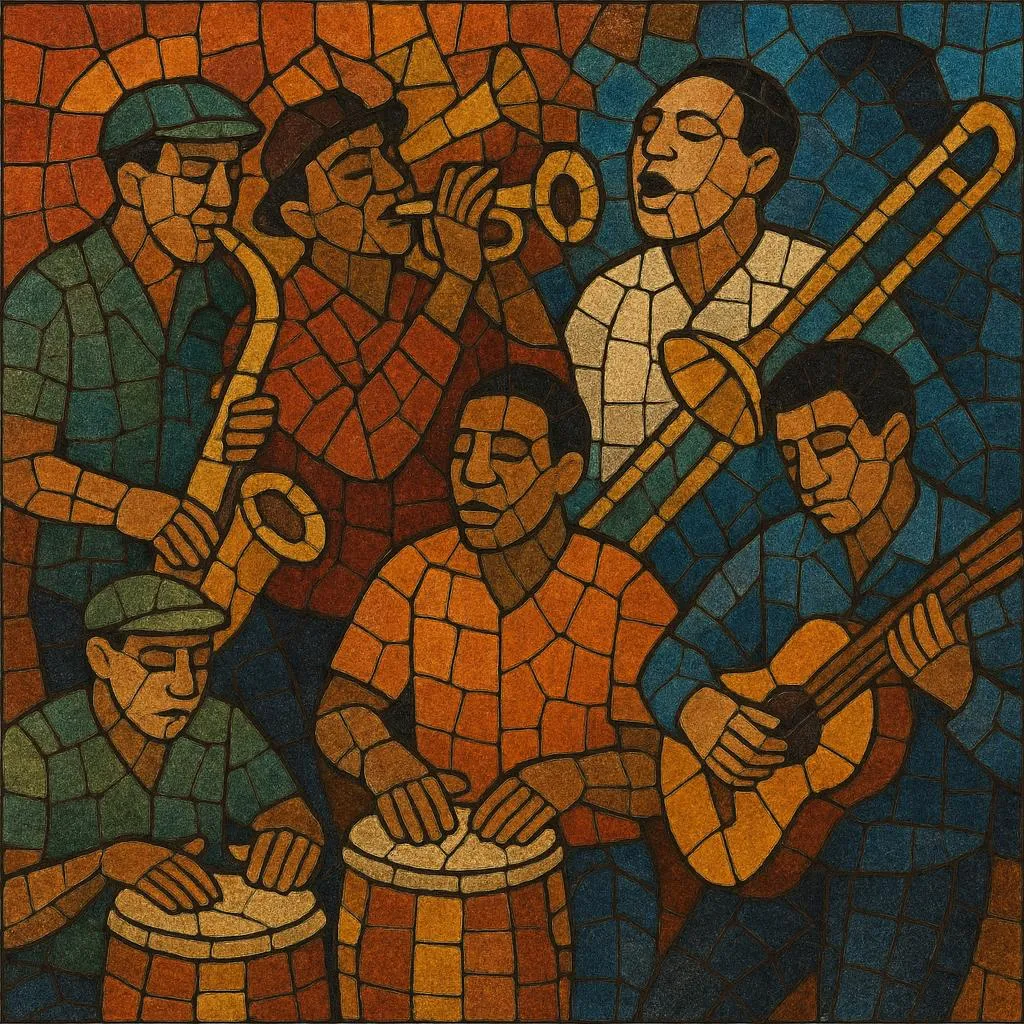
Compared with Puerto Rican plena, the Uruguayan variant tends to use a full tropical orchestra setup (trumpets/trombones, piano/keys, electric bass, timbales, congas, bongó, güira) and, in many bands, borrow rhythmic colors from candombe and murga. The result is upbeat, festive music made for social dancing, street parties, and carnival stages, with catchy call‑and‑response hooks and lyrics that mix everyday stories, humor, romance, and barrio pride.
History
Uruguay’s long tropical and carnival traditions provided fertile soil for a local reading of Caribbean plena. Dance bands in Montevideo, already fluent in salsa, merengue, and cumbia, began arranging plena grooves with full horn sections and the streetwise coro–pregón language familiar from salsa, while drawing on candombe and murga for timbral and rhythmic identity. By the early–mid 1990s, the term “plena uruguaya” circulated to distinguish this lively, brass‑forward, party‑ready take on plena within the broader música tropical uruguaya scene.
As Montevideo’s tropical orchestras grew in popularity through clubs, neighborhood fiestas, and carnival seasons, plena uruguaya solidified a recognizable format: bright two‑ or three‑horn lines, keyboard montunos doubling or answering the brass, and layered percussion (timbales, congas, bongó, güira) sometimes colored by candombe drums. Catchy hooks, romantic themes, and humor made the style a staple of radio and weekend dance floors, alongside cumbia and salsa.
The 2010s saw plena uruguaya coexist and cross‑pollinate with other local tropical currents (e.g., cumbia pop), while bands updated arrangements with modern production and hybrid beats. The social function—soundtrack for dancing and communal celebration—remains central, and the genre continues to surface each carnival season and at popular dance venues, sustaining a distinct Uruguayan accent within the pan‑Latin tropical spectrum.