Your digging level

For this genre
0/8
🏆
Sign in, then listen to this genre to level up

Description

Pashto pop is a modern popular music style sung in the Pashto language by Pashtun artists across Pakistan and Afghanistan. It blends regional folk melodies, poetic forms, and vocal ornamentation with contemporary pop song structures and studio production.

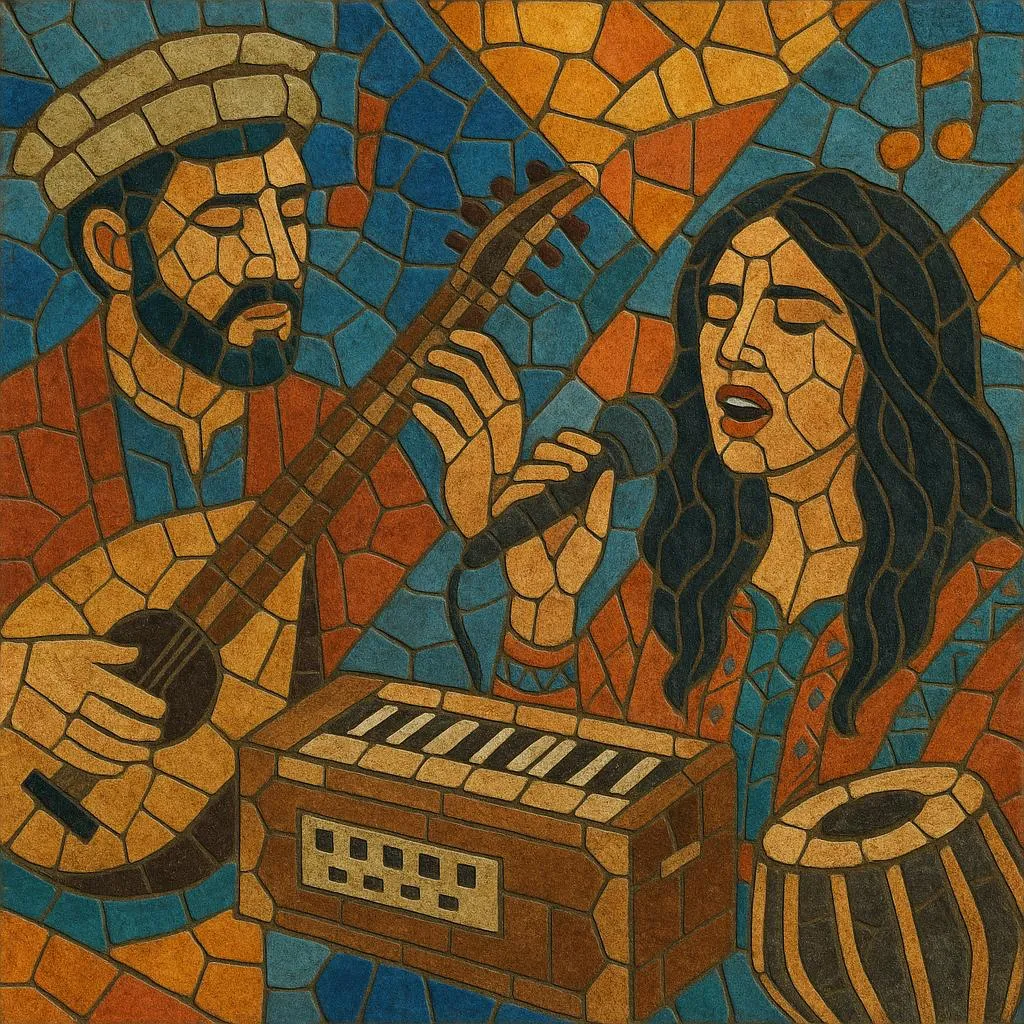
Typical arrangements fuse rubab and harmonium with guitars, keyboards, and drum machines, while dhol/dholak or tabla-driven grooves anchor dance-oriented tracks. Lyrically, it draws on Pashto literary traditions (tappa/landay and ghazal imagery), addressing themes of love, longing, pride, and place. Since the 1990s, satellite TV, regional film, and digital platforms have amplified the genre’s reach, and cross-border collaborations have further diversified its sound.


Sources: Spotify, Wikipedia, Discogs, RYM, MB, user feedback and other online sources

History

Roots and Early Formation (1960s–1970s)

Pashto popular song began to crystallize in the 1960s as radio and cinema connected folk repertoire to broader audiences. Musicians adapted regional dance and wedding songs, tappa/landay poetic couplets, and ghazal-like lyricism into shorter, catchy forms suited to radio. Arrangers and singers borrowed harmonic motion and instrumentation from Hindustani light-classical and film music, laying a foundation for a distinct Pashto pop idiom.

Consolidation and Media Expansion (1980s)

The 1980s saw a surge in commercially recorded cassettes and film songs that standardized pop structures (verse–chorus, hooks) and studio techniques (multi-track vocals, synthesized textures). Migration and cross-border circulation between Khyber Pakhtunkhwa, major Pakistani cities, and Afghan communities enriched the scene, bringing new players, studios, and audiences.

Diversification and Star System (1990s–2000s)

Music videos, television, and regional cinema helped establish a recognizable star system. Production values rose: drum machines and digital synths joined harmonium, rubab, and guitars; tabla/dholak grooves often gave way to four-on-the-floor kicks for dance cuts. Ballads kept classical ornamentation and ghazal imagery, while faster tracks favored chantable refrains and clapping patterns for live shows.

Digital Era and Crossovers (2010s–present)

Streaming, social video, and live sessions catalyzed fusions with rock, EDM, and hip hop aesthetics. Collaborative projects popularized polished, band-backed arrangements as well as acoustic “roots-pop.” Contemporary Pashto pop remains bilingual and transnational, with artists alternating among Pashto, Urdu, and Dari, reflecting the genre’s porous cultural geography while retaining a core Pashto melodic and poetic sensibility.

How to make a track in this genre

Instruments and Texture
•   Combine regional timbres with modern pop tools: rubab and harmonium alongside acoustic/electric guitars, keyboards/synth pads, and bass. •   Use dhol/dholak or tabla for hand-played drive; layer with programmed kicks, claps, and hi-hats for contemporary punch. •   Add bansuri or rubab riffs as intros/interludes to ‘sign’ the track as distinctly Pashto before the full rhythm section enters.
Melody, Mode, and Harmony
•   Write vocal lines that favor stepwise motion with mordents, slides, and short melismas, keeping phrases memorable for chorus sing-alongs. •   Alternate major and minor centers; borrow modal color from common South Asian light-classical usage (e.g., Khamaj/Mixolydian brightness, Bhairavi-tinged pathos) while keeping pop-friendly diatonic hooks. •   Harmonically, simple progressions work best (I–V–vi–IV, i–VII–VI–VII, or I–♭VII–IV) to support strong toplines and call-and-response choruses.
Rhythm and Form
•   For dance numbers, use tight 4/4 at 110–130 BPM with dhol accents on offbeats and claps reinforcing the chorus. •   For folk-inflected cuts, consider hand-percussion ostinatos and occasional asymmetric or compound-feel patterns inspired by regional dance cycles, but keep choruses square and hook-focused. •   Structure: intro (instrumental hook) → verse → pre-chorus (rising tension) → chorus (anthemic hook) → verse 2 → chorus → instrumental break/bridge → final double chorus.
Lyrics and Delivery
•   Write in Pashto with accessible diction; blend classical imagery (nightingale, desert winds, mountains, rivers) with contemporary romance and pride-of-place themes. •   Draw on tappa/landay brevity for punchy refrains; echo ghazal-like metaphors for ballads. •   Vocal delivery should be expressive but controlled: clear chest voice, tasteful ornamentation at line endings, and occasional call-and-response backing lines.
Production Tips
•   Layer a folk-signature instrument (rubab/bansuri) with modern pads to bridge tradition and pop sheen. •   Double-track choruses, add gang claps, and use subtle delay/reverb tails to widen the hook. •   Keep mixes vocal-forward; automate percussion clarity (dhol transients) to retain dance energy without masking the lead.

Top tracks

Locked
Share your favorite track to unlock other users’ top tracks

Upcoming concerts

in this genre
Influenced by
Has influenced
No genres found

Download our mobile app

Get the Melodigging app and start digging for new genres on the go
© 2026 Melodigging
Melodding was created as a tribute to Every Noise at Once, which inspired us to help curious minds keep digging into music's ever-evolving genres.
Buy me a coffee for Melodigging