

Your digging level for this genre

0/8
🏆
Sign in, then listen to this genre to level up

Description

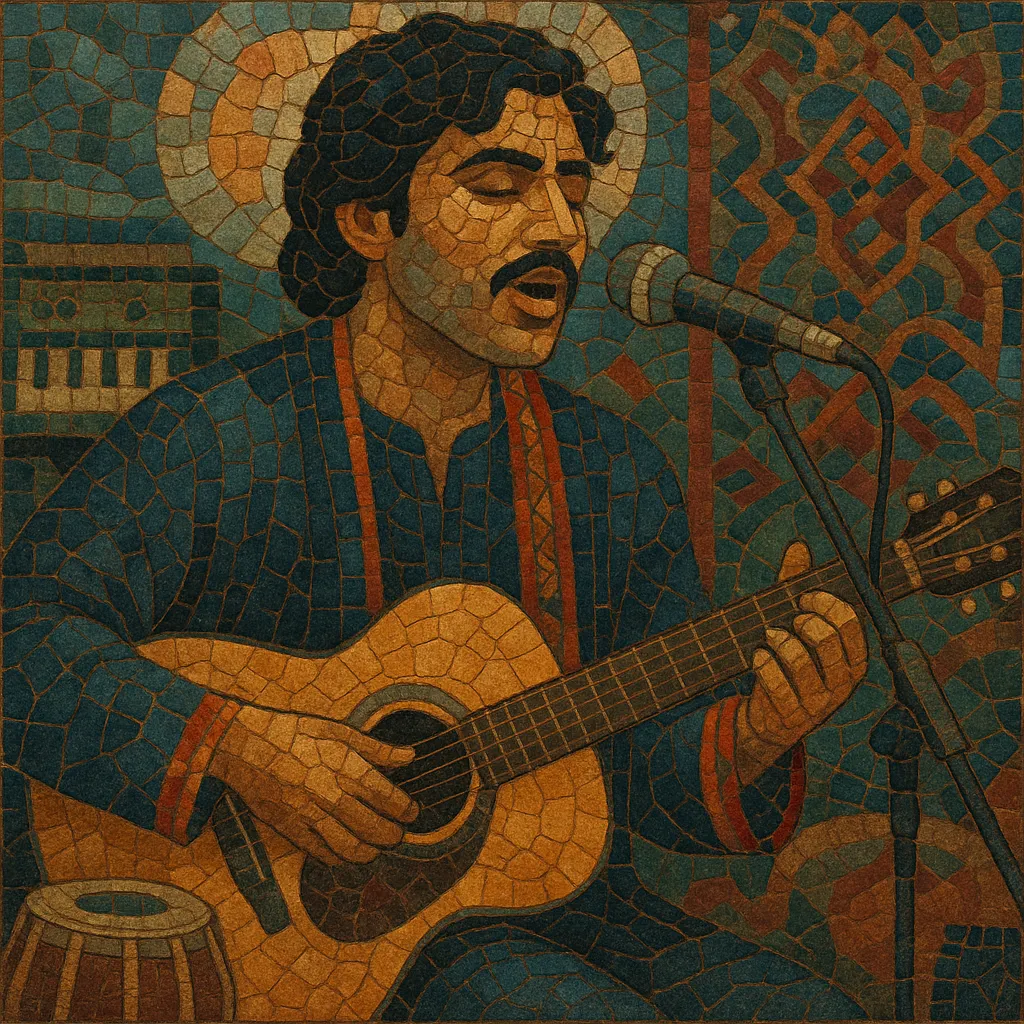
Afghan pop is a popular music tradition from Afghanistan that blends local folk melodies and poetic lyricism with Indian film music and Western pop, rock, disco, and synth-pop aesthetics.

Sung primarily in Dari (Afghan Persian) and Pashto, it features melismatic vocals, memorable hooks, and danceable rhythms that range from straightforward 4/4 grooves to Afghan dance cycles inspired by attan (often felt in asymmetrical meters). Arrangements commonly mix rubab, harmonium, and tabla/dholak with electric guitar, bass, keyboards, string pads, and drum machines.

The sound crystallized during the late 1960s and 1970s around Kabul’s burgeoning studio/radio scene and later evolved in diaspora hubs (Pakistan, Iran, Europe, and North America) during years of conflict, wedding celebrations, and media revival—producing a repertoire that is at once nostalgic and modern.

History

Early roots and radio era (1950s–1960s)

Afghan popular music took shape as radio and state orchestras in Kabul fostered a professional scene. Musicians absorbed Hindustani and Persian classical/poetic traditions (ghazal) and Indian film music while experimenting with microphones, arrangements, and modern song forms.

Golden age (late 1960s–1970s)

A distinct "Afghan pop" sound flourished with stars such as Ahmad Zahir, who fused local melodies and poetic lyricism with rock, soul, and early disco. Studios, Radio/TV Kabul, and live cabaret culture supported orchestras that combined rubab, harmonium, tabla, and strings with electric guitars, organs, and drum kits. Catchy refrains, sentimental themes, and danceable rhythms defined the era.

Disruption and diaspora (1980s–1990s)

Conflict, migration, and censorship disrupted the local industry. Afghan pop continued in exile across Pakistan (Peshawar/Quetta), Iran, Europe (notably Germany), and North America (California’s Afghan community). Wedding circuits and cassette culture kept the style alive, with synths, drum machines, and Euro-disco/electro-pop elements entering the sound.

Revival and media era (2000s–2010s)

After 2001, satellite TV, talent shows (e.g., Afghan Star), and new studios reinvigorated pop at home and in the diaspora. Artists updated arrangements with modern pop/EDM production while preserving Afghan melodic and poetic sensibilities. YouTube and streaming broadened reach to younger audiences.

Present day (2020s–)

Ongoing instability has again pushed many artists to work from abroad, but Afghan pop remains prolific online and at weddings. The genre continues to balance nostalgia with contemporary pop, trap-influenced beats, and international collaborations, sustaining a transnational Afghan cultural identity.

How to make a track in this genre

Core ingredients
•   Vocals: Use expressive, melismatic phrasing and ornamentation drawn from ghazal and regional folk styles. Deliver lyrics in Dari or Pashto (themes: love, longing, homeland, exile). •   Melody & Mode: Craft singable hooks using minor/Phrygian-dominant flavors and pentatonic touches. Motifs often rise and fall with graceful turns and mordents. •   Harmony: Keep harmonic movement simple (i–VI–VII, i–VII–VI–V, or pop I–V–vi–IV equivalents), allowing modal melody and arrangement color to lead.
Rhythm & groove
•   Dance songs: 4/4 at 110–130 BPM with steady kick, off-beat claps, and tabla/dholak fills. •   Attan-inspired feels: Incorporate asymmetry (e.g., 7/8 accents) or accent cycles that hint at attan energy, even within 4/4 frameworks. •   Ballads: 70–95 BPM with spacious percussion and sustained pads/strings.
Instrumentation & arrangement
•   Traditional colors: Rubab or dutar for motifs, harmonium/tabla for timbral identity. •   Pop backbone: Electric guitar (clean arpeggios or light overdrive), bass guitar, keys/synth pads, and a hybrid drum kit (acoustic hits layered with 808/909 samples). •   Strings: Layered string pads or small section lines to enhance romantic/nostalgic mood. •   Structure: Intro hook (instrumental or vocal), verse–pre–chorus–chorus, a short instrumental solo (rubab, guitar, or synth lead), and a final double chorus.
Production tips
•   Blend close, warm vocals with tasteful plate or hall reverb for classic Afghan pop sheen. •   Add tabla/dholak or daf as percussive ornamentation around backbeats; use short fills to lead into choruses. •   Balance modern punch (sidechained kicks/basses) with organic elements (rubab, hand percussion) to preserve identity.
Lyrics & expression
•   Focus on poetic imagery and metaphor (flowers, seasons, separation/reunion, homeland). •   Alternate intimate verses with communal, easily chantable choruses suitable for weddings and dance floors.

Top tracks

Locked
Share your favorite track to unlock other users’ top tracks
Influenced by
Has influenced
No genres found
Challenges
Digger Battle
Let's see who can find the best track in this genre
© 2025 Melodigging
Melodding was created as a tribute to Every Noise at Once, which inspired us to help curious minds keep digging into music's ever-evolving genres.
Buy me a coffee for Melodigging
