Your digging level
Description
Palestinian traditional music encompasses folk song, dance-music, and art-chant practices rooted in the Arabic maqam system and Levantine social life.
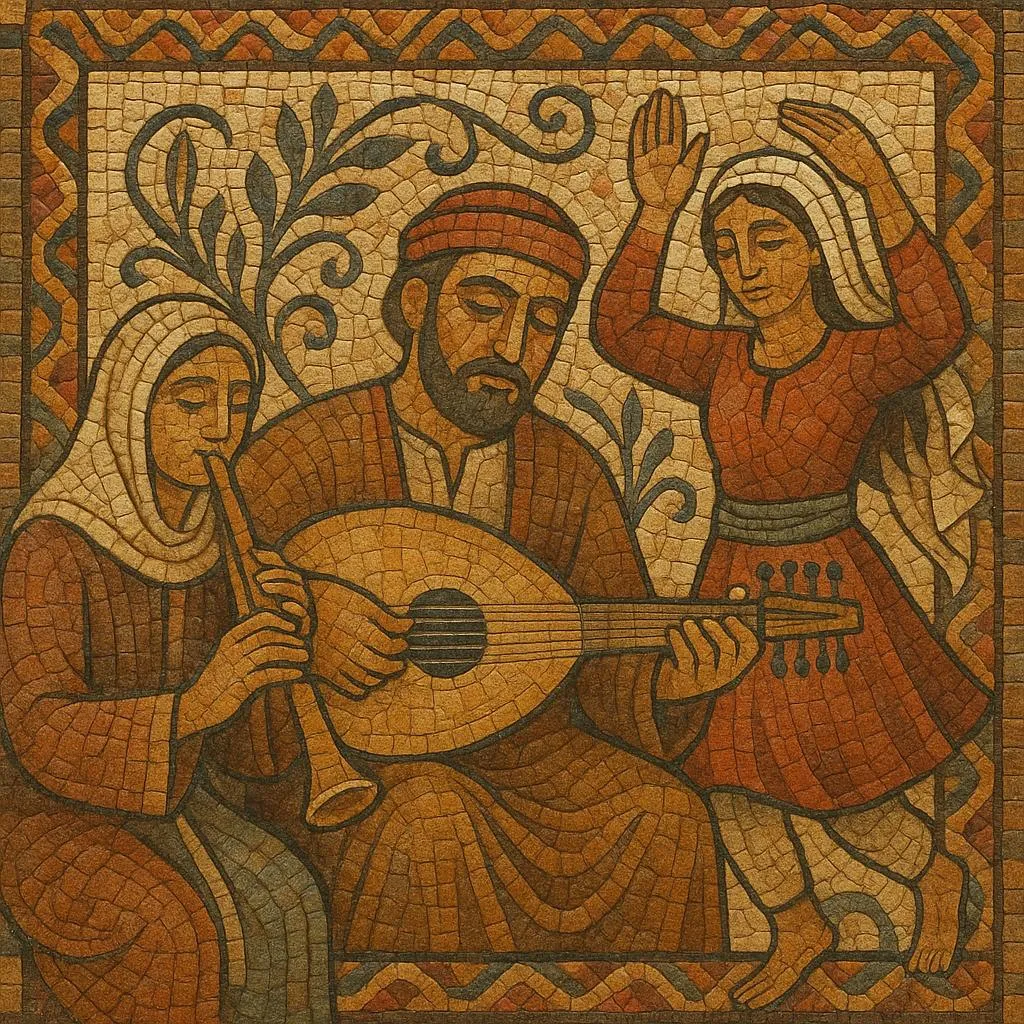
It centers on communal singing and line-dance repertoires (notably dabke), lyrical poetic forms (zajal, mawwal), and instrumental taqasim (improvisation) on oud, qanun, nay, violin, and regional reeds such as mijwiz and yarghul.
Stylistically it blends village wedding song, pastoral and urban forms, Sufi and liturgical currents, and classical Andalusian/Levantine poetics (muwashshah), producing music that can be exuberantly rhythmic for dance yet deeply melismatic and contemplative in solo song.
History
Palestinian song and chant traditions crystallized within wider Levantine Arabic culture. By the Ottoman era, urban courtly and religious repertoires (muwashshah, inshad) coexisted with rural pastoral and harvest songs. The modal (maqam) and rhythmic (iqa‘) frameworks that governed Arab art music shaped Palestinian melodies and performance practice.
Across the 19th century, communal line-dances and responsorial singing at weddings and seasonal gatherings developed into hallmark forms. Dabke songs, dal‘ouna refrains, and call‑and‑response lyrics tied music to poetry, collective identity, and place. Reed instruments like the mijwiz and percussion (darbuka, riqq) supported vigorous dance rhythms, while solo mawwal introduced free-meter melisma and emotive storytelling.
Early to mid‑20th century modernization brought notated arrangements, radio ensembles, and conservatory pedagogy. Urban takht/wasla line‑ups (oud, qanun, nay, violin) expanded, while village styles persisted. Collectors and broadcasters preserved folksong variants, and professional singers adapted traditional materials to stage and studio contexts.
Post‑1948 displacement spurred archival efforts, cultural troupes, and later revivalist and research‑based projects that safeguarded songs, meters, and performance customs. From the late 20th century onward, artist‑scholars and ensembles have reanimated dabke songs, maqam vocals, and instrumental taqasim, while collaborating with global and classical traditions. Today, Palestinian traditional music thrives both in community settings and on concert stages, informing contemporary pop, hip hop, and electronic hybrids.