Your digging level
Description
ʻŌteʻa is a Tahitian performance genre centered on fast, highly rhythmic drumming and vigorous group dance.
It is one of the best-known forms of traditional Tahitian music and dance, especially associated with ceremonial display, festive occasions, and staged cultural presentations in French Polynesia.
Musically, ʻōteʻa is driven primarily by percussion rather than melody. The emphasis falls on interlocking drum patterns, accelerating energy, and precise coordination between musicians and dancers.
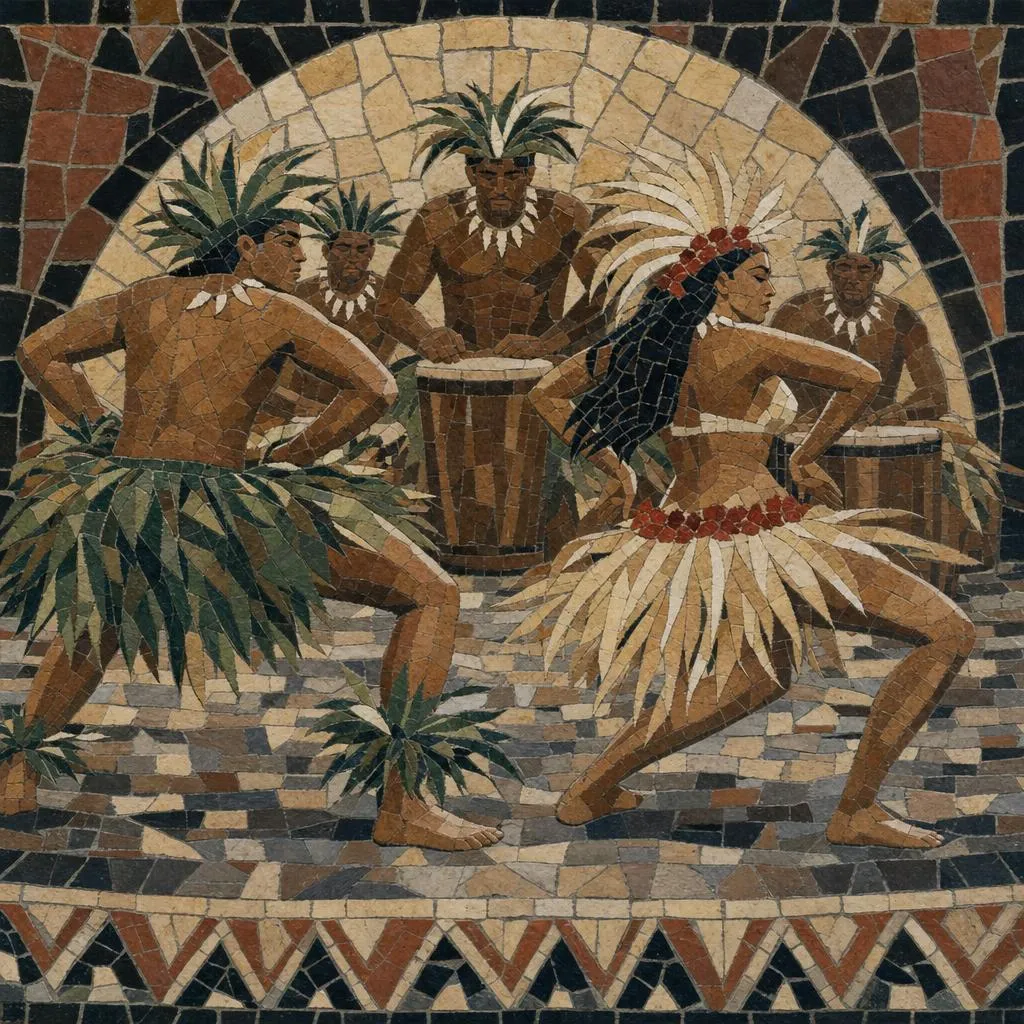
In performance, men and women often dance in separate formations or with distinct movement vocabularies. The dance is characterized by rapid lower-body movement, strong hip articulation, grounded footwork, and visually striking costumes made from natural materials.
Modern staged ʻōteʻa often combines inherited ceremonial elements with choreographed spectacle, but it remains deeply connected to Tahitian identity, oral tradition, and indigenous performance practice.
History
ʻŌteʻa developed in Tahiti and the wider Society Islands as a traditional dance-and-drum performance practice rooted in precolonial Polynesian ceremonial culture. It emerged as a communal form in which rhythm, movement, and social meaning were inseparable.
Historically, music in this context was not organized as a separate concert art in the modern Western sense. Instead, drumming, chanting, gesture, costume, and dance functioned together in ritual, celebration, courtly life, and communal display.
During the 19th century, missionary and colonial pressures led to the suppression or regulation of many indigenous Polynesian performance practices. As with other traditional Tahitian dances, forms related to ʻōteʻa were discouraged because colonial authorities often viewed them as morally suspect or incompatible with Christian norms.
Even so, rhythmic and choreographic knowledge survived through community memory, family transmission, and local cultural continuity. Elements of drumming, dance vocabulary, and ceremonial presentation persisted despite periods of reduced public visibility.
In the 20th century, especially from the mid-century onward, Tahitian cultural revival movements helped restore and formalize traditional dance practices. ʻŌteʻa became increasingly visible in festivals, tourism, cultural showcases, and competitive performance contexts.
As revival and staging expanded, ʻōteʻa also became more codified. Ensembles developed recognizable structures for percussion accompaniment, costume design, choreography, and group formations. Public festivals such as Heiva Tahiti played a major role in preserving and reshaping the form.
Today, ʻōteʻa is both a living traditional practice and a major performance symbol of Tahitian culture. It is taught in dance schools, presented in competitions, and performed internationally by Polynesian ensembles.
Contemporary ʻōteʻa often balances heritage and innovation. Some performances aim for strong historical grounding, while others incorporate theatrical staging, expanded ensemble organization, and polished choreographic design. Despite these modern developments, the genre remains fundamentally defined by percussion-led energy, collective discipline, and cultural continuity.
Build the piece around percussion first, not harmony.
ʻŌteʻa is fundamentally rhythm-led, so the main compositional task is to create layered drum patterns that support dance energy, visual accents, and changes in intensity.
Use Tahitian percussion as the core sound source.
Typical instruments include:
• Pahu or related large drums for the main pulse and power • Toʻere slit drums for sharp, penetrating rhythmic figures • Smaller hand percussion or supporting drums for subdivision and texture • Optional shouted cues or brief vocal elements depending on the performance contextMelodic instruments are usually absent or secondary in strict percussion-centered ʻōteʻa performance.
Write fast, driving, cyclical patterns.
Important rhythmic features include:
• Strong repeating ostinatos • Interlocking parts between low drums and higher-pitched percussion • Clear accents for choreographic hits and directional changes • Dynamic build-ups through density, volume, and tempo feel • Tight ensemble precisionThe groove should feel physically propulsive and danceable rather than loose or swing-based.
Organize the music in sections that correspond to choreographic development.
A practical structure might be:
-
•
Short rhythmic introduction
•Main groove establishing pulse and movement type
•Variation section with added accents or denser subdivision
•Break or call figure for visual transition
•Climax with maximum ensemble force
•Strong closing cadence or cut-off
Compose in direct dialogue with dance.
In ʻōteʻa, rhythm is inseparable from movement. Each section should support:
• Hip movement patterns • Footwork intensity • Group formations • Entrances and exits • Visual unisons • Climactic momentsIf you are writing for dancers, rehearse the drum patterns with choreography from the beginning.
Perform with precision, stamina, and strong physical attack.
The style depends on:
• Consistent tempo control • Crisp attack on accented strokes • Ensemble synchronization • Gradual intensification when needed • Clear visual leadership from drummers or choreographersTreat the style as a living indigenous tradition, not just a percussion effect.
To compose or perform ʻōteʻa respectfully:
• Study Tahitian dance and drumming traditions together • Learn how rhythm functions in cultural and ceremonial context • Avoid reducing the style to generic 'tribal' drumming • Work with knowledgeable practitioners when possible • Preserve the connection between sound, movement, costume, and community meaning