Your digging level

For this genre
0/8
🏆
Sign in, then listen to this genre to level up

Description

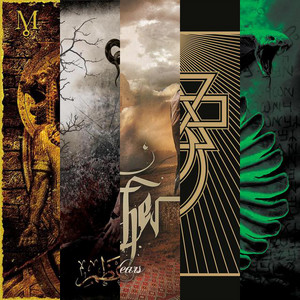
Oriental metal is a subgenre of heavy metal that fuses the intensity of metal with modal systems, rhythms, instruments, and storytelling traditions from West Asia and North Africa. Instead of Western major/minor harmony, it foregrounds maqam-based melody (e.g., Hijaz, Rast, Nahawand, Kurd, Bayati), microtonal ornamentation, and cyclical iqa’at grooves alongside distorted guitars and double‑kick drumming.

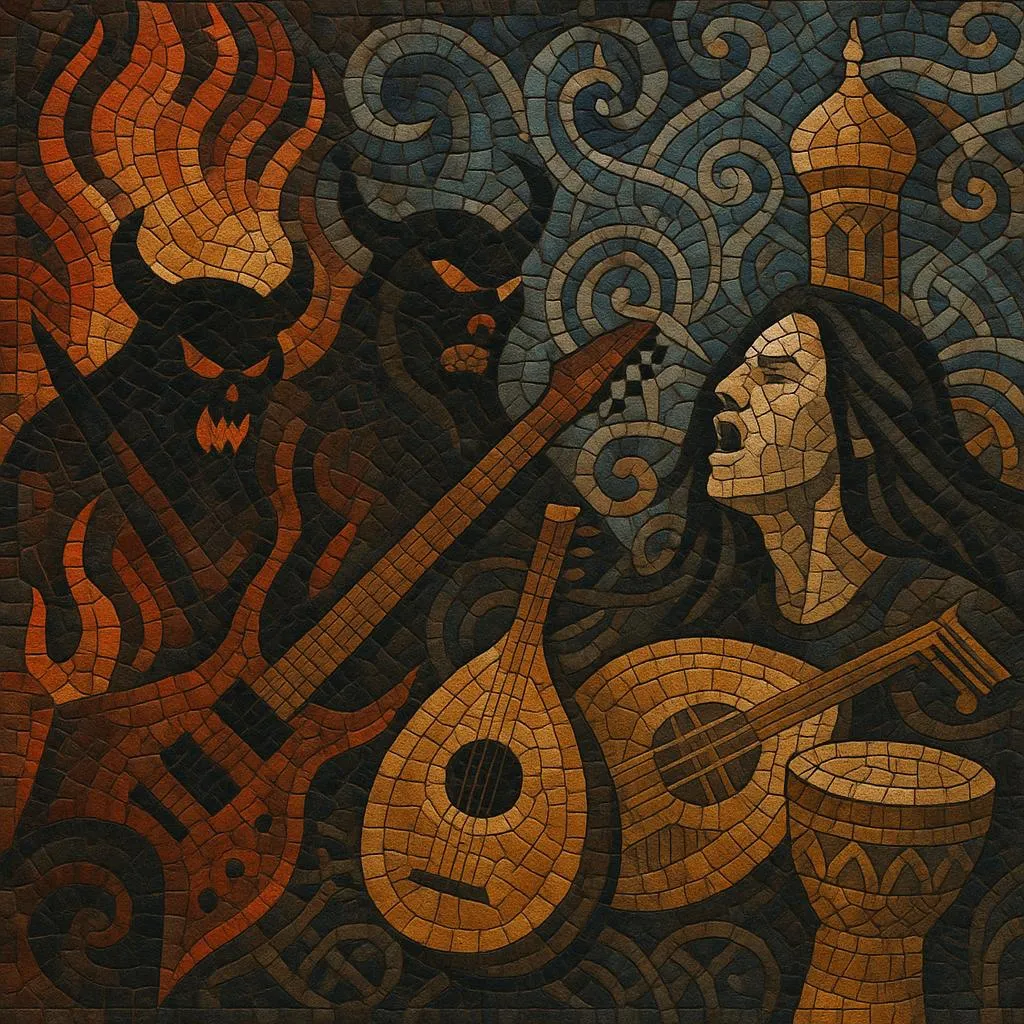
Typical timbres include electric guitars and bass locked to down‑tuned, palm‑muted riffs, blended with oud, saz/bağlama, qanun, ney, kamancheh, and darbuka/riq/bendir. Vocals may alternate between harsh growls and melismatic clean lines, and lyrics often draw on regional history, mythology, and spiritual themes. The result is a dramatic, “epic” sound that remains rhythmically danceable while sounding dark, exotic (to Western ears), and emotionally charged.


Sources: Spotify, Wikipedia, Discogs, RYM, MB, user feedback and other online sources

History

Origins (1990s)

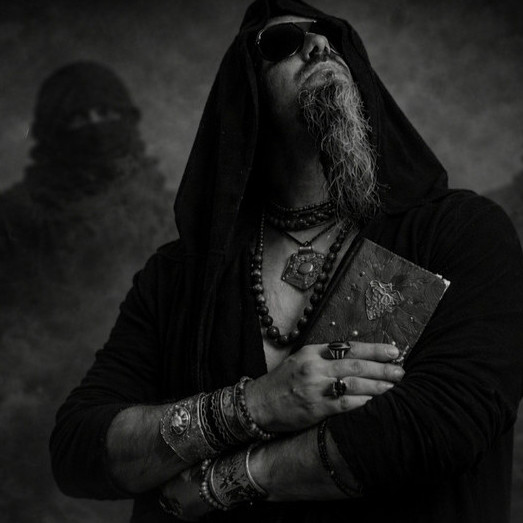
Oriental metal emerged in the 1990s, primarily in Israel, where pioneering bands began integrating Middle Eastern melodic modes (maqamat), Arabic/Hebrew lyrical themes, and traditional instruments into heavy and extreme metal frameworks. Early innovators showed that modal hooks and iqa’at grooves could coexist with down‑tuned guitars, blast beats, and progressive song structures, establishing a distinct regional identity within global metal.

Expansion across West Asia and North Africa (2000s)

During the 2000s, the approach spread through Turkey, Tunisia, Algeria, the Levant, and the Gulf, as local scenes experimented with combining national folk elements (e.g., saz, darbuka, qanun, ney) and language with death, black, doom, and progressive metal. Diaspora musicians in Europe contributed modern production and broader touring networks, helping the sound reach international audiences and festivals.

Aesthetics and techniques

Musically, oriental metal privileges modal melody and motif development over chordal harmony. Common scales include Hijaz (and its tetrachord), Nahawand (minor), Kurd (Phrygian), Rast ("major" with neutral seconds), and Bayati (microtonal inflections). Rhythms often borrow from iqa’at such as Maqsoum (4/4), Saidi (4/4), Malfuf (2/4), Masmoudi (8/4), Chiftetelli (8/4), and Samai Thaqil (10/8), sometimes interlocking with metal’s double‑kick patterns and odd meters (7/8, 9/8, 10/8). Melismatic vocals, call‑and‑response, and chant‑like choruses are common.

Contemporary scene

Today the style is internationally recognized, with bands across North Africa, the Middle East, Central and South Asia, and the broader diaspora. Modern productions mix cinematic sound design, orchestration, and microtonal guitar setups or fretless instruments to more faithfully articulate maqam intervals. Lyrically, the scene navigates cultural memory, spirituality, social critique, and myth, while collaborations with traditional musicians continue to deepen the authenticity of the fusion.

How to make a track in this genre

Scales and modality
•   Center your melodies on maqam logic rather than Western chord progressions. Start with Hijaz (Phrygian dominant color), Nahawand (minor), Kurd (Phrygian), Rast, and Bayati. •   Use tetrachords (e.g., Hijaz tetrachord) to build riffs and hooks. Employ slides, bends, and grace notes to imply microtones; consider fretless guitar, microtonal fretting, or sampled traditional instruments for quarter‑tone inflections.
Rhythm and groove
•   Combine iqa’at with metal drums: Maqsoum or Saidi in 4/4 over double‑kick patterns; Malfuf (2/4) or Chiftetelli/Masmoudi (8/4) under half‑time riffs; Samai Thaqil (10/8) for progressive passages. •   Alternate straight driving sections with cyclical, dance‑like percussion breaks using darbuka/riq/bendir; layer shakers and claps for regional feel.
Instrumentation and timbre
•   Core: down‑tuned electric guitars (Drop C/B), bass, and metal drum kit. •   Traditional colors: oud, saz/bağlama, qanun, ney/kaval, kamancheh, daf/darabuka/riq/bendir. Let these instruments carry intros, interludes, and countermelodies. •   Tone: tight high‑gain rhythm guitars (palm‑muted), sustaining lead tone with delay/reverb for modal lines; acoustic/nylon/oud for contrast.
Riffs, harmony, and structure
•   Riffs should outline modal centers rather than functional harmony; pedal points and droning fifths support modal melodies. •   Use motif development: state a maqam motif, vary it via transposition to related tetrachords, then return to the tonic for resolution. •   Employ odd meters (7/8, 9/8, 10/8) for tension; pivot to 4/4 for chorus impact.
Vocals and lyrics
•   Blend harsh vocals (growls/screams) with clean, melismatic lines. Ornament phrases with mordents, slides, and appoggiaturas typical of regional singing. •   Write lyrics in local languages (Arabic, Hebrew, Turkish, Persian, etc.) or bilingual texts. Themes can include mythology, spirituality, historical epics, exile, and social commentary.
Arrangement and production
•   Contrast sections: atmospheric intro with ney/oud → heavy riff with double‑kick → percussion/chant break → soaring chorus. •   Layer traditional percussion under the kit; sidechain subtly to the kick for clarity. Pan hand percussion and drones to widen the image. •   If microtonal: tune sampled instruments consistently; avoid pitch‑correction that collapses quarter‑tones. Use convolution reverbs (baths, courtyards) for regional space.
Practical workflow tips
•   Start by sketching a modal melody on oud/saz or a vocal line; build the guitar riff around its tetrachord. •   Map iqa’at into a DAW with hand‑percussion samples before adding the drum kit—this preserves the danceable feel. •   Test key changes by swapping tetrachords (e.g., Hijaz → Nahawand on the same tonic) to maintain identity while refreshing color.

Top tracks

Locked
Share your favorite track to unlock other users’ top tracks

Upcoming concerts

in this genre
Influenced by

Download our mobile app

Get the Melodigging app and start digging for new genres on the go
© 2026 Melodigging
Melodding was created as a tribute to Every Noise at Once, which inspired us to help curious minds keep digging into music's ever-evolving genres.
Buy me a coffee for Melodigging