Your digging level
Description
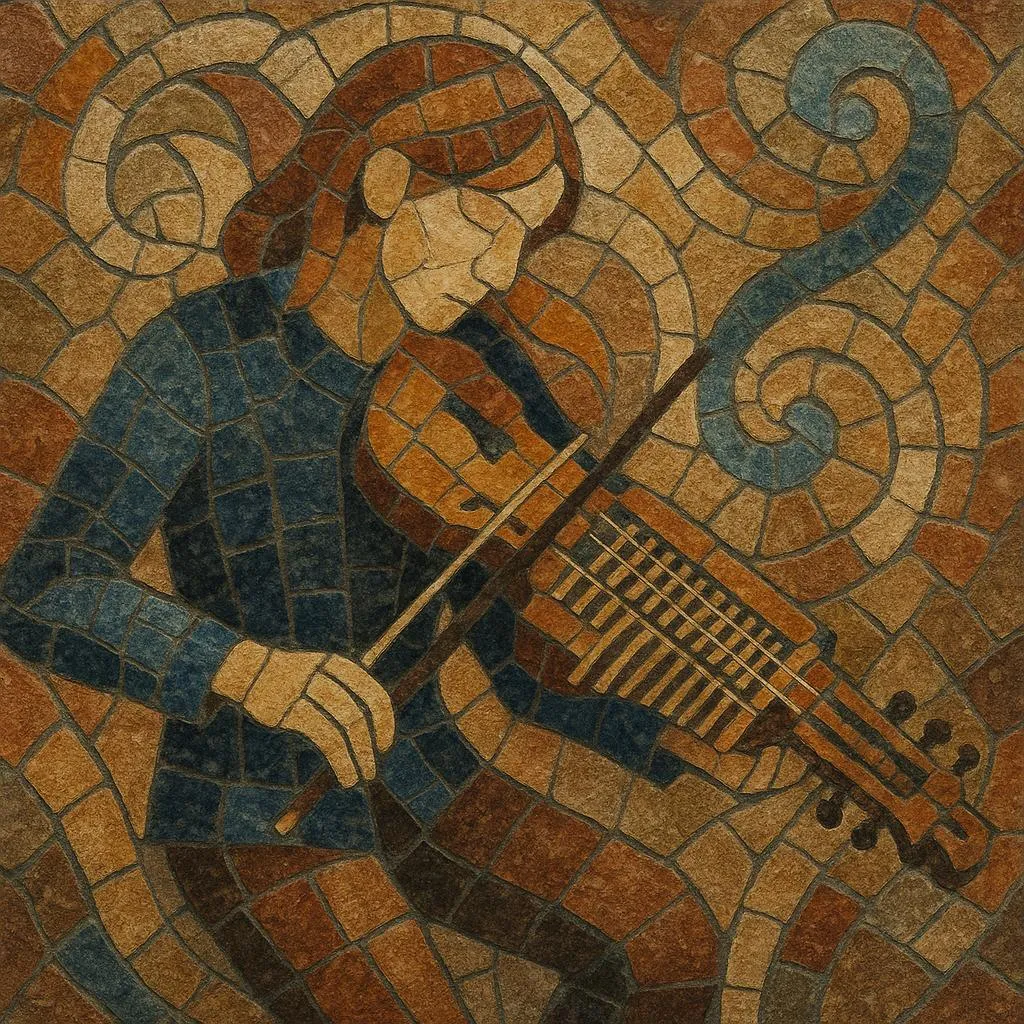
Nyckelharpa refers to the Swedish keyed-fiddle tradition centered on the nyckelharpa instrument, a bowed chordophone with wooden keys and a chorus of resonant sympathetic strings. Its timbre is bright, glassy, and bell-like, with a natural shimmer created by the sympathetic strings that ring along with the bowed melody.
Historically rooted in Uppland (east-central Sweden), the style features dance-derived forms such as polska, schottis, waltz, and polka. Modern performance often blends traditional dance tunes with newly composed repertoire and baroque/renaissance pieces adapted to the instrument’s chromatic range. The chromatic nyckelharpa (developed in the 20th century) enabled expanded harmony and modulation, making it equally at home in solo settings, small folk ensembles, and cross-genre collaborations.
History
Depictions of keyed-fiddles appear in Swedish churches from the mid-1300s, indicating an early tradition around Uppland. These early instruments—ancestors of today’s nyckelharpa—served local dance music and processional contexts, aligning with medieval and later renaissance musical practices.
Distinct Swedish dance repertoires—especially polska in asymmetric triple meter—shaped nyckelharpa technique and phrasing. Instrument types such as the kontrabasharpa and silverbasharpa coexisted, each with regionally preferred tunings and key layouts. The music remained primarily community-based: village dances, weddings, and seasonal festivities.
In the early–mid 1900s, makers and musicians—including August Bohlin and Eric Sahlström—standardized the modern chromatic nyckelharpa (with four bowed melody strings and chromatic keys, plus multiple sympathetic strings). This redesign greatly expanded melodic and harmonic possibilities.
The Swedish folk revival of the 1960s–70s brought the instrument back to national prominence. Conservatories, competitions, and folk festivals nurtured a new generation of players, and the repertoire broadened to include composed tunes and arrangements from earlier art-music eras.
From the late 20th century onward, the nyckelharpa entered international folk, early music, and cross-genre scenes. Players adapted baroque sonatas, renaissance dances, and contemporary compositions to the instrument’s idiom. Today, nyckelharpa music thrives in Sweden and beyond, supported by teaching institutions, luthiers, and a vibrant community of performers exploring tradition and innovation side by side.