Your digging level
Description
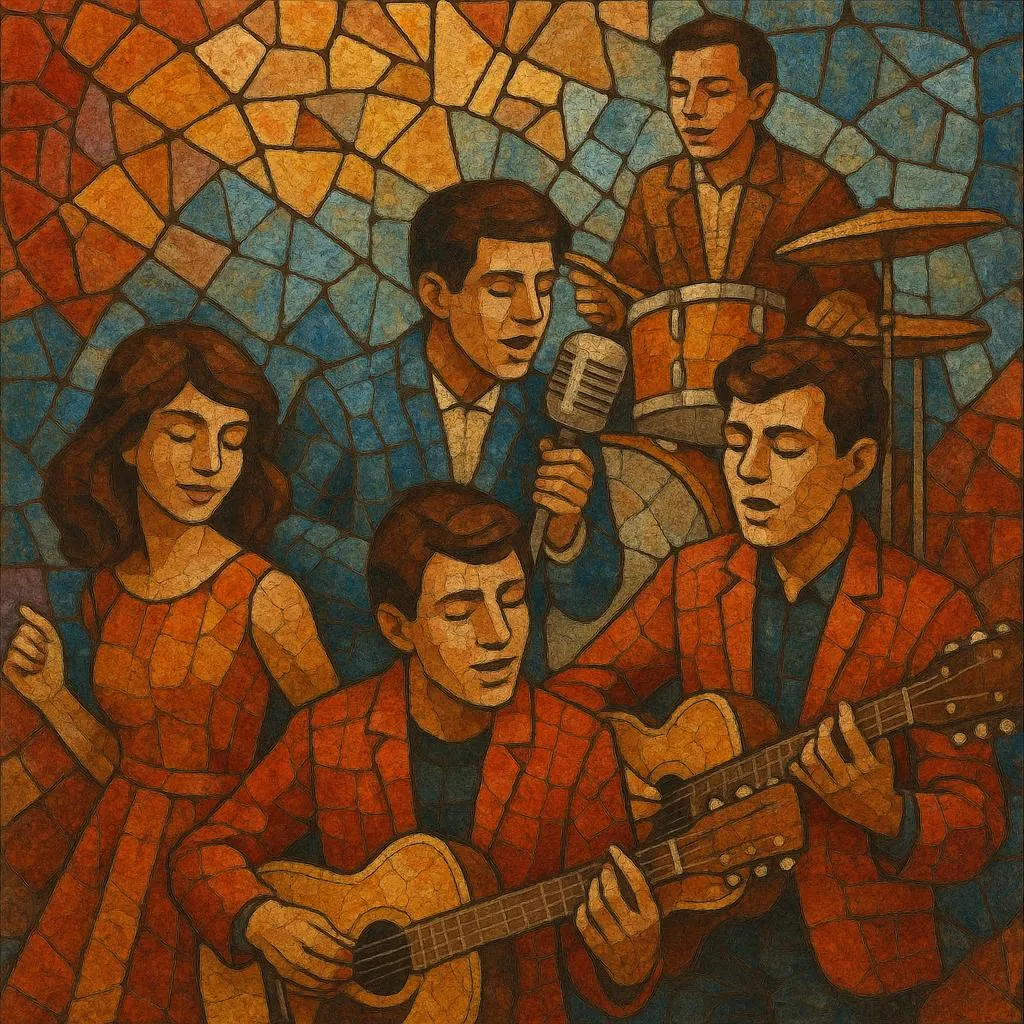
Nueva Ola Chilena is the Chilean iteration of the early-1960s Latin American teen pop and rock-and-roll boom. It blended local Spanish-language lyrics with the energetic patterns of U.S. rock and roll and doo-wop, the dance-craze rhythms of the twist, and the melodic, fashion-forward flair of European yé-yé and British beat.
Stylistically it favors short, hooky songs with clean vocals, handclaps, vocal harmonies, and backbeat-driven drums, often featuring electric guitars, bass, piano or Farfisa/Hammond organ, and occasional sax or string sweetening for ballads. Lyrical themes revolve around youth culture—dance, romance, summer, and city life—delivered with bright, radio-ready arrangements.
Beyond covers of international hits, it fostered original repertoire and star-making media ecosystems (labels, radio, variety TV, and festivals), laying foundations for later Chilean pop and rock while preserving a distinct, upbeat, and youthful identity.
History
In the aftermath of the global rock-and-roll explosion, Chilean musicians and producers adapted the new teen sounds to local tastes. Radio networks, dance halls, and record labels rapidly promoted Spanish-language versions and homegrown originals, while the rise of variety television and song festivals offered national stages. The resulting scene—Nueva Ola Chilena—brought modern youth culture into Chile’s mainstream, pairing stylish performers with tightly arranged, danceable pop and beat music.
The genre’s sound drew on rock and roll backbeats, doo-wop harmonies, twist rhythms, and the melodic immediacy of yé-yé and Merseybeat. In Chile, strong radio rotation, prolific 7-inch singles, and prime-time TV appearances helped craft teen idols and bands whose personas were as crucial as their songs. Festivals such as the rapidly growing Viña del Mar stage reinforced pop’s visibility and pushed production values toward polished studio aesthetics.
By the late 1960s, Nueva Ola’s high-energy dance-pop broadened to include romantic balladry and smoother orchestrations, even as psychedelic and garage currents appeared at the scene’s edges. Although tastes diversified in the 1970s, the movement’s industrial infrastructure, songwriting craft, and audience-building methods directly seeded Chile’s later pop and rock ecosystems. Its repertoire remains a touchstone of Chilean popular memory—celebrated for its youthful optimism, catchy hooks, and foundational role in Spanish-language pop and rock.