Your digging level
Description
Muzica bănățeana is the traditional folk music of Banat, a multiethnic region in western Romania (bordering Serbia), recognized for its refined dance repertoire, lyrical songs, and distinctive use of wind and string timbres.
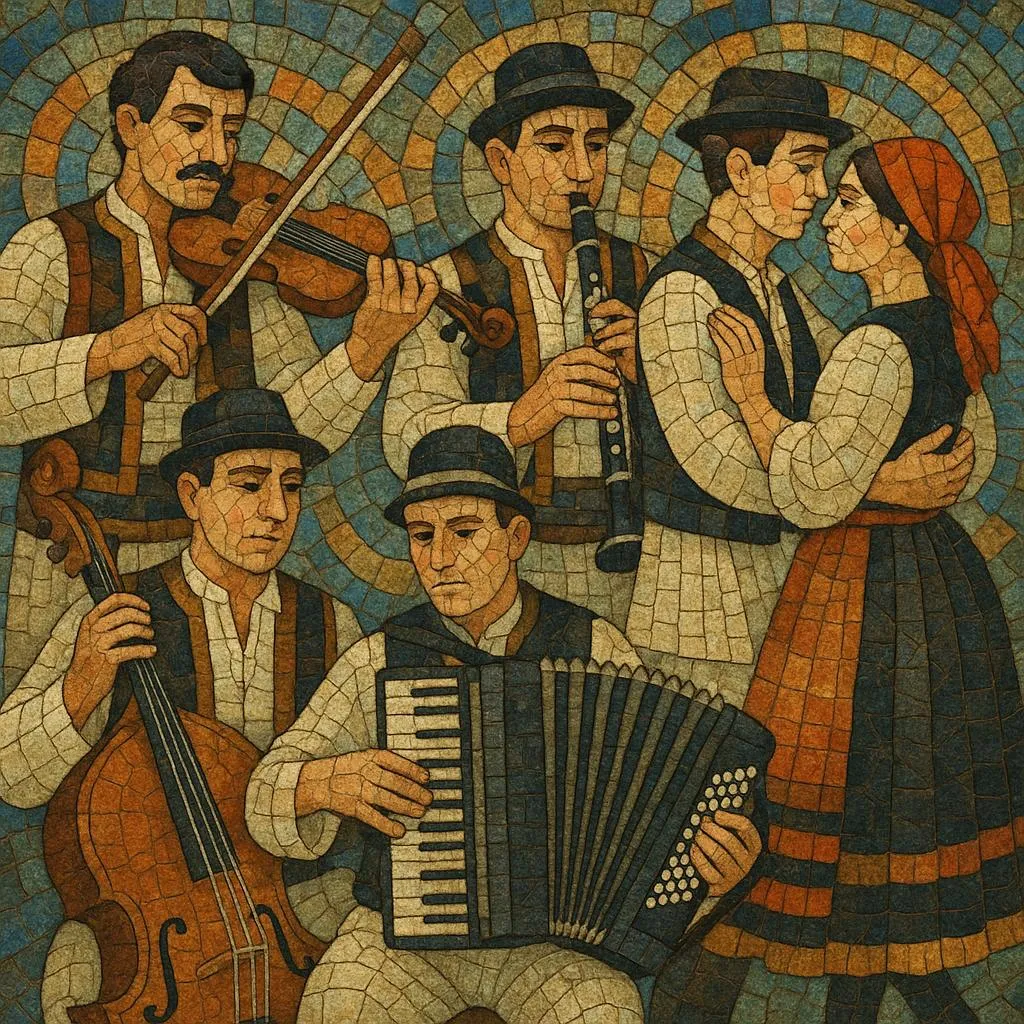
It features lively couple and circle dances (hora bănățească, sârba, brâul, ardeleana bănățeana, jocul „de doi”) alongside free-rhythm laments and love songs (doina bănățeana). Ensembles typically center on a lead melodic instrument (violin, clarinet, or taragot), supported by accordion, braci (viola/contra), and contrabas, with modern groups also using saxophone and keyboard for weddings and stage performance.
Banat’s urban centers (Timișoara, Lugoj, Caransebeș) professionalized the style in the 20th century through ensembles and radio, while rural village bands (tarafuri) preserved older heterophonic textures and local dialect songs about love, place, and the quintessential Romanian feeling of dor (longing). The result is a bright, rhythmic, dance-forward folk idiom with ornate vocal melismas and instrumental ornamentation.
History
Banat’s music grows from village ceremonial and dance traditions maintained by tarafuri (small folk bands) and lăutari (professional folk musicians). The region’s mixed Romanian, Serbian, Hungarian, and German communities fostered a shared dance floor where circle and couple dances, distinct dialects, and instrument choices cross‑pollinated. By the late 1800s, recognizable Banat song types (doina bănățeana, cântec bătrânesc) and dances (hora, sârba, brâul, ardeleana) coalesced as a regional sound.
The first decades of the 1900s brought printed collections, early recordings, and growing city stages (Timișoara, Lugoj, Caransebeș). Lăutari codified local tunes and performance practice—ornate violin leads, the emerging prominence of clarinet and taragot, and the supporting role of accordion, braci (viola/contra), and contrabas. Repertoire balanced energetic dance sets with free‑rhythm doine and lyrical love songs.
During the socialist period, professional folk ensembles and cultural houses institutionalized Banat music. Radio and state stages expanded its audience nationwide, standardizing arrangements while keeping regional identity. Star singers and instrumentalists popularized canonical versions of Banat dances and vocal styles.
After 1990, wedding bands adopted saxophone and keyboards, modernizing grooves for longer dance sets without abandoning core rhythms. Professional ensembles and festivals continue to present curated versions on stage, while local tarafuri preserve village variants. Diaspora communities (notably in Western Europe and North America) sustain the style at community events, keeping Banat’s songs, dialect, and dances vibrant.