Your digging level
Description
Musiikkia lapsille is Finnish children's music: songs created and performed for kids, typically in the Finnish language and built around clear melodies, simple forms, and vivid storytelling. It blends Finland's folk-singing and iskelmä (schlager) heritage with contemporary pop, rock, and educational music, yielding pieces that are catchy, participatory, and age-appropriate.
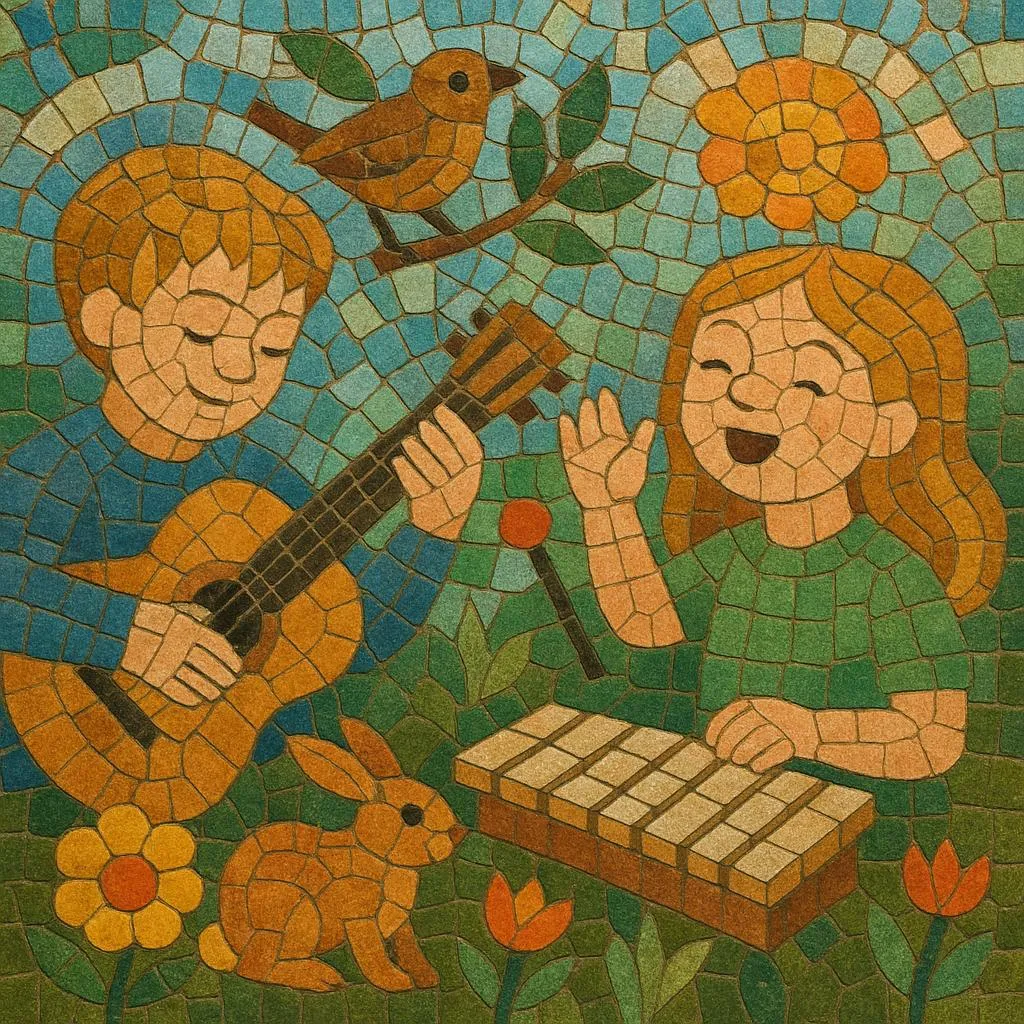
Arrangements often feature acoustic guitars, piano, hand percussion, Orff-style classroom instruments (xylophone, metallophone, glockenspiel), and children's choirs. Lyrics focus on everyday adventures, nature, animals, humor, and social-emotional learning, with plenty of rhyme, repetition, and call-and-response to invite movement and singing along.
History
Finland has a long tradition of children's lullabies, nursery rhymes, and folk songs passed down orally and through school songbooks. These materials formed the pedagogical and musical base for children's repertoires well before the recording era.
From the 1970s, children's programming on radio and television helped carve out a recognizable, recorded "musiikkia lapsille" repertoire. Producers and educators embraced Orff-Schulwerk and other child-centered methods, encouraging movement, speaking-and-singing, and simple instrumental parts. During the 1980s and 1990s, numerous ensembles and songwriters began issuing albums specifically for young listeners, consolidating a national sound that combined folk, iskelmä, and light pop/rock idioms.
In the 2000s, Finland saw a boom in stylistic variety: hip-hop-, rock-, and even metal-influenced children's acts appeared, alongside new compilation projects and school/municipal ensembles. Streaming and social media expanded the audience, while live family concerts, library tours, and festivals normalized professional children's performance circuits. Today the genre spans gentle lullabies through danceable pop and kid-safe rock, with strong participation from educators and community choirs.