Your digging level
Description
Música tradicional cubana is the umbrella term for the island’s foundational popular and folk styles—son, trova/bolero, danzón, rumba, guajira, punto, and related forms—that crystallized from the late 19th century into the early 20th century.
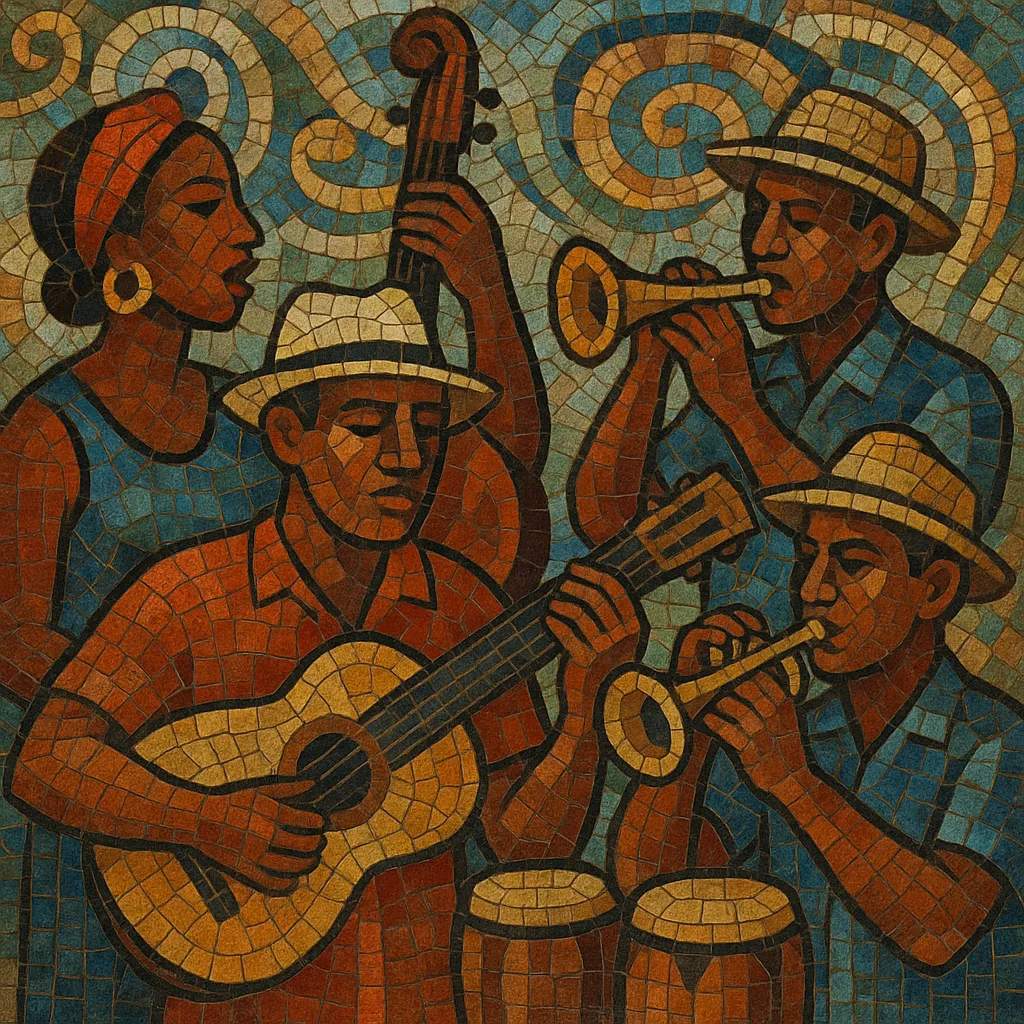
It fuses Spanish poetic song traditions and salon dances with West and Central African rhythmic systems and performance practices. Hallmark features include the clave (in 3–2 or 2–3 orientation), call-and-response coros, the syncopated habanera and cinquillo cells, and cyclical montuno vamps that open space for improvisation. Typical timbres come from the tres, Spanish guitar, laúd, bongó, maracas, claves, güiro, double bass or marímbula, and later trumpet or full charanga (flute and violins). Harmony often centers on diatonic I–IV–V motion with colorful secondary dominants and guajeo-based ostinati.
Beyond dance and social function, the tradition carries Cuba’s oral poetry (like décima), neighborhood identity, and Afro-Cuban spirituality, forming the bedrock that later enabled mambo, cha-cha-chá, salsa, and Latin jazz.
History
Cuban musical life in the 19th century connected Spanish-descended salon dances (contradanza, later habanera) with Afro-Cuban drumming and call-and-response practices brought by enslaved West and Central Africans. Poetic song (trova) spread especially in Oriente, while rural décima singing and punto/guajira reflected Canarian and broader Iberian roots.
By the first decades of the 1900s, key traditional styles coalesced. Danzón became a national dance via charangas (flute, violins, piano, bass, timbales, güiro). In Santiago and then Havana, son cubano thrived through sextetos and septetos (tres, guitar, bongó, maracas, claves, bass, trumpet), formalizing the clave pulse, call-and-response coros, and the montuno section. Trova singers shaped the Cuban bolero as intimate, poetic song.
Groups like Sexteto/Septeto Habanero and Septeto Nacional de Ignacio Piñeiro standardized son’s repertoire. Arsenio Rodríguez modernized the ensemble into a conjunto with congas, piano, multiple trumpets, and a driving bass tumbao, paving the way to mambo, cha-cha-chá, and later salsa. Parallel traditions—rumba in Havana’s solares, danzón in salons, and trova/bolero in cafés—circulated across social spaces, radio, and early recording.
Post‑1959 institutions preserved traditional ensembles while new hybrids (songo, timba) evolved from the same roots. From the 1990s, the Buena Vista Social Club revival brought international attention back to veteran soneros and trovadores, reaffirming música tradicional cubana as a living source for global Latin styles and a touchstone of Cuban cultural identity.