Your digging level

For this genre
0/8
🏆
Sign in, then listen to this genre to level up

Description

Musica roraimense refers to the contemporary popular and roots music scene of Roraima, Brazil’s northernmost state on the borders with Venezuela and Guyana.

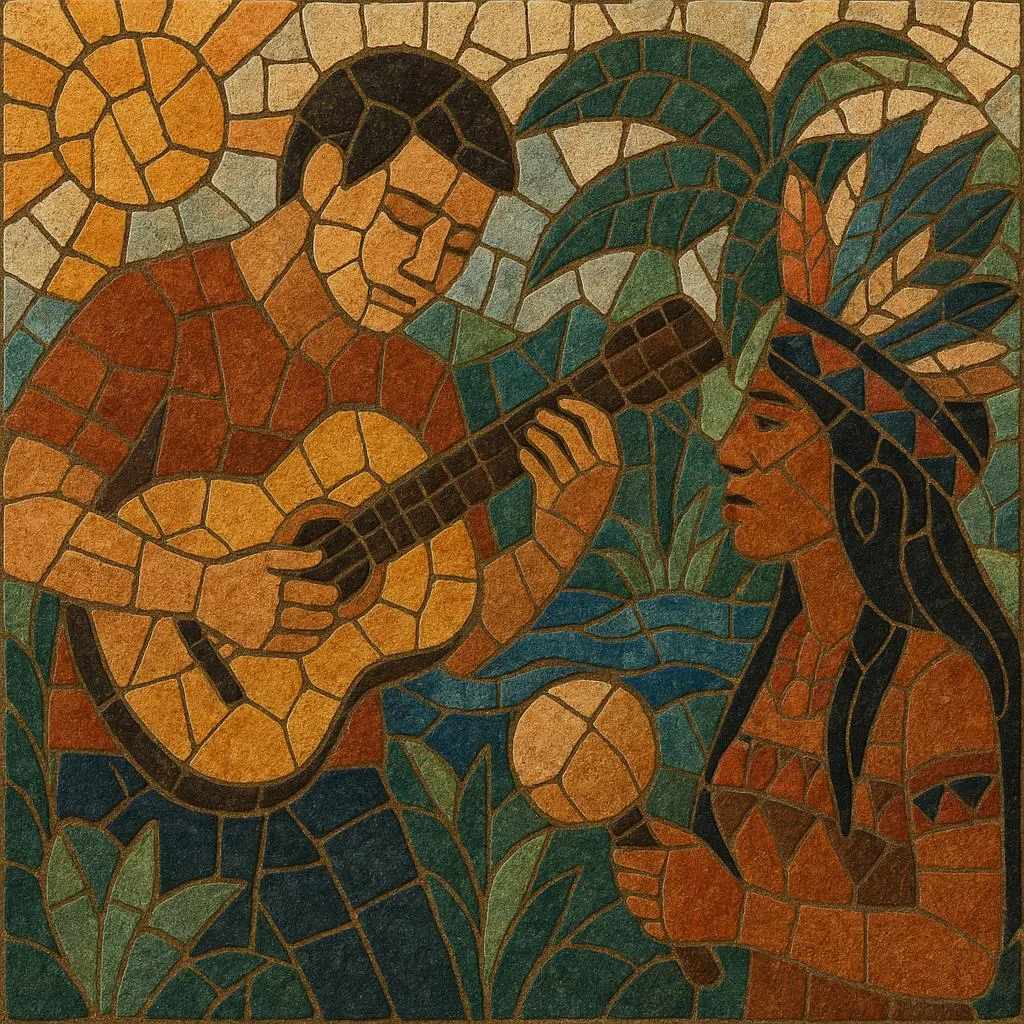
It blends mainstream Brazilian styles (MPB, forró, brega, lambada) with northern/Amazonian and borderland elements and, crucially, indigenous Makuxi and Wapichana rhythmic patterns (such as parixara), chants, and percussion. The result ranges from guitar‑driven singer‑songwriter songs and sertanejo/forró dance repertoire to urban pop, hip hop, and rock informed by Amazonian imagery and bilingual (Portuguese–indigenous, and sometimes Spanish) expressions.

Rather than a single strict rhythm, it is a scene tag that captures how artists from Roraima localize Brazilian popular music through Amazonian timbres (maracás/shakers, frame drums), call‑and‑response refrains, and lyrics that invoke the lavrado savanna, the Rio Branco, and regional cultural festivals (boi and indigenous ceremonies).


Sources: Spotify, Wikipedia, Discogs, RYM, MB, user feedback and other online sources

History

Early roots (1980s)
•   The late 1980s saw the consolidation of a distinct Roraima identity inside Brazilian popular music. Artists and collectives in Boa Vista began marrying MPB/rock songcraft and forró dance grooves with local indigenous rhythmic cells (notably parixara) and Amazonian imagery. This period aligns with the broader assertion of northern scenes across the Amazon basin and the formation of the so‑called “Roraimeira” current.
Consolidation and diversification (1990s–2000s)
•   Through the 1990s, local bars, cultural centers, and state festivals helped formalize a circuit for singer‑songwriters, dance bands, and folk‑rooted groups. The proximity to Pará’s tecnobrega and lambada, and to Amazonas’ boi‑bumbá spectacles, fed new timbral palettes (synths, drum machines, electric guitar) and show formats. The 2000s digital era further diversified the sound: pop‑rock, hip hop, and electronic approaches absorbed Amazonian percussion and call‑and‑response hooks.
Streaming era and border dialogues (2010s–present)
•   Streaming platforms amplified “musica roraimense” as a discoverable micro‑scene tag. Cross‑border traffic with Venezuela and Guyana increased Spanish‑language incursions and Caribbean rhythmic accents (calypso/soca touches). Parallel to urban pop/sertanejo growth, indigenous cultural revitalization renewed interest in ceremonial melodies, choral textures, and traditional instruments, which many artists now integrate into modern productions.
A scene label, not a single beat
•   Like many Brazilian state tags, musica roraimense functions as an umbrella for region‑first aesthetics. Its center of gravity is the fusion of mainstream Brazilian forms with Amazonian/indigenous identity markers, rather than a single codified rhythm.

How to make a track in this genre

Core rhythm and feel
•   Draw on forró/baião (2/4 or brisk 4/4 with syncopated bass/triangle patterns) and lambada’s lilt; interleave Amazonian grooves (hand drums, frame drums) and parixara‑like ostinatos. •   Use call‑and‑response refrains, communal claps, and maracás (shakers) to evoke indigenous ceremony energy in dance sections.
Instrumentation and timbre
•   Acoustic or nylon‑string guitar for songcraft; accordion and zabumba/triangle for forró colors; electric bass and drum kit for pop/rock foundations. •   Add Amazonian percussion (maracás, caxixi, surdo‑type drums) and occasional indigenous vocal drones or choral layers. •   In electronic tracks, pair tecnobrega‑style saw leads and bright synth stabs with sampled shakers and hand‑drum loops.
Harmony and melody
•   Favor diatonic harmony (I–IV–V, ii–V–I; occasional minor‑mode ballads). Keep modulations sparing; rely on pedal tones to spotlight rhythmic drive. •   Melodies are singable and often pentatonic‑leaning; short motifs repeat over danceable ostinatos.
Lyrics and themes
•   Write in Portuguese with indigenous borrowings (Makuxi/Wapichana) and, where relevant, Spanish code‑switches. •   Common images: the lavrado savanna, Rio Branco, Serra do Tepequém, border markets and festivals, everyday Boa Vista life, and pride in Roraima’s multiethnic fabric.
Arrangement tips
•   Alternate intimate verses (voice + guitar/accordion) with full‑band or beat‑driven choruses featuring communal vocals. •   For stage shows, integrate visual elements (body painting motifs, boi/indigenous costume cues) and participatory claps/chant lines to mirror local festivities.

Top tracks

Locked
Share your favorite track to unlock other users’ top tracks

Upcoming concerts

in this genre
Influenced by
Has influenced
No genres found

Download our mobile app

Get the Melodigging app and start digging for new genres on the go
© 2026 Melodigging
Melodding was created as a tribute to Every Noise at Once, which inspired us to help curious minds keep digging into music's ever-evolving genres.
Buy me a coffee for Melodigging