Your digging level
Description
Música puntana refers to the regional folk music of the province of San Luis, Argentina. It is part of the broader Cuyana tradition, sharing repertoire and aesthetics with neighboring Mendoza and San Juan, yet it preserves distinctive local imagery, accent, and repertorial favorites tied to San Luis’ landscapes and towns (notably Villa Mercedes and its emblematic “Calle Angosta”).
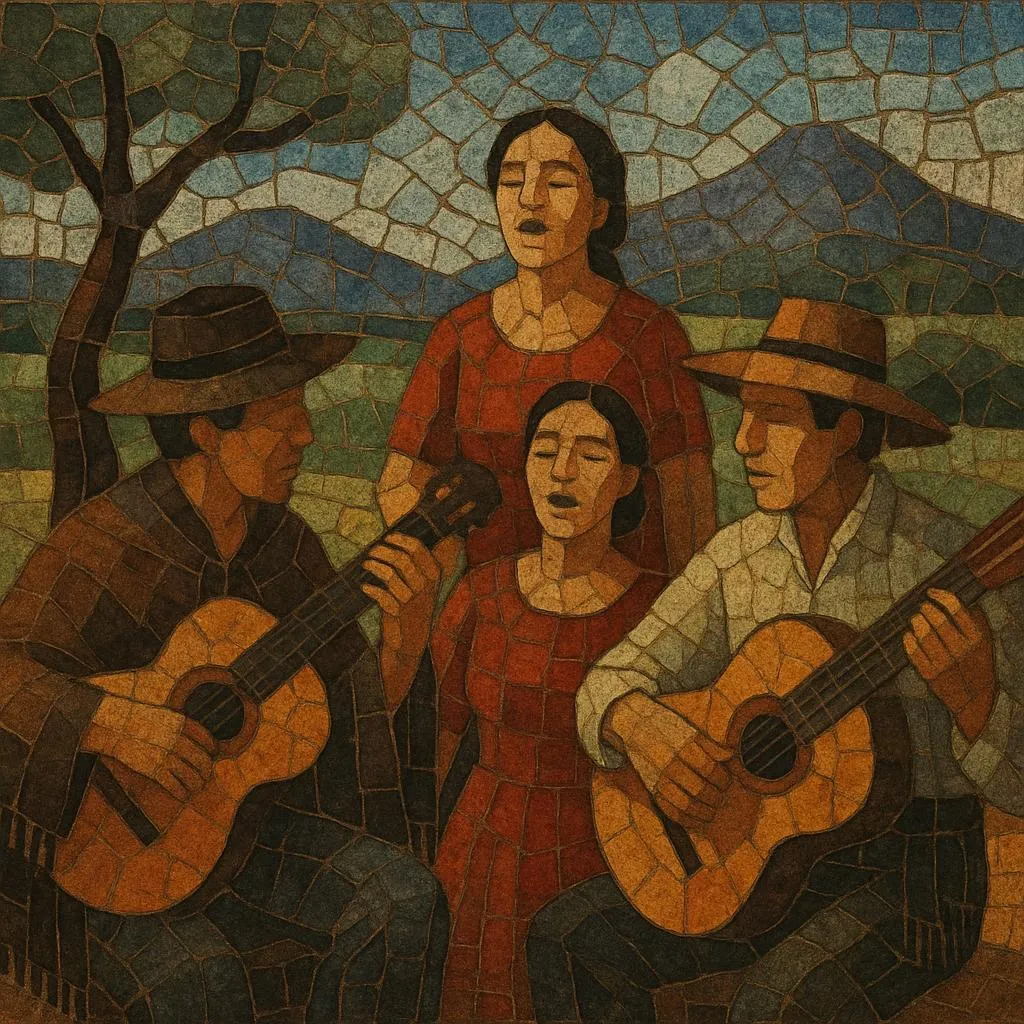
Core song forms include the tonada cuyana (lyrical, often intimate and guitar-led), the cueca cuyana (a lively couple’s dance in 6/8–3/4 hemiola), and local variants of the gato. The texture typically revolves around interlocking guitars and the deep, resonant guitarrón cuyano, with close vocal harmonies sung in duos or trios. Lyrics praise the sierras, algarrobo trees, springs, and neighborhood life, and often carry a nostalgic, romantic tone.
Stylistically, música puntana is marked by rasgueo-driven strumming patterns (rasguido cuyano), bass “bordoneo,” and graceful, melodically rich vocal lines. While firmly traditional, the scene also features contemporary ensembles that update arrangements while respecting the region’s poetic and musical codes.
History
Música puntana arises from the rural and small‑town traditions of San Luis, within Argentina’s Cuyo cultural region. Its roots lie in 19th–early 20th‑century criollo song and dance practices transmitted in family gatherings, peñas, and local fiestas. As in the rest of Cuyo, voice-and-guitar formats crystallized around the tonada and cueca, with the distinctive guitarrón cuyano adding depth and rhythmic propulsion.
During the 1950s–60s Argentine folk boom, San Luis’ repertoire and performers became more widely documented and staged. Radio, touring peñas, and provincial festivals helped fix an identifiable puntana songbook and style. The rise of regional festivals—especially those connected to Villa Mercedes and the famous “Calle Angosta”—cemented local pride and provided a platform for ensembles to codify the puntano sound alongside broader Cuyana currents.
Late 20th and early 21st centuries saw renewed interest through provincial cultural programs, university ensembles, and contemporary groups that refreshed arrangements while retaining hallmark elements: guitarrón‑anchored textures, close harmonies, lyrical evocations of San Luis’ geography, and danceable cuecas and gatos. Today, música puntana thrives in festivals, recordings, and educational initiatives that frame it as both living heritage and an adaptable, community‑rooted art.