Your digging level
Description
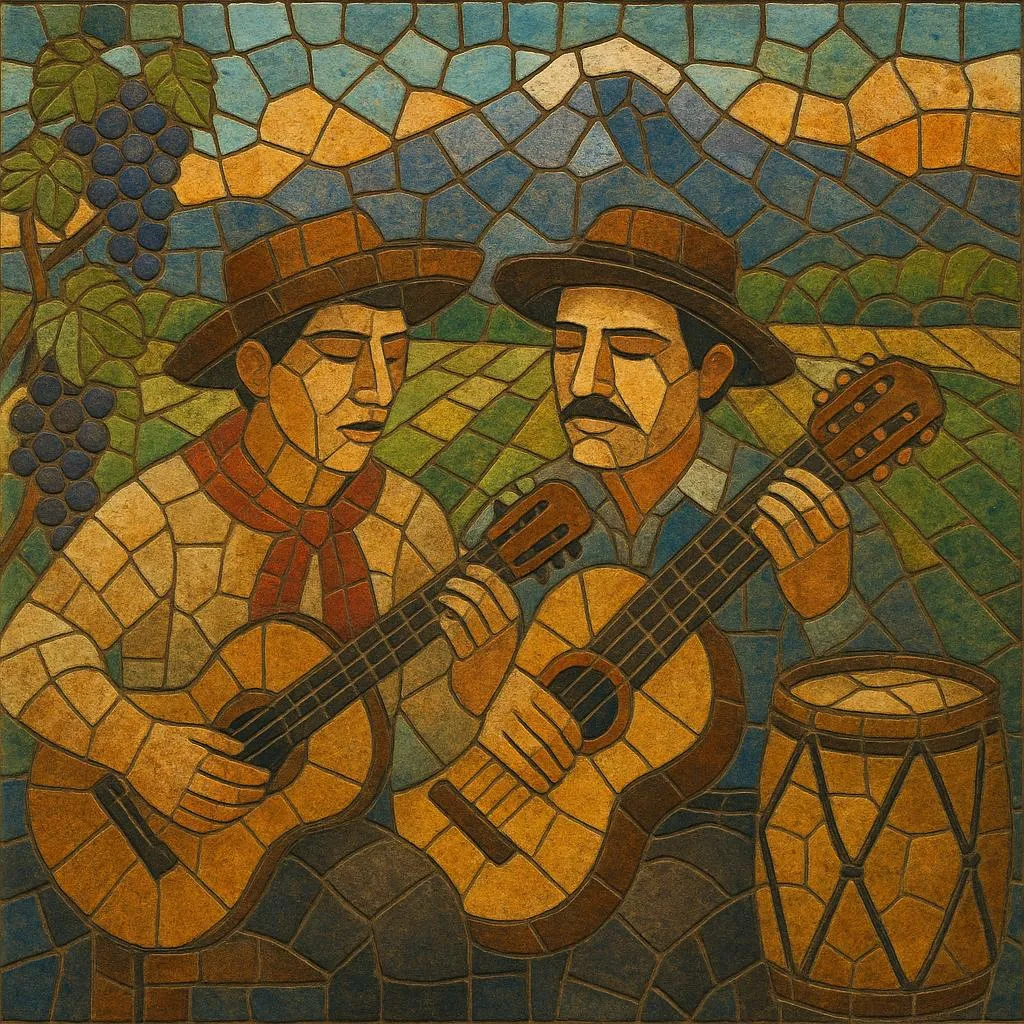
Folklore cuyano is the traditional folk music of Argentina’s Cuyo region (primarily the provinces of Mendoza, San Juan, and San Luis). It is characterized by intimate guitar ensembles, close two‑part singing, and poetic lyrics that evoke vineyards, mountain landscapes, rural romance, and local customs.
Core song‑dance forms include the cueca cuyana (a local variant of the cueca), the tonada cuyana (a lyrical strophic song), and the gato cuyano (a lively couple dance). Performances typically feature one or two criolla (Spanish) guitars plus the deep‑voiced regional guitarrón cuyano; handclaps or the bombo legüero may appear, though percussion is used sparingly. A hallmark is the “a dúo” vocal style in parallel thirds or sixths, where the second voice often carries a strong countermelody.
Rhythmically, folklore cuyano plays with hemiola between 6/8 and 3/4, creating a graceful sway suited both to dance (cueca, gato) and to more reflective, serenade‑like pieces (tonada). Harmonies lean on simple tonal movement (I–IV–V) with expressive minor keys and modal color, supporting poetic coplas that balance tenderness, nostalgia, and festive spirit.
History
Folklore cuyano emerged as a distinct regional expression in Argentina’s pre‑Andean Cuyo, where Spanish colonial song (tonada), payada (improvised gaucho verse), and the binational cueca tradition circulating between Chile and western Argentina converged. By the early 1900s, local practices—especially the intimate two‑voice singing and the adoption of the guitarrón cuyano—crystallized into a recognizable Cuyan style.
Radio, touring troupes, and the recording industry helped standardize and popularize Cuyan repertoire. Figures like Hilario Cuadros (with Los Trovadores de Cuyo), Antonio Tormo, and composers such as Félix Dardo Palorma and Tito Francia established canonical tonadas, cuecas, and gatos, defining the region’s poetic imagery (mountains, vineyards, zondas) and its characteristic duet harmony. The guitar ensemble sound—with bordoneo (bass‑line picking) and rasgueo (strumming)—became emblematic.
Poets and songwriters from Mendoza and San Juan—most notably Armando Tejada Gómez and Jorge Viñas—brought a literary and socially conscious dimension to the tonada cuyana, aligning aspects of the style with the wider nueva canción movement. While the core dance forms remained vital, a parallel current of concert and song‑poetry formats expanded the genre’s expressive reach.
Local peñas (folk venues), festivals, and municipal cultural programs sustained the tradition through late‑20th‑century shifts. From the 2000s, artists such as the duo Orozco‑Barrientos renewed folklore cuyano by blending it with rock and contemporary songwriting, inspiring younger acts in the Mendoza rock scene and informing broader Argentine indie‑folk aesthetics. Today, folklore cuyano remains a living repertoire taught in conservatories, celebrated at harvest festivals, and reimagined by acoustic and crossover ensembles.