Your digging level

For this genre
0/8
🏆
Sign in, then listen to this genre to level up

Description

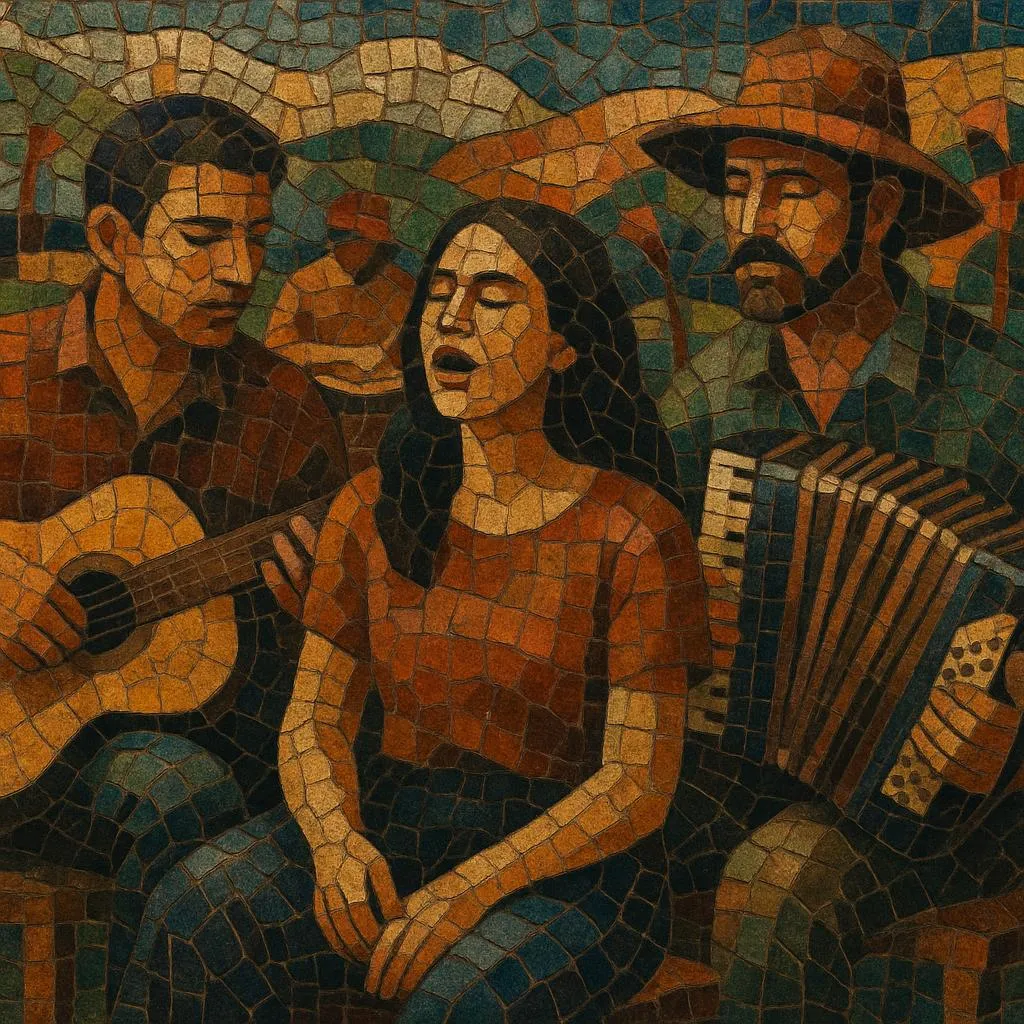
Musica ponta-grossense is a locality-driven scene tag for artists linked to Ponta Grossa, a city in the Campos Gerais region of Paraná, Brazil. Rather than a single codified style, it captures a cluster of bands, singer‑songwriters, and producers whose sound reflects Southern Brazilian influences and the city’s university‑centric cultural life.

Typical releases blend Brazilian indie/alternative rock and MPB songwriting with elements heard widely in Paraná and neighboring states: hints of sertanejo (both raiz and universitário), xote/vaneira dance feels, and occasional use of viola caipira, accordion, or folk percussion. Lyrics are predominantly in Portuguese and often reference everyday life, student culture, and regional imagery.

Production ranges from DIY, rehearsal‑room grit to mid‑fi studio records; guitar‑centric textures, warm bass, straightforward backbeats, and melodic hooks are common. The tag functions as a geographic and community marker in streaming ecosystems, connecting local acts to Brazil’s broader indie and pop‑rock map.


Sources: Spotify, Wikipedia, Discogs, RYM, MB, user feedback and other online sources

History

Overview

Musica ponta-grossense denotes the contemporary popular music ecosystem tied to Ponta Grossa (Paraná, Brazil). It operates as a city‑scene descriptor on streaming platforms, grouping artists who perform, record, and circulate from this cultural hub.

Local Roots (20th century)

Ponta Grossa’s musical life absorbed currents typical of Southern Brazil: dance‑band repertoires with polka/schottische roots from European immigration, rural song traditions (viola caipira, modas), and big‑tent popular genres broadcast by regional radio. University and municipal ensembles, church choirs, and baile circuits helped sustain a steady flow of performers and audiences.

1990s–2000s: Venues and University Circuit

With the growth of the local university scene and bar circuits, more original bands emerged alongside cover acts. Singer‑songwriters and rock groups began folding MPB melody and regional dance feels (xote, vaneira) into indie and pop‑rock frameworks. Affordable home recording and regional festivals helped seed a self‑reliant, DIY ethos.

2010s: Streaming Era and Scene Labeling

As Brazilian indie diversified nationwide, streaming platforms and data‑driven taxonomies started labeling tightly localized scenes. “Musica ponta-grossense” crystallized as a tag for artists associated with Ponta Grossa—sonically adjacent to Curitiba/Paraná indie, yet marked by Campos Gerais references, Portuguese lyrics, and a pragmatic, venue‑driven approach to arrangement and production.

2020s: Community and Cross‑Pollination

Local artists collaborate across styles (indie rock, MPB, alternative pop, light sertanejo and gaúcho‑adjacent dance feels). The scene’s identity remains plural and community‑based, defined by shared geography, university life, and a circuit of festivals, bars, and cultural centers rather than by strict musical rules.

How to make a track in this genre

Core Groove and Tempo
•   Favor straightforward backbeats in 4/4, 85–140 BPM. For a Southern Brazilian tint, try xote/vaneira‑inspired kick patterns (alternating strong beats with light syncopation) or a relaxed pop‑rock shuffle. •   Keep drum parts song‑first: kick on 1 & 3 (or 1 & “and” of 2), snare on 2 & 4, and ride/hi‑hat driving eighths. Add subtle off‑beat percussion to nod to baile/dance traditions.
Harmony and Melody
•   Build around MPB and indie‑rock progressions: I–V–vi–IV, ii–V–I, or modal color (mixolydian for sunny guitar hooks). Borrow bVI or IVmaj7 for a warm, Brazilian hue. •   Melodies should be singable and hook‑friendly. Explore parallel thirds/sixths in choruses, with occasional call‑and‑response backing vocals.
Instrumentation and Texture
•   Guitars lead: clean or lightly overdriven rhythm plus a melodic lead line. Add a capo‑voicing acoustic part for warmth. •   Include regional colors sparingly: viola caipira arpeggios, accordion pads, or nylon‑string guitar to reference countryside roots. •   Bass stays warm and melodic, locking with kick; keyboards (organ/piano) can fill midrange without crowding guitars.
Lyrics and Themes
•   Portuguese lyrics grounded in everyday life: student culture, winter cold of the highlands, roads and landscapes, small triumphs and saudade. •   Keep verses observational and concrete; lift choruses with memorable, inclusive phrases that work in sing‑alongs.
Arrangement and Production
•   Verse–pre–chorus–chorus forms with a dynamic lift; consider a short bridge that introduces a regional rhythmic twist (xote accent, hand‑percussion break). •   Production can be mid‑fi/DIY: tight drums, present vocals, and guitars that breathe. Double‑track choruses; add subtle room reverb for live‑club feel. •   Master for streaming without crushing transients; let guitars and vocals remain clear at moderate LUFS.
Performance Practice
•   Prioritize audience participation: clappable rhythms, chantable refrains, and call‑and‑response passages. •   Live sets benefit from alternating danceable numbers with intimate ballads—mirroring the scene’s mix of bar energy and songwriter intimacy.

Main artists

Top tracks

Locked
Share your favorite track to unlock other users’ top tracks

Upcoming concerts

in this genre
Influenced by
Has influenced
No genres found

Download our mobile app

Get the Melodigging app and start digging for new genres on the go
© 2026 Melodigging
Melodding was created as a tribute to Every Noise at Once, which inspired us to help curious minds keep digging into music's ever-evolving genres.
Buy me a coffee for Melodigging