Your digging level
Description
Música pitiusa is the contemporary folk and popular music of the Pityusic Islands (Eivissa/Ibiza and Formentera) in the Balearic archipelago. It blends traditional island repertoires—dance tunes for ball pagès, work songs, and improvised gloses in the local Eivissenc/Formentera Catalan dialect—with modern singer‑songwriter, folk‑rock, and pop instrumentation.
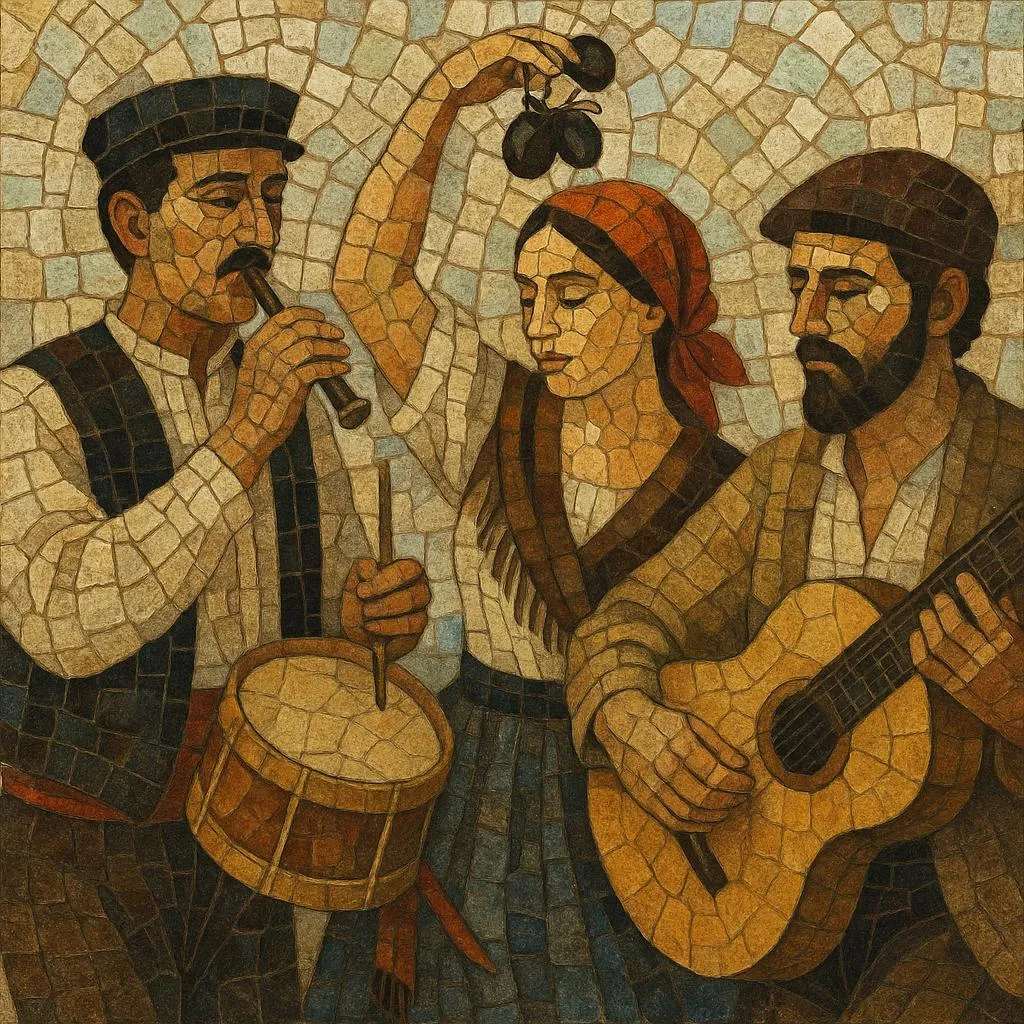
Characteristic timbres come from the island’s heritage instruments: the flabiol (a cane fife) with tamborí (small drum), large wooden castanyoles (castanets), and the metallic espasí (a sword‑like idiophone) that marks time in dances. In modern arrangements these colors sit alongside acoustic guitars, bass, hand percussion, and occasionally rock rhythm sections. Lyrical themes often celebrate island life—seafaring, seasonal feasts, rural courtship and satire—preserving local speech, toponyms, and prosody while opening to contemporary song forms.
History
The Pityusic Islands long maintained distinctive oral traditions: ball pagès dance music, call‑and‑response work songs, and gloses (improvised quatrains) performed in the local Catalan dialect. These practices, tied to community festivities and rural life, created a strong melodic and rhythmic identity centered on flabiol i tamborí, castanyoles, and the ringing espasí.
In the broader Catalan‑speaking world a folk revival paralleled Europe’s “New Folk” movements. On Eivissa and Formentera, musicians began documenting and arranging the island repertory for the stage and for recordings. This period standardized ensemble formats, notated tunes that had lived primarily in oral tradition, and brought local dialect poetry into author‑composed songs.
As recording and festival circuits grew, Pityusic groups fused traditional dance rhythms and timbres with folk‑rock backlines, singer‑songwriter forms, and world‑music aesthetics. Studio production added drones, harmonies, and environmental textures while retaining the percussive castanet drive and the modal flavor of older tunes.
Música pitiusa now spans archival folk ensembles, creative re‑imaginings of dance sets, and pop/rock acts writing new material in Eivissenc/Formentera Catalan. It functions both as cultural preservation and as a living scene, heard at local festivals, contemporary venues, and on Balearic media, ensuring continuity of language, repertoire, and performance practice.