Your digging level
Description
Música otavaleña is the traditional and contemporary music of the Kichwa (Quechua) communities from Otavalo, in Ecuador’s northern highlands (Imbabura Province).
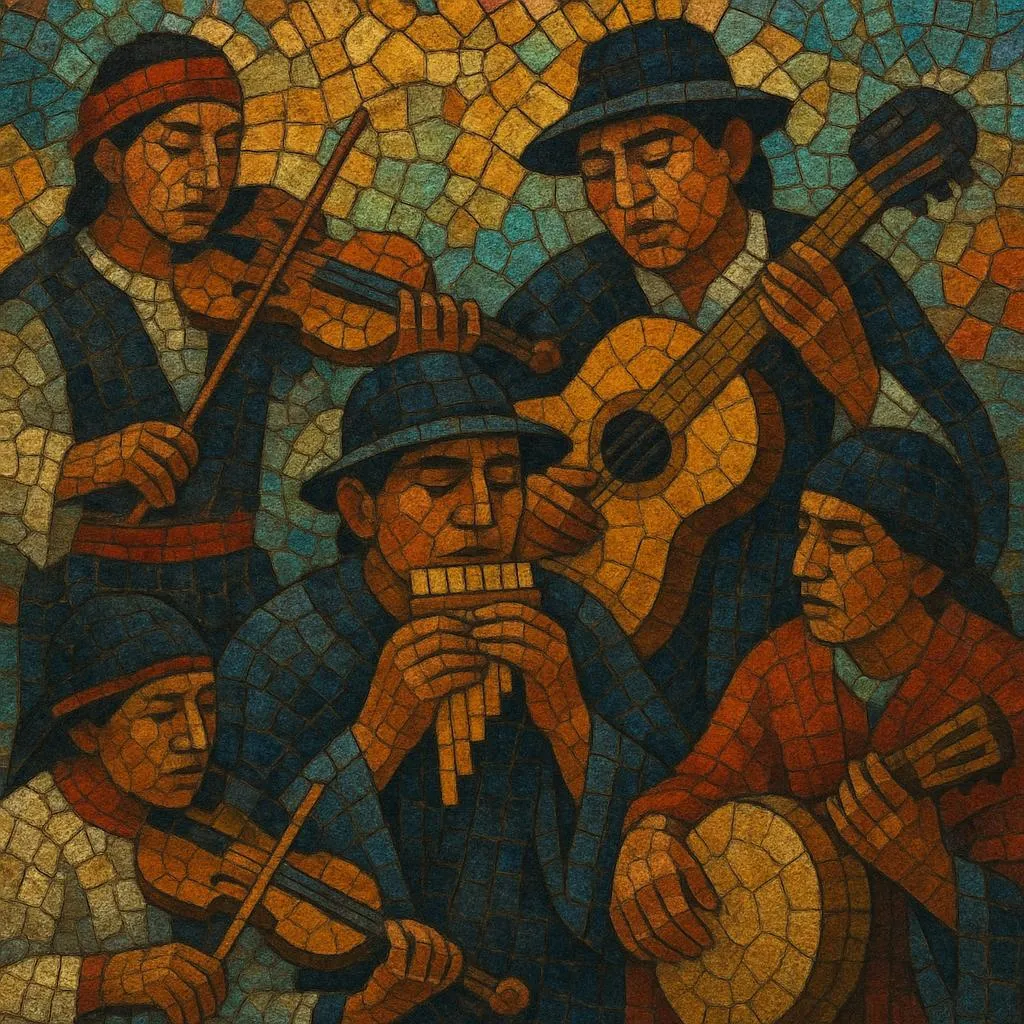
At its core are pentatonic flute melodies (especially the locally distinctive rondador panpipe), quena and siku/zampoña panpipes, charango and guitar arpeggios, violin leads, and bombo and caja hand‑drums driving dance rhythms such as sanjuanito, albazo, danzante, and processional tunes connected to community fiestas like Inti Raymi and Yamor. Vocals appear in Kichwa and Spanish, with antiphonal/call‑and‑response lines and communal choruses.
Since the mid‑20th century, Otavalo ensembles have fused these roots with worldbeat, new age ambience, and light pop harmonies, creating a style recognized internationally by its soaring panpipes, bright string strums, and celebratory, processional grooves.
History
Música otavaleña grows from the musical practices of Kichwa communities around Otavalo (notably Peguche and Kotama). Historically, flutes, panpipes, and small drums accompanied agricultural cycles, community work, and religious/seasonal festivals. Repertoires associated with sanjuanito, danzante, and other highland forms were played in processions and social dances, often in heterophonic textures led by flutes and supported by string drones and percussion.
As national radio and local recording scenes expanded, Otavalo musicians began to codify a recognizable ensemble sound for concerts and records. Groups organized around rondador/quena sections, charango and guitar, violin leads, and bombo/caja, presenting festival tunes and sanjuanitos on stage. This period set the template for what external audiences would later recognize as the “Otavalo” sound.
From the late 1970s and especially the 1980s onward, Otavalo ensembles toured Andean capitals and then Europe, North America, and Asia, performing in plazas, markets, and concert halls. International travel and cassette/CD markets encouraged smoother arrangements, layered panpipe choirs, and occasional synthesizers and reverb‑heavy production, aligning the sound with worldbeat and new age aesthetics while retaining community repertoire and dance rhythms.
Today, música otavaleña spans village processions and ritual contexts, community flute ensembles (e.g., Kotama’s tradition), folkloric stage groups, and outward‑facing bands that incorporate light pop, ambient pads, and crossover grooves. Lyrics emphasize local landscapes (waterfalls, mountains), identity, migration, and celebration, while instruments like the rondador remain core symbols of Otavalo musical identity.