Your digging level

For this genre
0/8
🏆
Sign in, then listen to this genre to level up

Description

Música nayarita is the umbrella term for the regional popular and traditional music made in the Mexican state of Nayarit. It blends brass-led banda de viento from the coastal towns and river valleys with guitar-driven ranchera and corrido song forms from the sierra, plus indigenous Wixárika (Huichol) and Cora melodic and rhythmic traits.

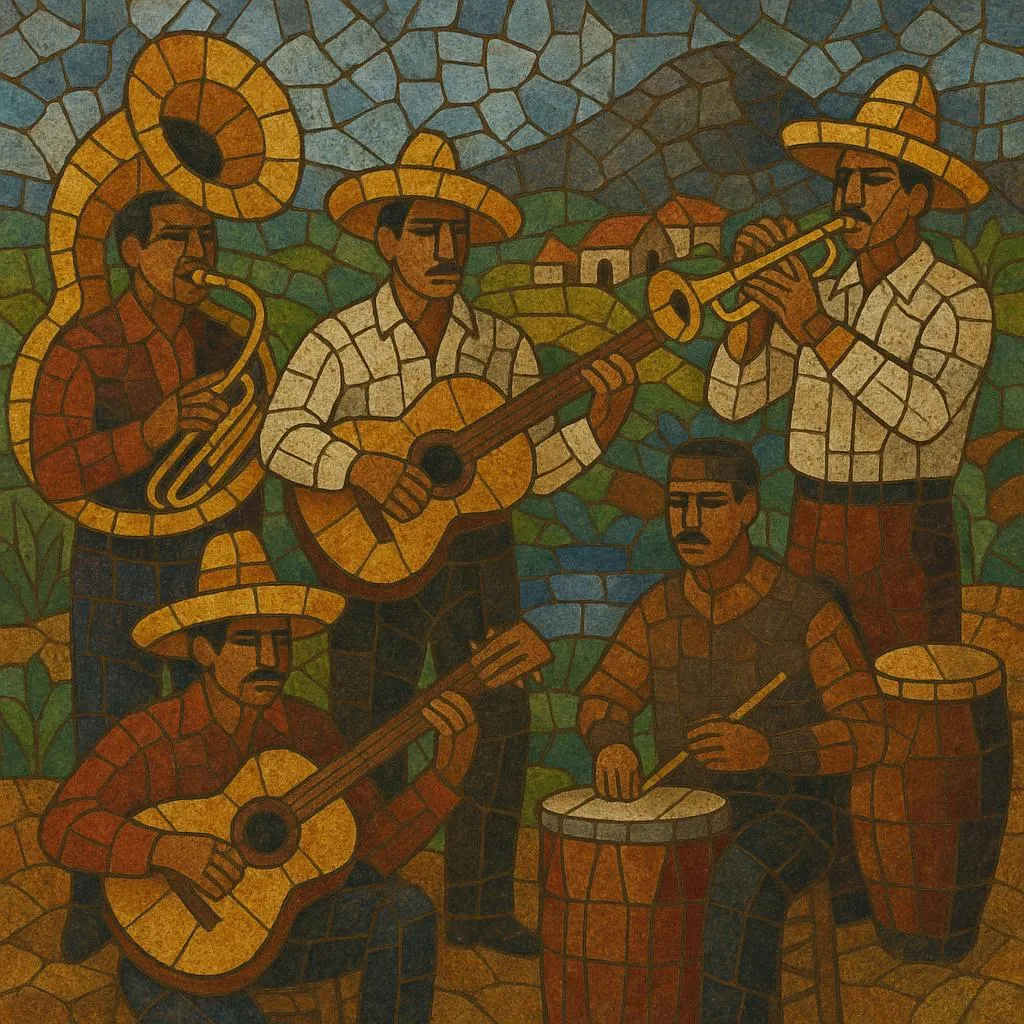
Core repertoires include lively polkas, waltzes, and cumbias for community dances; narrative corridos and romantic rancheras; and locally themed sones that praise towns, landscapes, fishing, farming, and migration. The most visible sound is banda-style instrumentation (clarinets, trumpets, trombones, tuba, tarola and bombo), but sierreño/serrieño formats with requinto or 12‑string guitar, bajo quinto and tololoche are also common. Lyrics are in Spanish with regional vocabulary, and performances are tied to patron-saint fiestas, ferias, jaripeos, and family celebrations.


Sources: Spotify, Wikipedia, Discogs, RYM, MB, user feedback and other online sources

History

Early roots (late 19th–mid 20th century)

The foundations of música nayarita lie in two intersecting currents: (1) brass and woodwind banda traditions that spread along the Pacific coast from neighboring Sinaloa and Jalisco, bringing European polka and waltz rhythms into local dance life; and (2) long-standing indigenous Wixárika and Cora singing, violin, and guitar practices in the Sierra del Nayar. By the early 20th century, town and municipal bands in coastal Nayarit were already accompanying civic ceremonies and fiestas.

Consolidation and local identity (1950s–1980s)

After the 1950s, Nayarit ensembles increasingly formalized the “banda de viento” lineup and repertoire—corridos, rancheras, danzones, polkas, and waltzes for baile—and recorded on small regional labels. Parallel rural sierreño/serrieño trios and quartets in the sierra adapted corrido and ranchera narratives to 12‑string requinto and tololoche, while indigenous ceremonial melodies filtered into popular tunes. Songs celebrating fishing ports, cane fields, and rivers helped define a distinctly Nayarit lyrical identity.

Regional Mexican era and media circulation (1990s–2010s)

With the national rise of Regional Mexicano, Nayarit bands circulated more widely at fairs and patron-saint circuits throughout the Pacific coast. Studio recordings added brighter brass arrangements, more syncopated cumbias, and expanded percussion. Local radio, baile halls, and diaspora communities in the U.S. strengthened demand for Nayarit-flavored banda and serrieño sets.

Contemporary scene (2010s–present)

Today música nayarita spans community bandas, professional touring acts, and sierreño groups. Repertoires mix classic corridos and rancheras with modern cumbia-pop grooves, norteño‑banda fusion, and polished brass voicings. While production values have modernized, performances remain embedded in social rituals—processions, ferias, and family events—where call-and-response coros, shout-outs to towns, and danceable 2/4 and 3/4 meters keep the local character vivid.

How to make a track in this genre

Instrumentation and ensemble
•   Banda de viento format: 2–3 clarinets, 2–3 trumpets, 2–3 trombones, alto horns, tuba/sousaphone, tarola (snare), bombo/tambora (bass drum), and cymbals. Optional tenor sax or bass clarinet doubles. •   Serrieño format: requinto or 12‑string guitar (melody/lead), bajo quinto or guitarra de golpe (harmony/comping), tololoche (upright bass), and light snare or cajón for pulse.
Rhythm and groove
•   Polka (2/4) with a steady “oom‑pah” low–high tuba pattern; tarola accents on offbeats or backbeats. •   Vals (3/4) for rancheras and lyrical sones; emphasize 1 with bombo, light 2–3 with tarola/brushes. •   Cumbia (4/4) with a syncopated bass (tuba) tumbao, tarola ghost notes, and bright cymbal lifts.
Harmony and melody
•   Functional diatonic harmony (I–V–I; I–IV–V; I–vi–IV–V). Common modulations to IV or relative minor for second verses or brass solos. •   Melodies are singable and trumpet/clarinet lead lines double or answer the vocalist; in serrieño, the requinto states intro hooks and interludes with slides and tremolo. •   Use parallel brass voicings in 3rds/6ths; trombones and altos pad inner lines; clarinets ornament cadences with mordents/trills.
Form and lyrics
•   Corrido: strophic verses (often quatrains), narrative focus on places, people, and events; include spoken dedications and town shout‑outs. •   Ranchera/vals: verse–verse–bridge–verse with a key lift for the final chorus; themes of love, family, and homesickness. •   Dance numbers (polka/cumbia): short intro riff, 2 verses + coro, instrumental brass break, coro out; keep intros under 8 bars to get dancers moving.
Arrangement tips
•   Balance tuba presence (clear root motion) with tarola clarity; leave space for call‑and‑response coros. •   In banda, feature trumpet/clarinet unisons for hooks; give trombones counter‑riffs in responses. •   In serrieño, lock tololoche two‑beats with requinto arpeggios; use hemiola‑style fills when moving between 3/4 and 6/8 son fragments. •   Record brass in section pairs to achieve the characteristic bright “stacked” sheen; add subtle plate reverb for a live baile feel.

Top tracks

Locked
Share your favorite track to unlock other users’ top tracks

Upcoming concerts

in this genre
Influenced by
Has influenced

Download our mobile app

Get the Melodigging app and start digging for new genres on the go
© 2026 Melodigging
Melodding was created as a tribute to Every Noise at Once, which inspired us to help curious minds keep digging into music's ever-evolving genres.
Buy me a coffee for Melodigging