Your digging level

For this genre
0/8
🏆
Sign in, then listen to this genre to level up

Description

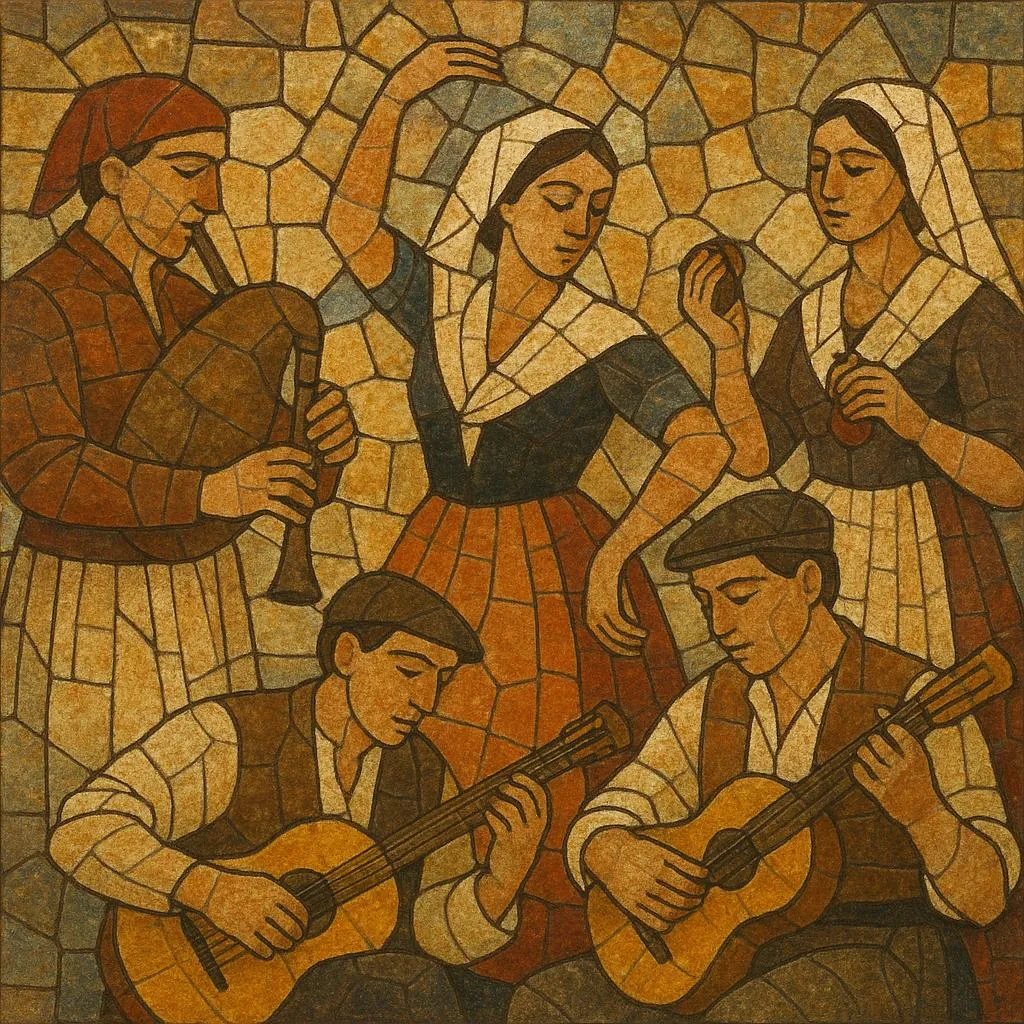
Música mallorquina refers to the traditional and contemporary music of Mallorca (Majorca), the largest island of Spain’s Balearic archipelago. At its core are rural dance-song suites known collectively as ball de bot (bolero, jota, fandango, copeo), improvised verse-singing (gloses) by glosadors, seasonal ritual repertoires, and distinctive timbres such as the xeremia (Mallorcan bagpipe), flabiol i tamborí (one-handed pipe with tabor), llaüt and guitarró, castanets, and the friction drum ximbomba.

The style blends Iberian dance meters (3/4, 6/8, and duple-time copeos), Mediterranean modal melody, and communal call-and-response. It ranges from sacred/seasonal chants (including the medieval Cant de la Sibil·la at Christmas) to festive village dances and satirical improvised poetry. Since the late 20th century, singer‑songwriters and bands have fused these idioms with folk revival, pop, rock, and rumba while maintaining the Mallorquí (Balearic Catalan) language and island imagery.


Sources: Spotify, Wikipedia, Discogs, RYM, MB, user feedback and other online sources

History

Origins and early formation

Mallorca’s musical life developed from medieval parish and court traditions into a rich village repertoire of dances and narrative song. By the 18th–19th centuries, the ball de bot suite crystallized locally (bolero mallorquí, jota, fandango, copeo), performed at town squares and festas with xeremia, flabiol i tamborí, llaüt/guitarró and castanets. Narrative romances and work songs circulated orally, while glosadors cultivated sharp, improvised, octosyllabic quatrains (gloses) for social banter and community rites.

Seasonal practices such as the Cant de la Sibil·la (a medieval chant still sung on Christmas Eve) and winter ximbomba gatherings (ximbombades) around Sant Antoni kept sacred and secular threads intertwined. Dance fraternities and local brotherhoods maintained distinctive choreographies and tune-types from village to village.

20th century pressures and revival

Urbanization and mass media reduced village transmission in the early–mid 20th century, and Catalan/Mallorquí public expression faced repression under Franco. From the late 1960s–1970s, a folk revival took root: collectors documented tunes, dance troupes re-staged ball de bot, and ensembles such as Música Nostra and Al‑Mayurqa brought island repertory to concert stages. Nova Cançó artists (notably Mallorcan singer Maria del Mar Bonet) reframed traditional melodies and texts within modern singer‑songwriting, strengthening linguistic and cultural identity across the Catalan-speaking world.

Contemporary scene and hybridization

Since the 1990s, a new generation has fused música mallorquina with pop, rock, rumba, and world‑folk textures while keeping Mallorquí lyrics and references to island landscapes and trades. Artists like Tomeu Penya, Antònia Font, Joan Miquel Oliver, Anegats, Xanguito, Biel Majoral, and glosadors such as Mateu Matas “Xurí” exemplify this continuum—from rigorous traditional practice to inventive hybrids. UNESCO’s 2010 recognition of the Cant de la Sibil·la amplified global awareness of Mallorca’s living musical heritage.

How to make a track in this genre

Core idioms and forms
•   Ball de bot suite: write/arrange a sequence of bolero (lyrical 3/4), fandango (swaying 3/4 with hemiola), jota (brisk 3/4 or 6/8), and copeo (lively duple). Keep tunes short, repeatable, and dance-led, with clear cadences for figure changes. •   Gloses (improvised verse): craft octosyllabic quatrains with tight rhyme (ABAB/ABBA), topical wit, and call‑and‑response delivery; rehearse antiphonal exchanges between two singers. •   Seasonal pieces: include ritual/sacred items (e.g., medieval chant contours for the Sibil·la) or winter ximbomba songs with earthy, communal refrains.
Melody, rhythm, and harmony
•   Melody: favor modal scales common to Iberian/Mediterranean folk (Dorian, Aeolian, Mixolydian). Use stepwise motion, small leaps, and cadential turns; ornament sparingly to match dance steps. •   Rhythm: juxtapose 3/4 and 6/8 (hemiola) in bolero/fandango; drive the jota with accented upbeats; switch to 2/4 for copeos. Maintain steady tempos appropriate for circle/paired dances. •   Harmony: keep harmonies simple—drone plus I–IV–V or i–VII–VI–V gestures; occasional Andalusian cadences can appear in minor tunes; double melodies in parallel thirds or sixths with strings.
Instrumentation and timbre
•   Lead/texture: xeremia (Mallorcan bagpipe) or flabiol i tamborí to cue dancers and outline melodies; add llaüt, guitarró, guitar, and bandurria for strummed accompaniment. •   Percussion: tamborí, palmes (handclaps), castanyoles (castanets), and the friction drum ximbomba for winter gatherings. Maintain a dry, present, outdoor‑capable sound.
Language, text, and arrangement
•   Lyrics in Mallorquí (Balearic Catalan) with themes of village life, trades (mariners, farmers), the sea, love, humor, and local saints’ days (Sant Antoni, Sant Joan). Use memorable refrains for communal singing. •   Arrange in strophic forms with instrumental ritornelli between verses. For modern fusions, layer folk motifs over rumba or pop backbeats, but preserve the dance phrasing and call‑and‑response ethos.
Performance practice
•   Let a xeremier or flabiol mark intros and figure changes; cue dancers with clear cadences. •   Encourage audience participation—handclaps, danced figures, and improvised gloses—so the performance retains its communal character.

Top tracks

Locked
Share your favorite track to unlock other users’ top tracks

Upcoming concerts

in this genre
Influenced by

Download our mobile app

Get the Melodigging app and start digging for new genres on the go
© 2026 Melodigging
Melodding was created as a tribute to Every Noise at Once, which inspired us to help curious minds keep digging into music's ever-evolving genres.
Buy me a coffee for Melodigging