Your digging level
Description
Música londrinense refers to the contemporary music made in and around Londrina, Paraná, Brazil. Rather than a single codified style, it is an umbrella scene tag that captures the city’s independent rock, MPB (Brazilian popular music), experimental electronic, hip‑hop, metal, jazz/classical ensembles linked to the local university, and community vocal groups.
The scene is shaped by Londrina’s position as a university town (UEL), a robust circuit of rehearsal spaces and small venues, and festivals that encourage cross‑genre collaboration. Typical outputs range from indie and post‑punk tinged rock to MPB/samba‑informed songwriting, electronic hybrids, chamber/jazz projects, and community choirs—usually sung in Portuguese and marked by a DIY ethos.

History
Londrina’s musical life long pre‑dated its indie moment through school bands, church choirs, and the Festival de Música de Londrina (founded in the early 1980s), which brought classical, jazz, and educational activities to the city. As Brazil’s “rock nacional” boom of the 1980s filtered into Paraná, local garage and college bands began to appear, weaving MPB songwriting with post‑punk, new wave, and hard rock.
By the early 2000s, the city’s independent circuit matured around small venues, student radio, cultural centers, and regional festivals (with Londrina acting as a hub on the south‑Brazil indie map). Affordable home recording and the internet helped bands produce EPs and organize multi‑genre bills—rock groups sharing nights with beatmakers, singer‑songwriters, and metal acts. University ensembles and local conservatories fed trained players into jazz and chamber projects, strengthening the city’s orchestral and choral profile alongside the indie circuit.
Streaming platforms enabled micro‑scenes—shoegaze/dreampop collectives, electronic producers, conscious rap crews, experimental guitar projects, and community choirs—to reach national audiences. Londrina’s artists frequently collaborate across styles (e.g., MPB writers with beatmakers or string players), reflecting a characteristically hybrid southern‑Brazil aesthetic. Today, música londrinense denotes a place‑based identity—plural, independent, and collaborative—rather than a single stylistic rulebook.
Because música londrinense is scene‑based, composition and performance vary by substyle. Still, several traits recur:
•Vocals & lyrics: Portuguese lyrics are common, alternating between introspective college‑town themes (identity, relationships, daily life) and socially aware narratives. Hooks are concise; choruses often use call‑and‑response or choir‑like layering learned from choral/orchestral traditions in the city.
•Harmony & melody: MPB and jazz harmony (extended chords, modal color) frequently meet rock and indie structures (verse–chorus, bridges with dynamic lifts). Acoustic guitars often carry MPB or folk progressions; electric guitars add post‑punk/shoegaze textures with chorus, delay, and reverb.
•Rhythm & groove: Rock backbeats (4/4) coexist with Brazilian pulses—samba and partido‑alto accents on the tamborim/shaker, baião‑like syncopations on bass drum, or viola‑caipira arpeggios. Electronic acts may blend house/hip‑hop grids with hand percussion for hybrid grooves.
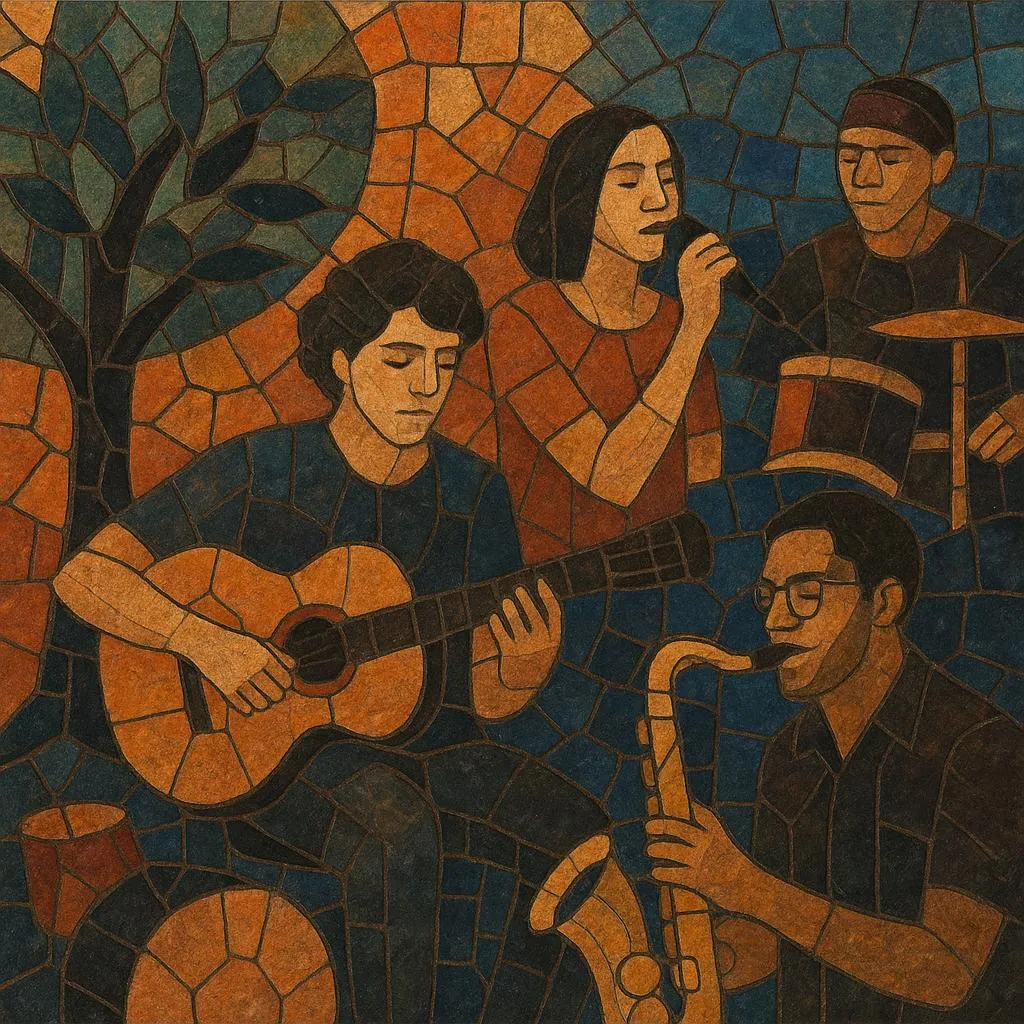
•Instrumentation: Typical indie setups (vocal, electric guitar, bass, drums, keys) are expanded by viola caipira, nylon‑string guitar for MPB, small percussion (pandeiro, ganzá), string quartets from local ensembles, and brass/woodwinds when collaborating with university players.
•Production: DIY recording is common—tight rhythm section with clean vocals up front; guitars alternate between jangly, chorus‑washed textures and saturated shoegaze walls. Electronic acts favor warm synths, side‑chain compression on pads, and sampled percussion layered with live instruments.
-
•
Start with a rock/indie song form; write lyrics in Portuguese about urban life, study years, or regional imagery.
•Harmonize using MPB‑influenced chords (maj7, 9ths) or modal movement; add a contrasting bridge for emotional lift.
•Layer Brazilian percussion (pandeiro/shaker) over a steady backbeat; try a baião‑tinged bass pattern for motion.
•Arrange a textural guitar bed (clean chorus for verses; overdriven or reverb‑heavy for climaxes). Consider strings or choir pads from local collaborators.
•Mix with intelligible vocals, present bass, and dynamic guitar ambience; keep headroom for live translation to small venues and festivals.