Your digging level
Description
Música istmeña (Isthmian music) is the traditional rural dance‑song music of Panama’s isthmus, especially associated with the Azuero Peninsula. It blends Spanish Iberian song forms and dance steps with African diasporic rhythms and indigenous Central American elements, yielding a vibrant, participatory style used for fiestas, patronal celebrations, and life‑cycle events.
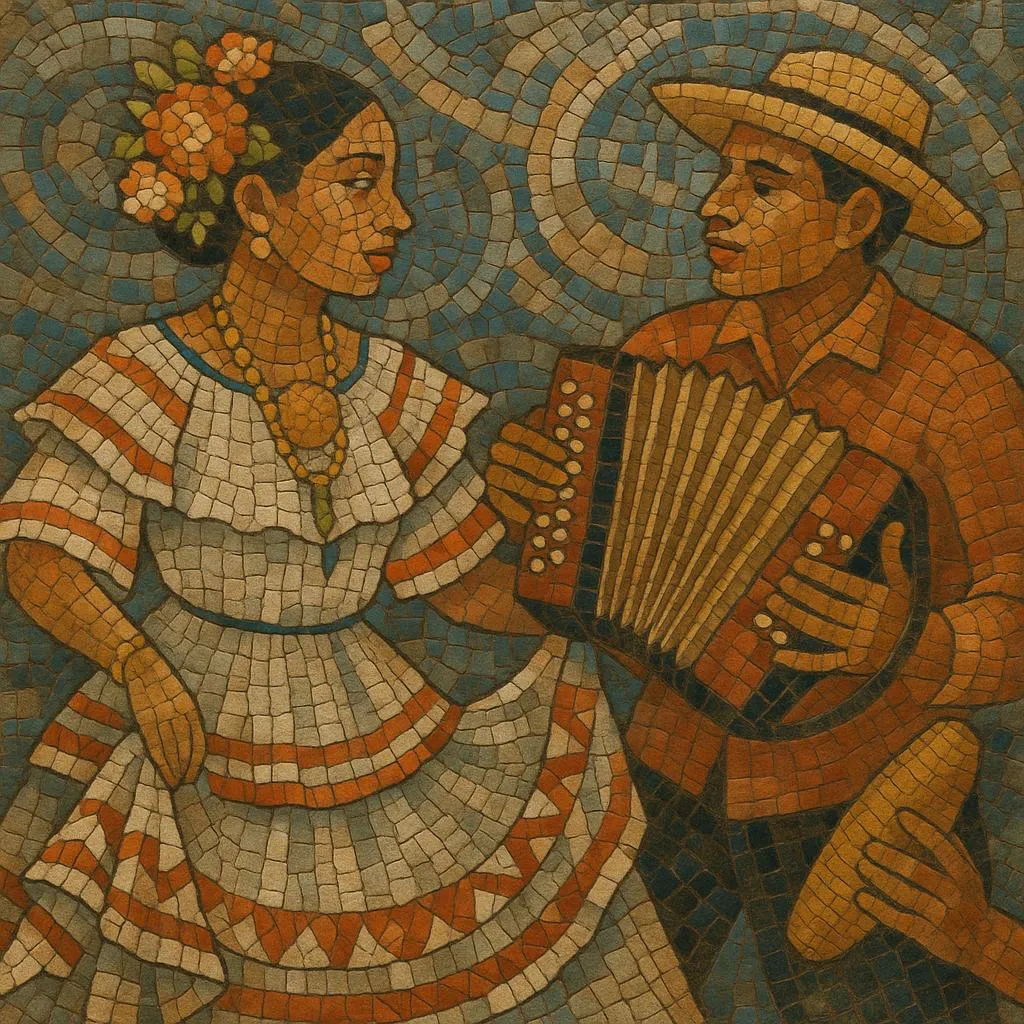
In practice, música istmeña encompasses repertories such as the tamborito, punto panameño, cumbia panameña, and mejorana songs. Ensembles range from voice‑and‑drums and handclaps to small strings (mejorana guitar, rabel fiddle) and, in the 20th century, the now‑iconic diatonic button accordion with caja drum and güiro (churuca). The music is highly danceable, built on cyclical grooves, responsorial singing, and décima poetry, and it functions as both social dance music and a vehicle for local identity.
History
Música istmeña emerges from Panama’s position as a cultural crossroads: Spanish settlers brought Iberian ballroom and folk dances (such as fandangos and contradanse‑derived forms), Catholic festal practices, and strophic song; enslaved and free African communities contributed polyrhythmic drumming, call‑and‑response, and circle‑dance aesthetics; and indigenous Ngäbe‑Buglé, Guna, and other groups contributed melodic contours, vocal timbres, and local instruments. By the 1800s, these currents coalesced in rural fiestas as genres like the tamborito (voice, handclaps, drums) and the punto panameño (a courtship dance with elegant stepwork and hemiola feel), alongside sung décimas accompanied by the mejorana guitar and rabel.
In the early 1900s, increasing mobility and radio helped standardize regional variants. The diatonic button accordion entered rural ensembles, accelerating a shift toward a modern dance‑band format (accordion, caja, güiro/churuca, congas/tambor). This amplified, more portable setup supported larger dances and patron‑saint festivals, and it linked related rhythms such as the Panamanian cumbia with older tamborito and punto repertoires.
From the 1950s onward, popular accordionists and bandleaders formalized a professional circuit and recordings. Repertoires expanded with fresh lyrical décimas, topical verses, and virtuosic accordion leads, while maintaining core rhythmic cells and dance structures. Radio and later television cemented música istmeña—often branded commercially as música típica—as a national emblem, especially identified with the Azuero Peninsula.
Today, música istmeña thrives in festivals, concursos, and dancehalls, coexisting with urban Panamanian genres. Bands modernize sound with bass, kit drums, and PA systems while keeping the hallmark grooves (tamborito pulse, punto hemiolas, cumbia swing). The tradition remains a primary space for community dancing, improvised poetry, and regional pride.