Your digging level
Description
Música costarricense refers to the constellation of folk, popular, and art-music practices from Costa Rica, unified by distinctive marimba-led dance traditions from the Pacific (Guanacaste), Afro–Caribbean calypso and reggae from Limón, and salon-derived genres (waltz, pasillo, bolero) that took root nationwide.
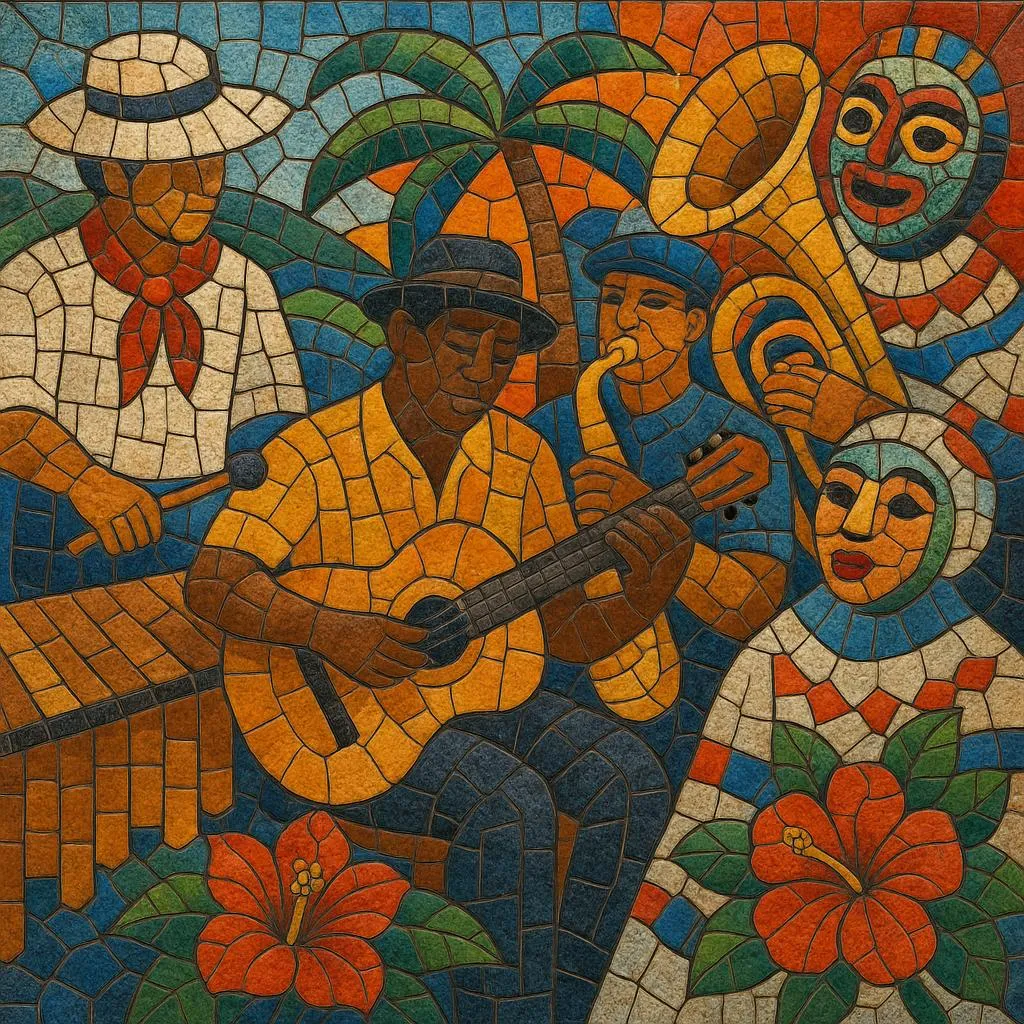
At its core are rural festivities powered by marimba ensembles and cimarrona (brass-and-percussion town bands), whose upbeat rhythms animate parades, mascaradas, and patron-saint celebrations. Along the Caribbean coast, English- and Creole-lyric calypso and later reggae and ska created a parallel, groove-forward identity. Since the late 20th century, rock en español, jazz fusions, singer‑songwriters, and indie scenes have woven these roots with global styles, producing a modern “tico” sound that is both cosmopolitan and unmistakably local.
History
Costa Rica’s musical bedrock predates colonization, with Chorotega, Bribri, Cabécar, and other Indigenous groups maintaining ritual song, flute, and percussion traditions. Spanish settlement introduced European dances (waltz, contradanza) and liturgical music, while the marimba—circulating through Mesoamerica—became a national emblem by the 19th century. Rural festivities paired marimba ensembles with guitar, quijongo (musical bow), and later cimarrona town bands, establishing the bright, syncopated feel of Guanacaste’s social dances.
In the late 19th and early 20th centuries, salon forms like waltz, pasillo, and bolero flourished in cities. Simultaneously, Afro–Caribbean migration to Limón brought calypso, mento, and later Jamaican popular styles. Local calypsonians (eventually epitomized by Walter Ferguson) sang in English and Limonese Creole about everyday life, humor, and social themes, shaping a coastal identity distinct from the Pacific marimba culture.
Radio, recording, and state cultural projects elevated marimba orquesta, municipal bands, and folkloric dance ensembles, canonizing pieces such as punto guanacasteco as national symbols. Cimarrona bands became fixtures of civic rituals. Parallel to this, bolero trios and dance orchestras connected Costa Rica to broader Latin circuits of son, danzón, and early salsa.
The 1970s–80s saw protest song and nueva canción currents, while rock en español and ska scenes took shape in San José. By the 1990s, groups such as Editus folded classical technique and jazz harmony into Central American folk material, collaborating internationally and recentering Costa Rica within transnational world-jazz networks.
A generation of artists has fused marimba ostinatos, Caribbean grooves, and global pop/rock/indie. Bands like Malpaís, Sonámbulo Psicotropical, and Percance bridged folk, tropical, ska, and alt‑rock. Pop and singer‑songwriters (e.g., Debi Nova) brought a polished, international sound while retaining local melodic and rhythmic sensibilities. Today, música costarricense is best understood as a living umbrella: a set of regional traditions and modern scenes—marimba fiestas, calypso/reggae from Limón, indie/rock/ska in the Central Valley—interacting dynamically at home and abroad.