Your digging level
Description
Musica calabrese is the traditional folk music of Calabria, the southernmost mainland region of Italy. It is built around vibrant dance repertoires (especially the tarantella calabrese/sonu a ballu) and vocal song forms that narrate rural life, courtship, seasonal cycles, faith, and migration.
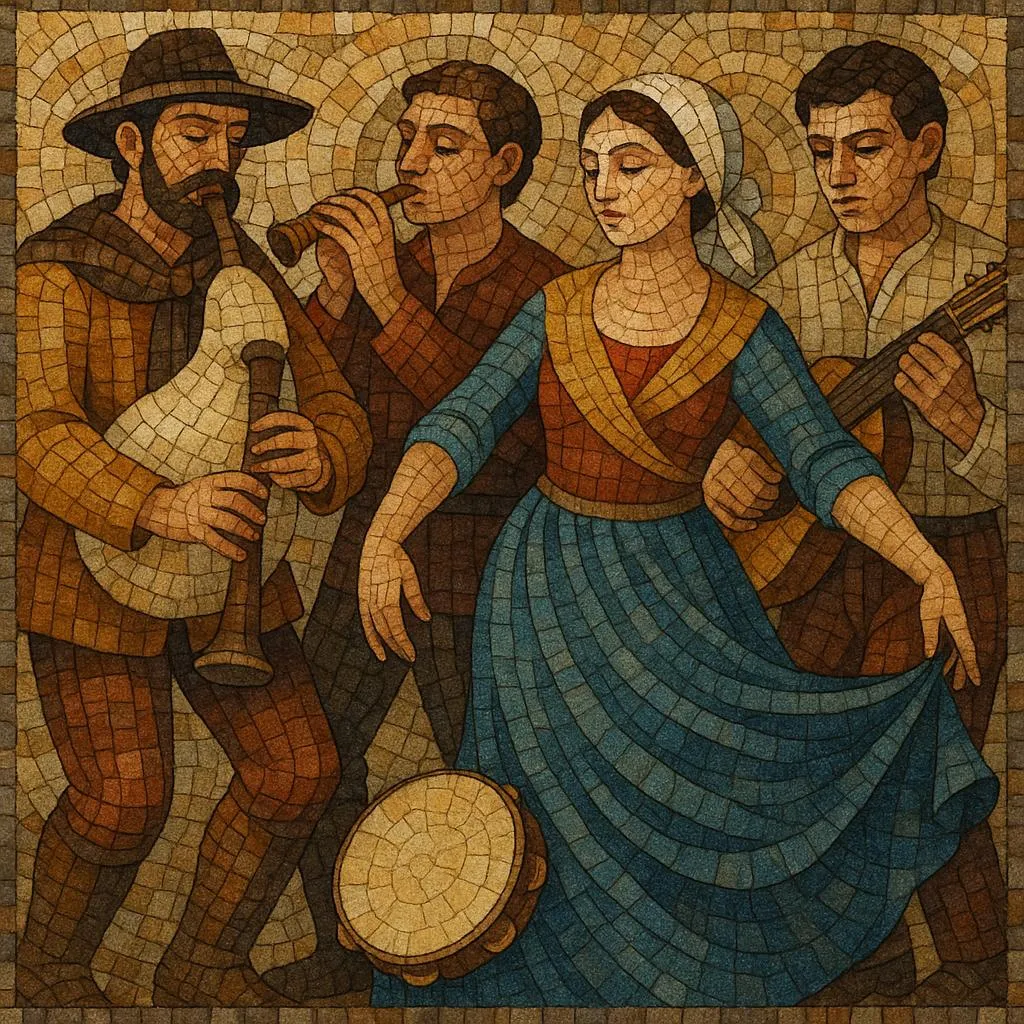
Signature timbres include the zampogna a paru (Calabrian bagpipe) and ciaramella (a small shawm), the chitarra battente (a percussive five-course folk guitar), the organetto (diatonic button accordion), the lira calabrese (a bowed lyre on the Ionian/Reggio side), and the tamburello frame drum. Rhythmically, pieces often pulse in fast compound meters (6/8 or 12/8) supporting circular or couple dances, while vocal styles range from solo strophic songs to call‑and‑response at village feasts.
Across its many subregional styles—from the Grecanic (Greek-speaking) communities of the Aspromonte to Arbëreshë (Albanian-Italian) villages—musica calabrese retains modal melodies, drone accompaniments, and ornamented, highly expressive singing.
History
Calabrian folk music took shape over centuries in a mountainous, largely pastoral society, where music accompanied work, feast days, and rites of passage. By the 19th century (and earlier), the region’s distinctive instrumentarium—zampogna a paru with ciaramella, chitarra battente, and tamburello—was firmly embedded in village life, particularly around Christmas and winter feasts when bagpipers played novenas.
Grecanic (Greek-speaking) enclaves preserved Byzantine-tinged chant inflections and the lira calabrese, while Arbëreshë communities maintained Albanian-derived dance and song forms. Songs such as strine (New Year’s good‑luck verses), love serenades, and narrative ballads circulated orally, often in Calabrian dialects.
In the 1950s, ethnomusicological fieldwork (notably Italian scholars and international collectors) recorded tarantelle, pastoral bagpipe repertoires, and work songs, helping to fix local variants on tape for the first time. The Italian folk revival of the 1970s–80s then catalyzed staged performance, ensemble arrangements, and new compositions rooted in Calabrian idioms, while emigration narratives fed a modern repertoire dealing with identity and return.
Since the 1990s, regional festivals (e.g., major tarantella gatherings in the Reggio Calabria area and Grecanic cultural events in Bovesia) have promoted the sonu a ballu as a living, participatory dance music. Today, traditional lineups coexist with fusion projects that blend Calabrian rhythms and dialect poetry with folk‑rock, jazz, and global sounds, keeping village aesthetics central while opening to contemporary audiences.