

Your digging level
Description
Music of East Timor (Timor-Leste) blends deep-rooted Austronesian traditions with layers of Portuguese and later Indonesian influences.
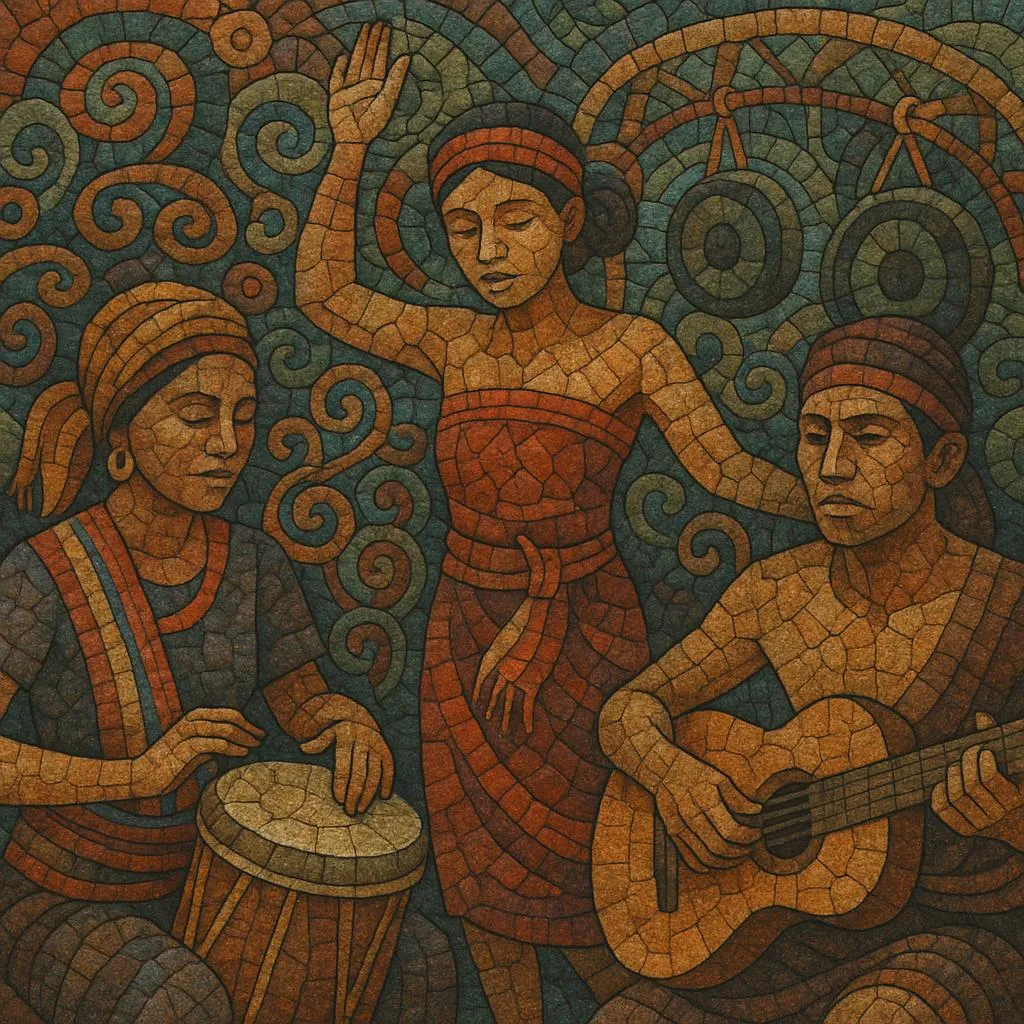
The most emblematic traditional form is the likurai dance-music, historically performed by women on small frame or barrel drums to welcome warriors returning from conflict; in modern practice it has become a courtship and festive dance. Rural repertoires also feature tebe/tebedai circle dances, call-and-response singing in Tetum and other local languages, and gong ensembles accompanying communal ceremonies.
Centuries of Portuguese rule introduced European instruments, hymnody, and fado/ballad aesthetics, while the late-20th-century Indonesian presence brought contact with gamelan and popular styles. Today, East Timorese music ranges from ceremonial drumming and choral song to guitar-led ballads and hybrid folk-pop, reflecting both resilience and cultural syncretism.
History
Indigenous musical life in Timor-Leste centers on communal dance, ritual, and storytelling. Women’s drumming and vocal antiphony anchored practices like likurai, while tebe/tebedai circle dances, bamboo idiophones, and gong-chime ensembles supported agricultural rites, marriages, and local feasts.
From the 1500s, Portugal’s presence brought Catholic liturgical music, Iberian/Atlantic instruments (guitars, mandolins), and fado-like balladry. Hymn-singing in Tetum and Portuguese emerged in churches and schools. Urban and mission settings fostered choral traditions, while local dance-music continued in villages, gradually incorporating strummed accompaniment and Western harmonic sensibilities.
During Indonesian rule, East Timorese encountered archipelagic styles—especially gamelan timbres, keroncong (itself Luso-Indo in origin), and later mass-media pop/dangdut aesthetics. In parallel, music became a vehicle for identity and resistance, with clandestine songs and choirs sustaining language and memory.
Post-2002 independence saw cultural revitalization: likurai and tebe are taught and showcased nationally and abroad; choirs and folk-pop songwriters record in Tetum and local languages; and diaspora/ally collaborations helped popularize Timorese sounds. Contemporary artists blend hand-drum grooves, gong textures, Catholic hymnody, and Portuguese guitar balladry with modern production, projecting a distinctly Timorese voice.

