

Your digging level

For this genre
0/8
🏆
Sign in, then listen to this genre to level up

Description

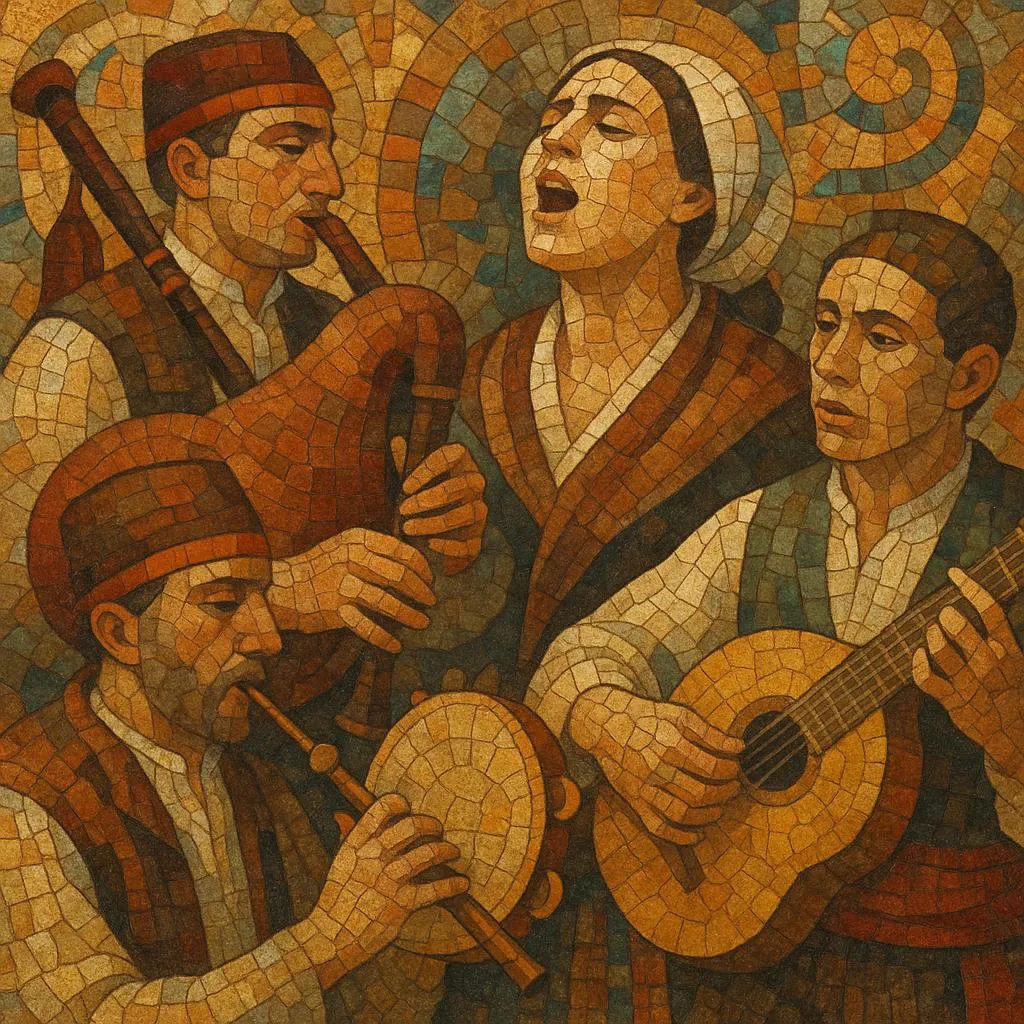
Music of Aragon is the traditional and popular music of Aragon, a historical region in northeastern Spain. It reflects centuries of cultural exchange along the Pyrenees, absorbing Roman, Celtic, Moorish, and French/Occitan elements while retaining distinctive local identities in song, dance, and instrumental practice.

Characteristic instruments include the gaita de boto (Aragonese bagpipe), dulzaina (shawm), chiflo (three‑hole pipe) with salterio (struck psaltery), tambor/tamboril (drums), pandero/tambourines and rattles, as well as the region’s emblematic plucked strings: the guitarro (guitarrico aragonés) and bandurria (often with laúd). Powerful, high tessitura vocal styles are common—especially in the jota aragonesa—paired with lively dances and communal refrains.


Sources: Spotify, Wikipedia, Discogs, RYM, MB, user feedback and other online sources

History

Origins (Middle Ages–Early Modern)

Aragon’s position between the Iberian interior, the Pyrenees, and Occitania fostered a musical language shaped by Roman civic traditions, Celtic-Pyrenean dance rhythms, and Andalusi/Moorish melodic practice. Medieval wind-and-drum duos (pipe & tabor), rustic bagpipes, and psaltery traditions anchored processional, festive, and liturgical paraliturgical song. The rise of the Crown of Aragon facilitated exchanges with Catalonia and southern France, reinforcing Occitan melodic and poetic footprints.

18th–19th Centuries: Codification of the Jota

By the 18th and 19th centuries, regional dances and songs coalesced into recognizable types, most famously the jota aragonesa. Its brisk triple meter, virtuosic singing, and castanet or stick-dance accompaniments became emblematic of Aragonese identity. Classical composers drew on these idioms: Glinka’s “Jota Aragonesa,” Tárrega’s “Gran Jota,” and zarzuela composers (e.g., Tomás Bretón in “La Dolores”) popularized Aragonese turns, hemiolas, and guitar/ bandurria textures across concert halls.

20th Century: Folk Revival and Cançión de Autor

Industrialization and urban migration prompted folklore documentation and local rondas (serenading groups) to preserve albadas (dawn songs), paloteaos (stick dances), and jota variants. From the 1960s–80s, Aragón also contributed to Spain’s singer‑songwriter wave (Labordeta, Carbonell), recontextualizing folk poetics for social commentary. Ensembles revived historic instruments (gaita de boto, salterio) and village repertories.

Contemporary Scene

Since the 1990s, artists have blended Aragonese roots with jazz, pop, and rock (e.g., Carmen París), while community groups and dance troupes keep traditional repertoires active at fiestas. Folk bands (La Ronda de Boltaña, La Orquestina del Fabirol, Biella Nuei) and broader Aragonese popular acts (Amaral, Héroes del Silencio) reflect the region’s evolving musical identity, from village squares to major stages.


How to make a track in this genre

Core Rhythm and Meter
•   Start with lively triple meters associated with the jota (3/4 or 6/8), often using hemiola (2+2+2 vs. 3+3) for lift. •   For processionals and stick dances (paloteao), use march‑like duple meters with strong downbeats and antiphonal accents.
Melody and Harmony
•   Use tuneful, diatonic melodies with occasional modal color (Dorian/Aeolian). Ornament key cadences with turns and appoggiaturas. •   Employ Iberian cadential gestures (e.g., Andalusian cadence iv–III–II–I in major/minor variants) sparingly to suggest Moorish-Andalusí color. •   Vocal lines should be ringing and projected, with leaps to the upper register for jota-style brilliance.
Instrumentation
•   Traditional wind/percussion: gaita de boto (bagpipe) for drones and countermelodies; dulzaina for bright, reedy leads; chiflo & salterio duo for drone + rhythmic ostinato; tambor/tamboril and pandero for pulse. •   Plucked strings: guitarro/guitarrico (bright strumming), bandurria and laúd (tremolo, arpeggios) underpin dance rhythms and reinforce cadences. •   Add castanets (palillos) or paloteao sticks as rhythmic ornaments in dance sections.
Forms and Structure
•   Alternate instrumental introductions with strophic coplas (verses) and refrains. •   For a jota suite: Intro (dulzaina/bagpipe) → Verse (solo voice) → Refrain (full group) → Dance break (paloteao/castanets) → Final chorus with accelerando.
Arrangement Tips
•   Double melody at the octave (dulzaina + bandurria) over a bagpipe drone for festival feel. •   Balance call‑and‑response between soloist and chorus (ronda style). •   Use dynamic swells before cadences; conclude with a tutti ritardando or climactic high note typical of jota performance.
Modern Fusion
•   Blend jazz/pop harmony (extended chords) with traditional rhythms; keep hand percussion and guitarro strums to retain identity. •   Sample field recordings (albadas, village bells) as atmospheric layers beneath contemporary arrangements.

Top tracks

Locked
Share your favorite track to unlock other users’ top tracks

Upcoming concerts

in this genre
Influenced by
Has influenced

Download our mobile app

Get the Melodigging app and start digging for new genres on the go
© 2026 Melodigging
Melodding was created as a tribute to Every Noise at Once, which inspired us to help curious minds keep digging into music's ever-evolving genres.
Buy me a coffee for Melodigging