

Your digging level
Description
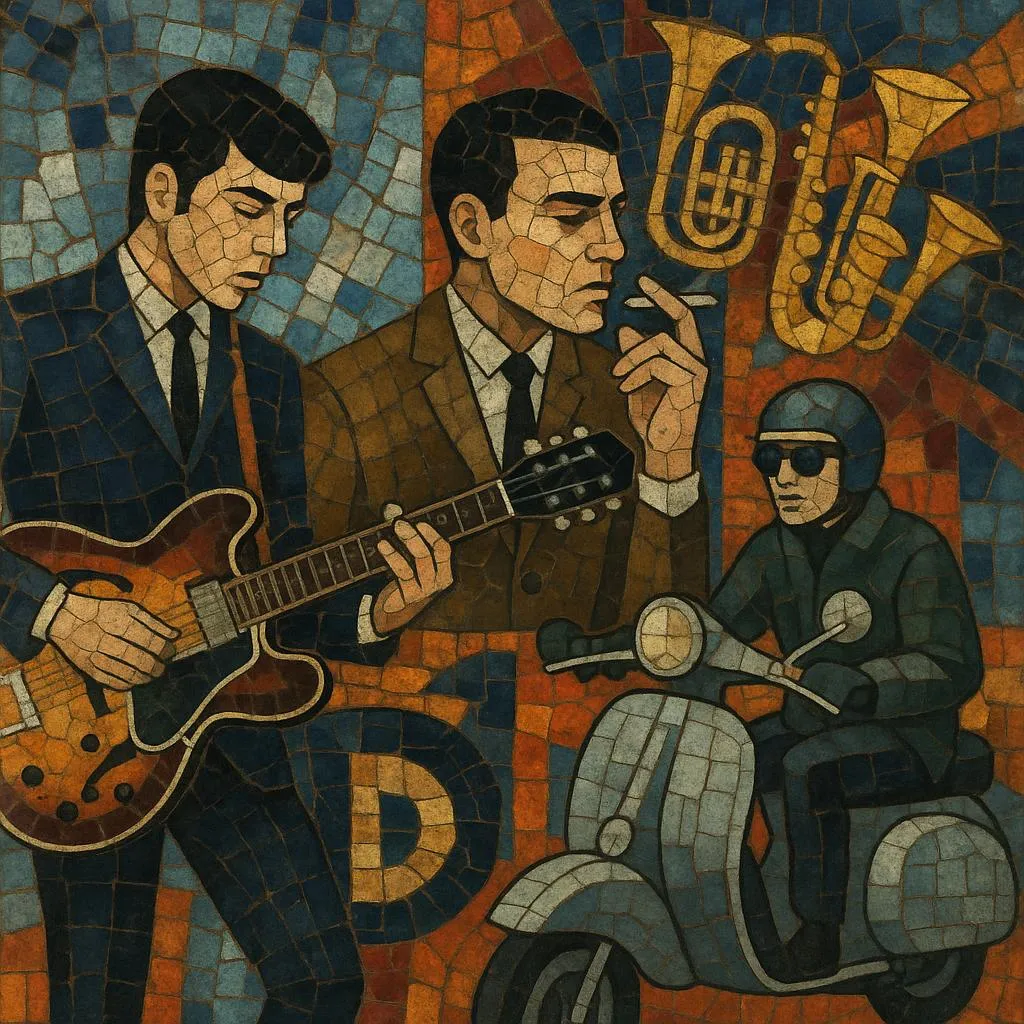
Modern mod is a contemporary guitar-pop and rhythm-and-blues–leaning style that updates the sharp hooks, brisk tempos, and street-smart attitude of 1960s British mod for the post-Britpop era.
Typically built on tight backbeats, chiming or slightly overdriven guitars, punchy basslines, and soulful embellishments (Hammond organ, brass), it balances working‑class realism and nightlife romance with concise, sing‑along choruses. While it borrows the clean lines and scooter‑culture aesthetics of classic mod, its songwriting and production are informed by 1990s indie/Britpop and 2000s UK indie rock, giving it a crisp, modern sheen.
Compared with the late‑1970s Mod Revival, modern mod is less punky and more melodic; compared with Britpop, it is leaner and more R&B‑rooted, prioritizing taut rhythms, jangly riffs, and compact, radio‑ready songs.


History
The original mod movement of the early–mid 1960s (The Who, Small Faces, The Kinks) fused American R&B, soul, and beat music with sharp fashion and a fast, dance‑centric club culture. After a lull, the late‑1970s Mod Revival (exemplified by The Jam and the scooter club scene) re‑energized the sound with punk urgency. In the 1990s, Britpop mainstreamed many mod sensibilities (anthemic choruses, Union Jack iconography, retro R&B flavors), laying a broad audience foundation for a new wave in the following decade.
In the 2000s, a cohort of UK bands consciously refreshed the mod template with contemporary indie production and songwriting economy. Acts kept the brisk tempos, Rickenbacker‑like chime, and soul‑inflected textures while writing hook‑heavy singles fit for modern radio and festival stages. DIY labels, weekender events, and a renewed scooter/fashion culture helped tie the sound to a living subculture rather than mere retro‑tribute.
The 2010s saw steady output from bands that straddle indie rock and classic mod aesthetics. Veteran figures such as Paul Weller remained cultural touchstones, while younger groups emphasized melodic craftsmanship, crisp arrangements, and danceable grooves. Today, modern mod thrives across club circuits, all‑dayers, and specialized festivals (e.g., Brighton weekender traditions), often intersecting with Northern soul nights and contemporary power‑pop scenes.
Modern mod is as much a sensibility as a sound: tailored silhouettes, scooters, record‑collector ethos, and a devotion to R&B roots. Lyrically it leans toward everyday urban life, mateship, romance, and local pride, delivered with plain‑spoken directness and aspirational warmth.



Best playlists


