Your digging level
Description
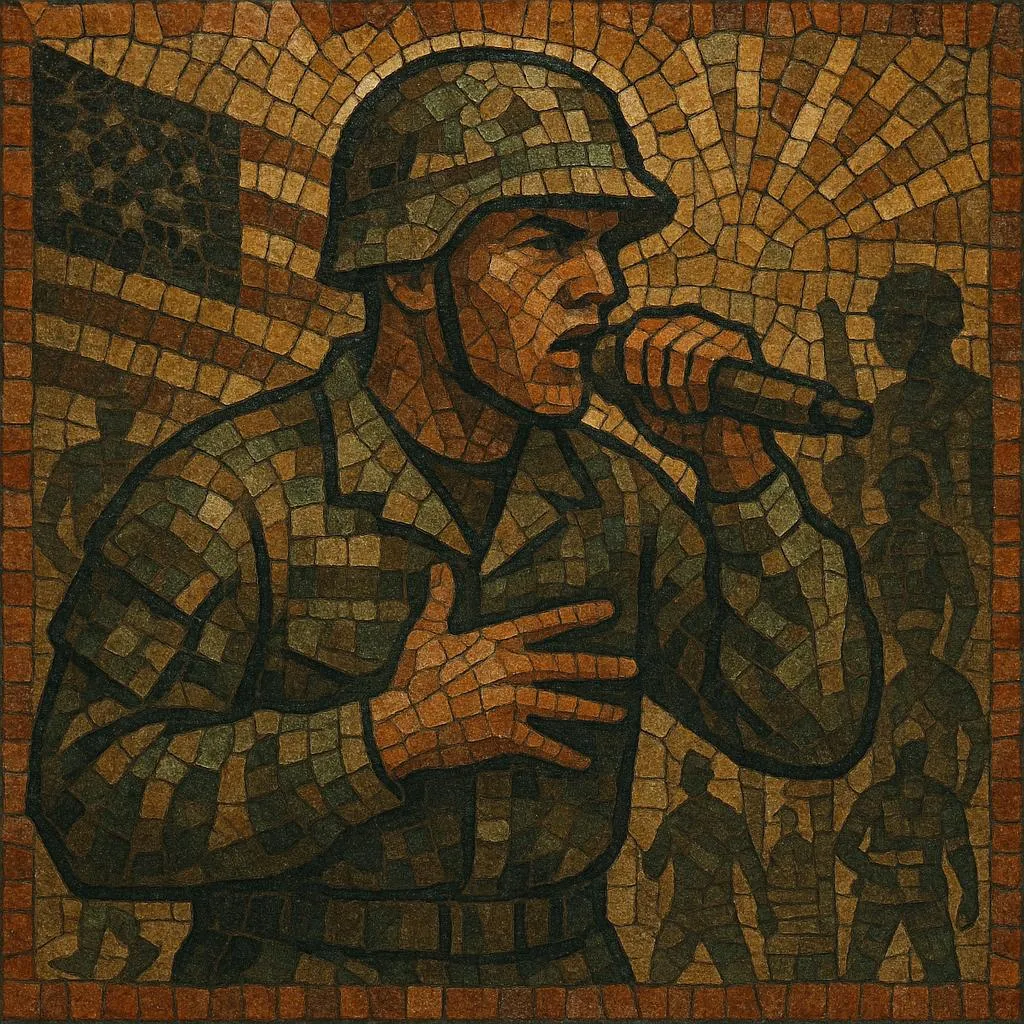
Military rap is a niche form of hip hop that centers military life, service identity, unit pride, and patriotic messaging.
It blends standard rap production with martial aesthetics such as cadence-like rhythms, marching references, drill/formation imagery, and lyrics shaped by deployment, training, sacrifice, and camaraderie.
The genre is often purpose-driven: it is made for motivation, recruitment-adjacent inspiration, tribute, and community building among service members and supporters.
Sonically it typically stays close to mainstream hip hop (trap, boom bap, or modern rap-pop), while the “military” character comes primarily from lyrical themes, vocal delivery, and occasional use of military chants, snare rolls, or brass-styled stabs.

History
Military-themed lyrics existed inside hip hop long before “military rap” was labeled as a distinct niche, especially through patriotism, protest, and soldier narratives.
The genre coalesced more clearly in the 2000s alongside the rise of online distribution (YouTube, MySpace-era sharing) and a post-9/11 cultural environment where military identity became a major public theme.
Artists and creators—some veterans, some civilians—began making rap explicitly framed around service culture, deployments, and motivational content for troops.
In the 2010s, social media and streaming accelerated the niche.
The style diversified sonically (from boom bap to trap), while the core remained lyrical: unit pride, memorial/tribute tracks, motivational anthems, and pro-military messaging.
Today, military rap functions more as a thematic umbrella than a strict sonic template.
It overlaps with patriotic music, motivational rap, and “military rap” adjacent content (marching cadence remixes, drill beats, and veteran storytelling) and is sustained by online subcultures rather than a single geographic scene.