Your digging level
Description
Messianic praise is a worship music style that emerges at the intersection of contemporary Christian praise and Jewish liturgical/musical traditions. It blends modern praise & worship songwriting with Hebrew and English lyrics, Scripture-centric texts, and melodies that frequently draw on Jewish prayer modes and Israeli folk idioms.
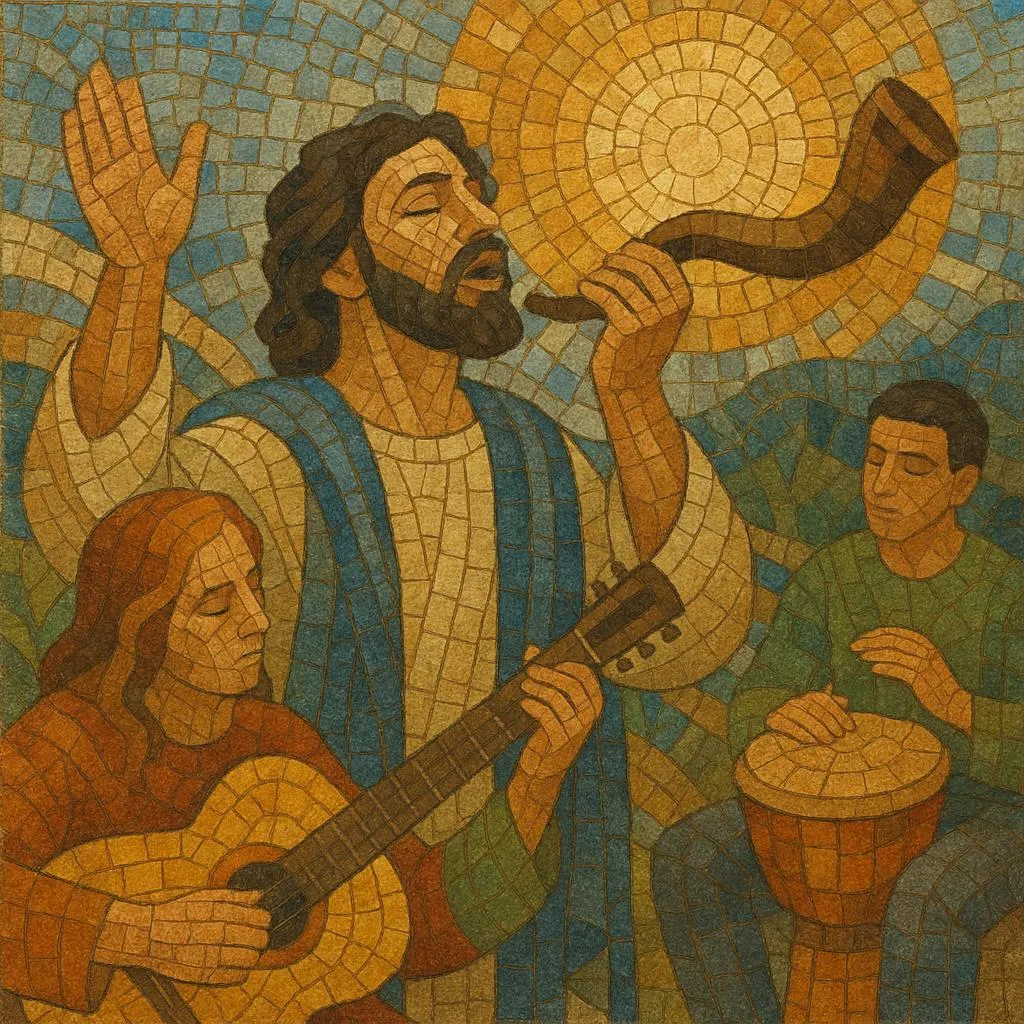
Musically, it spans acoustic ballads to full-band anthems, often incorporating Middle Eastern/Levantine scales (e.g., Ahava Rabbah/Phrygian dominant), Israeli folk-dance rhythms (horah/debulah), and occasional traditional instruments (violin, shofar, darbuka) alongside guitars, keys, bass, and drums. The congregational focus—call-and-response refrains, unison choruses, and memorable melodic hooks—makes it especially suited to Messianic Jewish services and interdenominational worship gatherings.
History
Messianic praise took shape alongside the late-1960s/1970s growth of the modern Messianic Jewish movement in the United States. Early worship repertoires adapted Jewish liturgical motifs and Hebrew Scripture into contemporary song forms influenced by the Jesus Movement and emerging Contemporary Christian Music. Congregational singing, Hebrew refrains, and folk-pop instrumentation defined the earliest recordings and assemblies.
Through the 1980s and 1990s, Messianic congregations formalized worship practices and released albums that standardized the style—Scripture-based lyrics in Hebrew and English, accessible choruses, and danceable Israeli rhythms. Production values rose, and tours, conferences, and cassette/CD distribution helped the genre reach broader Christian audiences, fostering cross-pollination with mainstream praise & worship while retaining distinct Jewish musical color.
As Messianic communities grew globally and in Israel, the sound absorbed more Middle Eastern instrumentation and modes. Artists based in Israel emphasized Hebrew-first repertoire, while North American and European communities favored bilingual formats. Online platforms and worship videos amplified the visibility of Israeli folk-dance worship (horah circles, line dances), further distinguishing the genre’s congregational aesthetics.
Modern Messianic praise spans intimate acoustic laments to large-scale anthems with orchestral or Middle Eastern textures. The core identity remains congregational and Scripture-forward, marked by Hebrew liturgical phrases, blessings, and psalmody. The genre now functions as a bridge—musically and theologically—between Jewish musical heritage and contemporary Christian worship culture.

Best playlists