Your digging level
Description
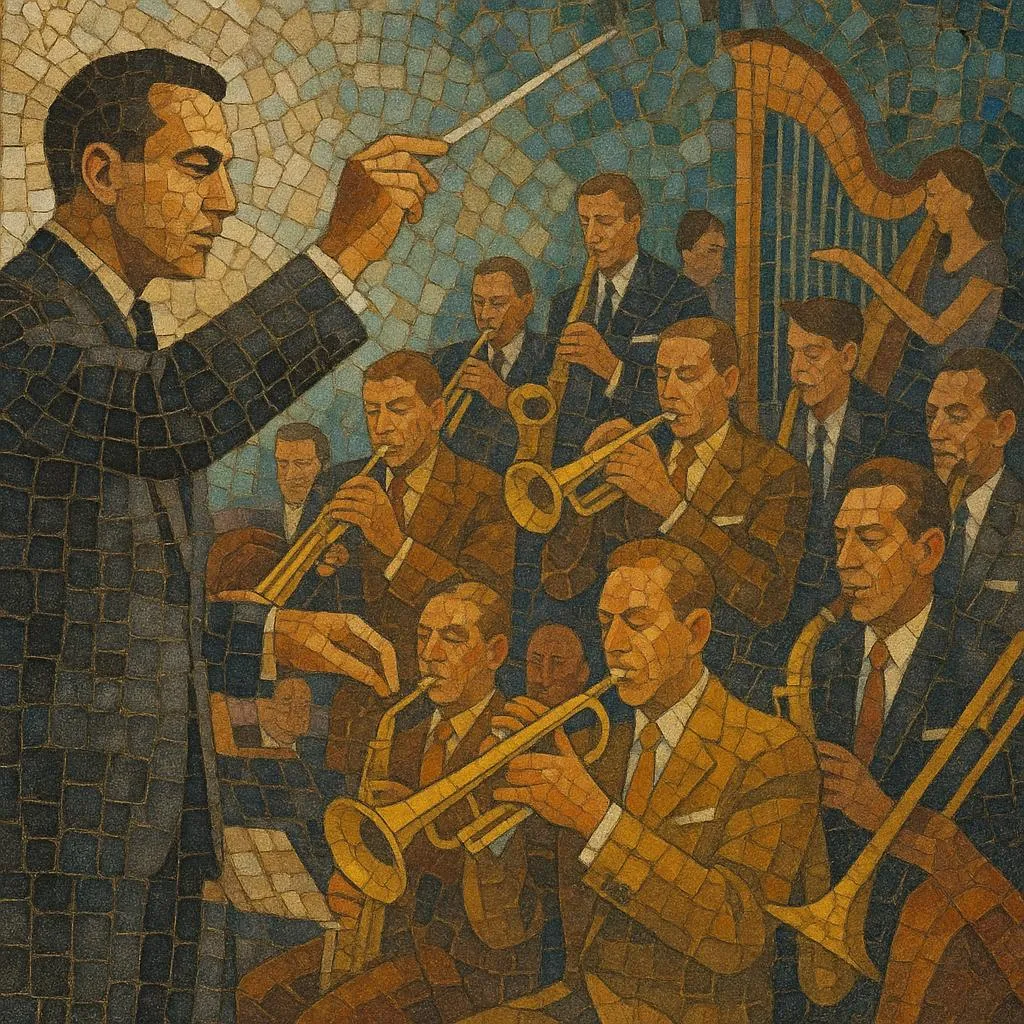
“Man’s orchestra” refers to the mid‑20th‑century tradition of male bandleaders billed as “X & His Orchestra,” spanning late–Swing Era dance bands through postwar light‑orchestral and easy‑listening ensembles.
Musically, these orchestras sit at the intersection of big‑band jazz, pops orchestration, and popular song arrangement. Core textures range from saxes, brass, and rhythm sections to lush string choirs, harp, woodwinds, and occasional chorus, producing everything from danceable swing to cinematic, high‑fidelity ballads. The tag is partly a credit convention, but it also implies a recognizable sound world: tightly crafted arrangements, melody‑forward presentations of standards, suave rhythmic feels (foxtrot, swing, cha‑cha, mambo, beguine), and rich, consonant harmonies suited to radio, ballroom, and hi‑fi living‑room listening.
History
Male bandleaders leading dance orchestras became a defining feature of the late Swing Era. Billing such as “Bandleader & His Orchestra” crystallized a public image of the suave musical director at the helm of a disciplined ensemble. Arrangements emphasized sectional writing (saxes vs. brass), memorable riffs, and ballroom‑friendly tempos, aligning with American radio, hotel ballrooms, and film shorts.
After World War II, many bands adapted to changing tastes and new technologies. High‑fidelity LPs encouraged more expansive orchestrations: strings, harp, celesta, and woodwinds were added to the classic big‑band core. This era bridged dance‑band swing with light music and pops practices, favoring polished melody statements, coloristic orchestration, and elegant versions of Tin Pan Alley and Broadway standards.
As rock ’n’ roll rose, “His Orchestra” leaders increasingly targeted radio and home listening markets. The sound softened toward easy listening and lounge: velvet string pads, choral “oohs,” stereo spectacle, and Latin and continental rhythms. The bandleader’s name became a quality mark for tastefully modern arrangements, often tied to film and television themes and branded concept albums.
Although large touring orchestras waned, the arranging language—silky strings, sectional call‑and‑response, tightly voiced brass, and spotlighted melody—fed into lounge/space‑age pop revivals, film/TV scoring, and contemporary orchestral‑pop productions. The credit convention survives in nostalgic branding and reissues, while the style’s arranging vocabulary remains a reference point for elegant, melody‑centric orchestration.
Start with a big‑band core: 4–5 saxophones (often doubling clarinet/flute), 3–4 trombones, 3–4 trumpets, piano, guitar, upright/electric bass, and drum set. For the light‑orchestral/easy‑listening palette, add strings (violins/violas/cellos), harp, vibraphone, celesta, and occasional choir.
Use ballroom‑friendly pulses: medium swing (foxtrot), light two‑step, and Latin feels (cha‑cha, rhumba/mambo, beguine). Keep the drum part tidy (brushes or light sticks), guitar on light four‑to‑the‑bar comping, and bass walking or playing even quarter notes depending on feel.
Favor rich but consonant harmony: major keys, extended tertian chords (maj7, 9, 13), secondary dominants, and tasteful modulations (often up a whole step for a lift). Write sectional voicings in close SATB‑style for reeds and brass; support with sustained string pads and countermelodies. Spotlight the tune clearly before introducing reharmonized returns.
Common forms include AABA 32‑bar standards and verse–chorus film themes. Use an intro tag, a clear first chorus (melody statement), a development chorus (counterlines, modulations, call‑and‑response), a short “shout” passage for brass, and a recap with a ritard or tag ending. Keep solos concise and melodic.
Exploit stereo imaging and hi‑fi colors: flutes/clarinets for shimmer, muted trumpets for suave bites, vibraphone or celesta for sparkle, harp/tremolo strings for glamour. Aim for smooth dynamics and a warm, reverberant mix that flatters melody and ensemble blend.