Your digging level

For this genre
0/8
🏆
Sign in, then listen to this genre to level up

Description

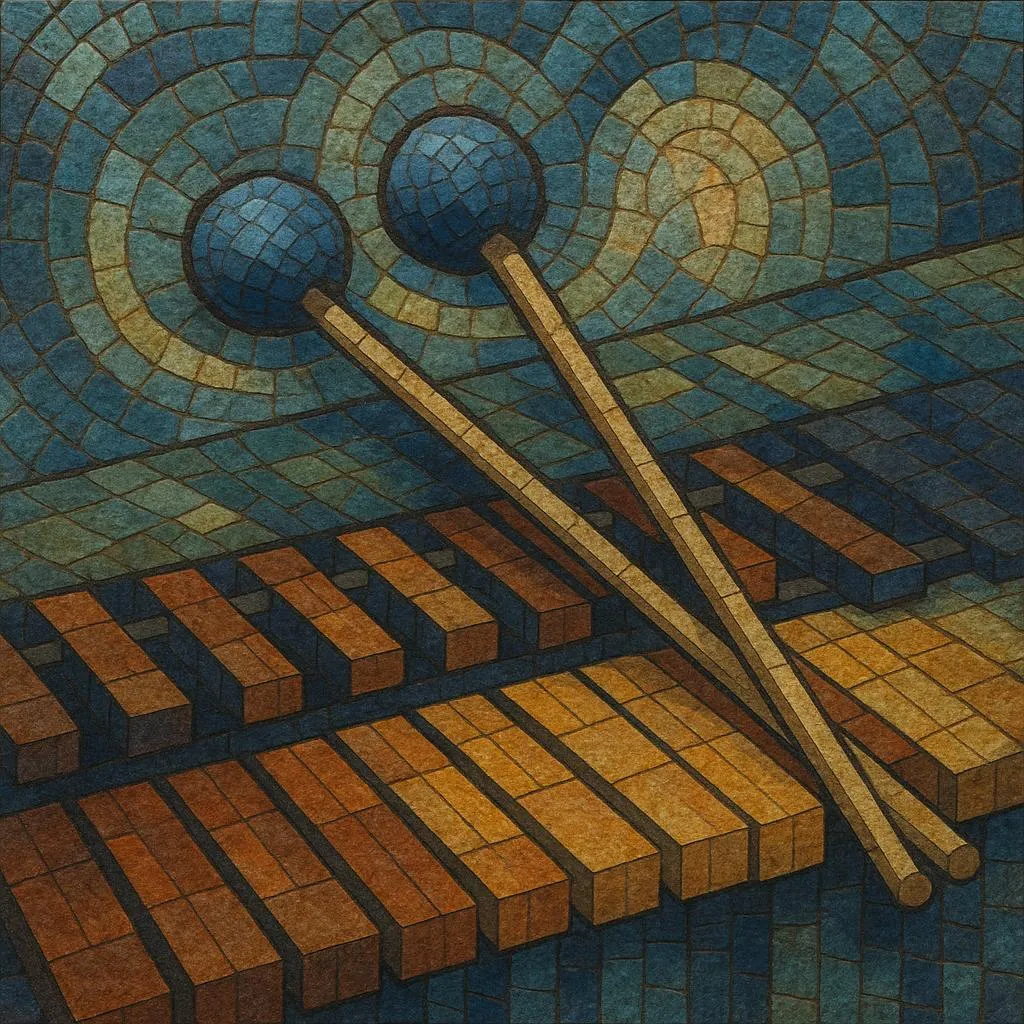
Mallet is an aesthetic-forward instrumental genre centered on mallet percussion timbres—especially marimba, vibraphone, xylophone, glockenspiel, and related keyboard percussion.

In practice it blends the shimmering sustain of vibraphone with the woody articulation of marimba, often in minimalist ostinati, pointillistic counterpoint, or soft ostinato beds used in contemporary classical, jazz-adjacent, and soundtrack contexts. Arrangements typically foreground pulse, interlocking patterns, and timbral clarity rather than dense harmony, giving the music a glassine, gently propulsive character that suits film cues, concert works, and contemplative listening alike.


Sources: Spotify, Wikipedia, Discogs, RYM, MB, user feedback and other online sources

History

Early roots (1930s–1950s)

The sonic vocabulary of Mallet music draws on the early prominence of the vibraphone in swing and bebop (e.g., Lionel Hampton and Milt Jackson), where metallic, sustained tones added a distinct lyrical quality to small-group jazz. In parallel, concert percussion expanded as a standalone medium, setting the stage for dedicated mallet repertoire.

Minimalism and concert canon (1960s–1980s)

The modern "mallet" aesthetic coalesced as American minimalism rose to prominence. Composers like Steve Reich and Philip Glass embedded marimbas, xylophones, and vibraphones into interlocking rhythmic grids and phase processes—music whose clarity of attack and decay made mallet instruments ideal carriers of pulse and pattern. Around the same time, soloists and educators (e.g., Keiko Abe, Leigh Howard Stevens) dramatically expanded marimba technique and literature, codifying four-mallet approaches and concert works that highlighted the instrument’s lyrical depth.

Crossovers and the studio era (1990s–2010s)

Percussion ensembles (So Percussion, Third Coast Percussion) and post-classical circles popularized mallet-forward textures in chamber settings, while film, television, and game composers embraced mallet patterns for kinetic motion and transparent harmonic beds. Electroacoustic and ambient artists layered sampled or processed mallet timbres to evoke warmth and crystalline detail.

Present day

Today, Mallet functions both as a concert idiom and a production aesthetic. It threads through contemporary classical, jazz, ambient, and soundtrack work—recognized by its tactile, percussive lyricism, interlocking ostinati, and glowing overtones that translate equally well to stage and screen.

How to make a track in this genre

Core instrumentation
•   Primary voices: marimba, vibraphone, xylophone, glockenspiel (plus auxiliary mallets like crotales or orchestral chimes). •   Support: light hand percussion, soft drum kit brushes, piano or electric piano for harmonic grounding, and subtle strings or synth pads for sustain.
Rhythm and texture
•   Build interlocking ostinati: two to four repeating patterns that dovetail rhythmically (e.g., 3:2 or 5:4 groupings), creating forward motion without heavy accents. •   Explore phase and additive processes: shift a pattern by a beat or add notes incrementally to evolve momentum organically. •   Keep dynamics moderate; use mallet type (soft to hard) to shape attack and color.
Harmony and melody
•   Favor clear diatonic or modal centers (Dorian, Aeolian, Mixolydian) with occasional color tones (add9, sus chords) to maintain transparency. •   Voice-lead smoothly between triads; let open fifths or quartal voicings leave space for overtones. •   For vibraphone, try motor on/off thoughtfully; slow tremolo can add shimmer without masking rhythm.
Form and development
•   Start with a single cell (1–2 bars), layer complementary figures, then rotate parts across instruments for timbral variety. •   Introduce gradual process-based changes (register shifts, inversion, rhythmic displacement) rather than abrupt modulations.
Production and performance tips
•   Close-mic for detail and blend with a roomy stereo pair to capture bloom and resonance. •   Use light compression and gentle EQ to tame transients without dulling attack; preserve transient clarity for rhythmic precision. •   In ensemble writing, assign overlapping ranges carefully so each mallet voice retains definition.

Top tracks

Locked
Share your favorite track to unlock other users’ top tracks

Upcoming concerts

in this genre
Influenced by
Has influenced

Download our mobile app

Get the Melodigging app and start digging for new genres on the go
© 2026 Melodigging
Melodding was created as a tribute to Every Noise at Once, which inspired us to help curious minds keep digging into music's ever-evolving genres.
Buy me a coffee for Melodigging