Your digging level
Description
Latin viral rap is a Spanish- and Portuguese-language web-native rap phenomenon that thrives on virality across YouTube, TikTok, and streaming platforms.
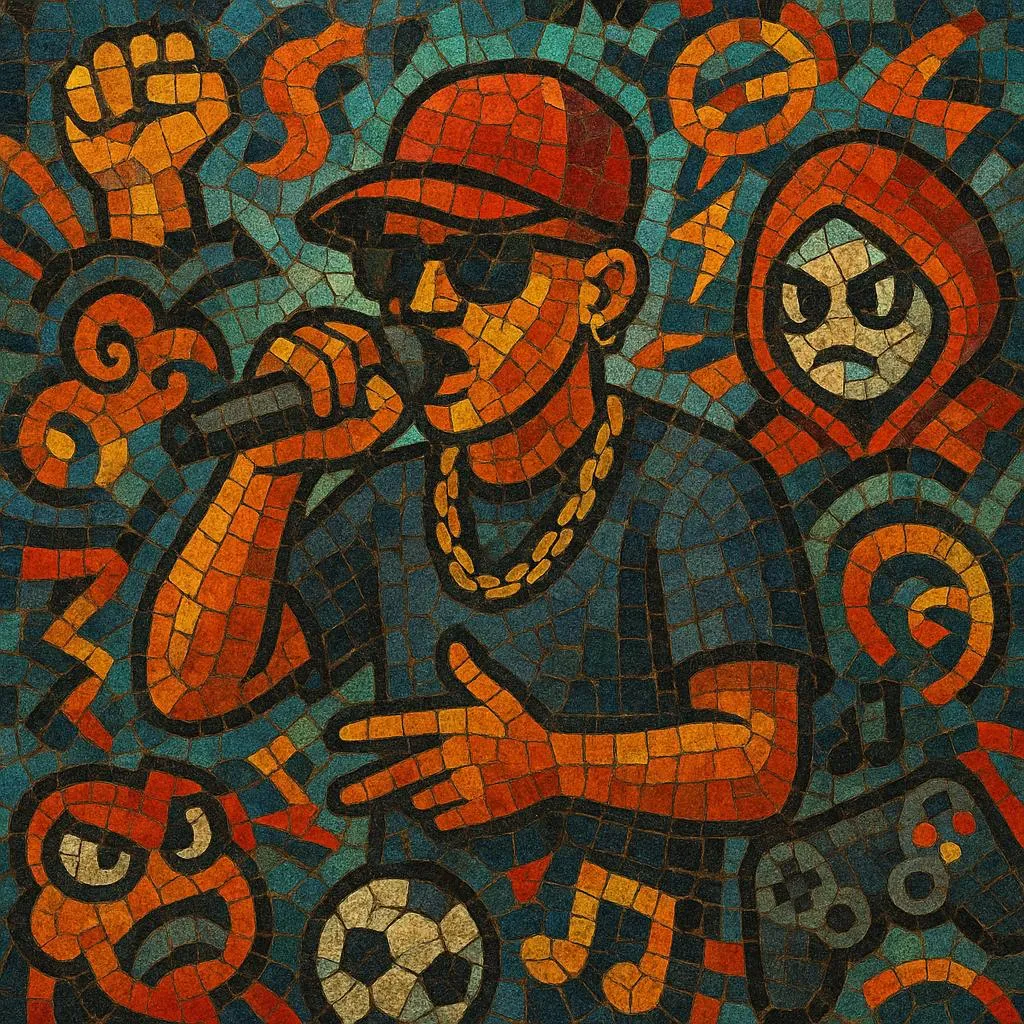
It mixes core hip hop flows and trap drum programming with reggaetón/dembow energy, highly referential lyrics (anime, gaming, fútbol, internet memes, trending news), and hooky, repeatable choruses optimized for short‑form video. Production is largely DIY—bedroom studios, type beats, and rapid turnaround releases that react to cultural moments.
Stylistically, you’ll hear 808 subs, rolling hi‑hats and triplet flows from trap and drill; dembow syncopation from urbano; and crowd‑pleasing call‑and‑response refrains. The tone ranges from playful and comedic to battle‑ready and epic, but always designed to be instantly shareable and “clip‑able.”


History
Early Spanish-language YouTube rap laid the groundwork for a style that spoke directly to online communities. As affordable home studios, type-beat ecosystems, and video platforms matured, a new crop of creators began crafting songs that referenced the same anime, gaming, and meme culture their audiences shared. By the mid‑2010s, these tracks circulated widely in Spain and across Latin America, often uploaded by creators who were simultaneously rappers, video editors, and community managers.
Short‑form platforms and algorithmic playlists rewarded ultra-catchy, repeatable hooks. Artists leaned into punchy choruses, fan‑service bars, and topical releases—dropping songs in tandem with show episodes, tournaments, or meme cycles. Production drew from trap and drill (fast hi‑hat grids, 808 slides), but also from urbano’s dembow to keep a dancing pulse. Collaborations between creators, “versus” formats, and multi‑MC cyphers helped cross‑pollinate audiences.
Latin viral rap spread beyond Spain to Mexico, Argentina, Chile, Colombia, and beyond, blending local slang, football culture, and regional rhythmic feels. Some creators specialized in “fan rap” (anime/game lore), others in comedic and satirical takes, and others in battle‑hardened flows over modern trap/drill. The scene professionalized—better mixing/mastering and visual identity—while keeping a rapid, internet‑first release cadence.
Because it is optimized for shareability, the genre often privileges immediacy over purist hip‑hop orthodoxy. Fans celebrate its relatability and community feel; critics sometimes question its durability or lyrical depth. Nevertheless, the format has proven resilient, continually refreshing itself around new franchises, memes, and platform features.
Latin viral rap functions as a rapid-response cultural engine in the Spanish‑speaking internet: a place where rap technique, urbano rhythm, and fandom storytelling meet the pacing of social media.