Your digging level

For this genre
0/8
🏆
Sign in, then listen to this genre to level up

Description

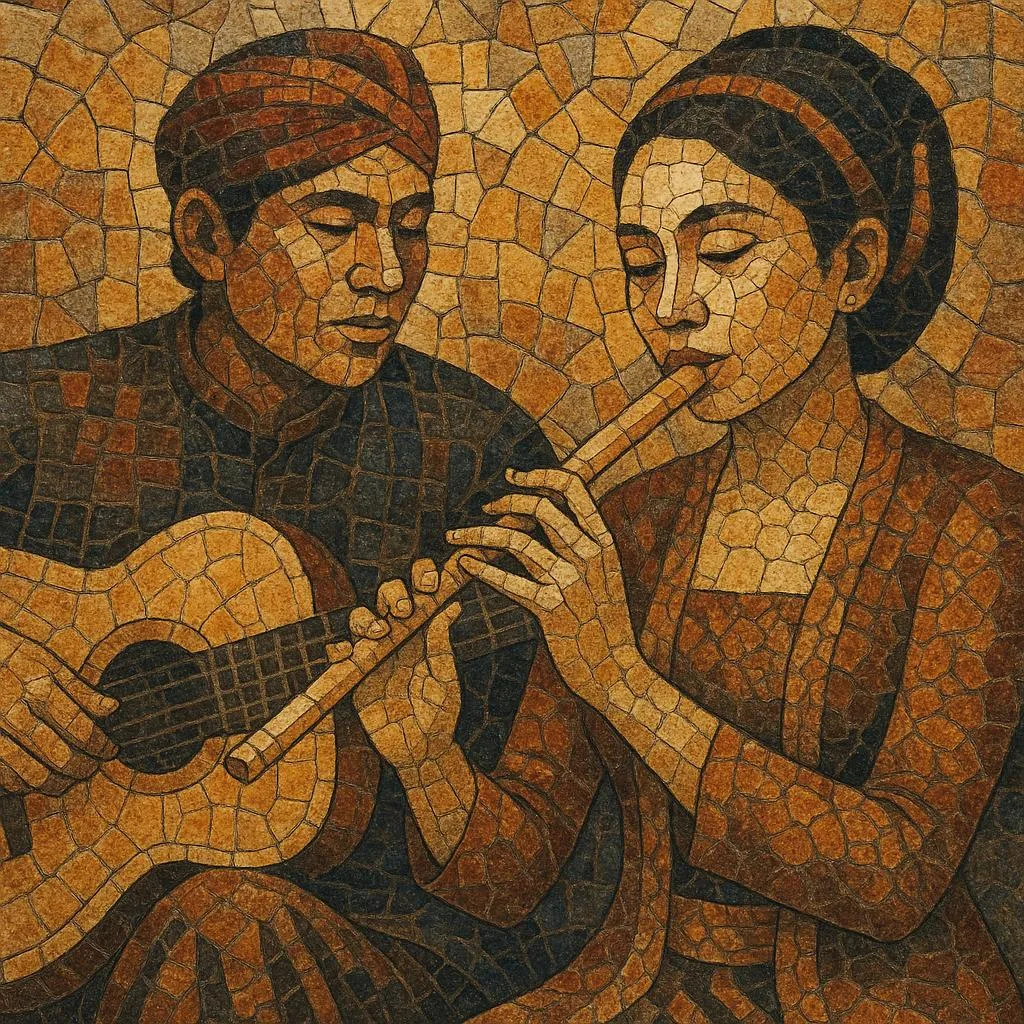
Tarling (often referred to locally as "lagu tarling") is a coastal West Java folk–popular style from the Cirebon–Indramayu (Pantura) region of Indonesia. Its name is widely understood as a portmanteau of tar (guitar) and suling (bamboo flute), reflecting the idiomatic pairing of plucked guitar lines with ornamented bamboo flute melodies.

Classic tarling is built around a small ensemble: lead vocal (often in Cirebonese dialect), guitar providing both rhythm and melodic fills, suling carrying lyrical, gamelan-inspired ornamentation, and local percussion (kendang/kecrek) driving danceable, mid-tempo grooves. Melodically it leans on pelog/slendro inflections translated to diatonic instruments, with expressive bends and cengkok (melodic turns). Lyrically, songs range from romance and everyday life to humorous and moral tales tied to village festivities and coastal markets.

Over time, tarling absorbed elements from dangdut and organ-tunggal stage culture, producing electrified variants (often called tarling dangdut or tarling pantura) that add keyboard, drum machine, and koplo-leaning beats while retaining the signature guitar–suling dialogue.

Sources: Spotify, Wikipedia, Discogs, RYM, MB, user feedback and other online sources

History

Origins (1950s–1960s)
•   Tarling took shape in the post–World War II decades in the coastal districts of Cirebon and Indramayu, West Java, Indonesia. Street and market musicians blended guitar accompaniment with suling (bamboo flute) lines, adapting local pelog/slendro melodic sensibilities to the diatonic fretboard and adding village percussion (kendang, kecrek). •   Early performances were tied to weddings, pasar malam (night markets), and neighborhood festivities, with lyrics in the Cirebonese dialect addressing love, humor, and community life.
Cassette Era and Local Popularity (1970s–1980s)
•   The domestic cassette boom spread tarling recordings across the Pantura corridor. Semi-professional orkes tarling groups emerged, standardizing ensemble layouts and song forms (intro–verse–chorus–instrumental interlude). •   Stage culture intensified, with singers (often called sinden in local parlance) fronting compact bands that could play for hours at social events.
Electrification and Crossovers (1990s–2000s)
•   Exposure to national popular styles, especially dangdut, brought heavier drum grooves, synth/organ textures, and extended dance breaks. This produced electrified hybrids often branded as tarling dangdut or tarling pantura, while classic acoustic formats continued in parallel. •   VCDs and local TV helped circulate live tarling shows well beyond Cirebon–Indramayu, and the repertoire began to include new, hook-driven originals alongside beloved regional standards.
Digital Era (2010s–present)
•   YouTube and social media amplified regional scenes, enabling younger singers and bands to modernize production (click tracks, keyboard bass) without losing the idiomatic guitar–suling call-and-response. •   Today, tarling exists on a spectrum—from intimate acoustic troupes to high-energy, organ-led stage acts—remaining a key cultural marker for coastal West Java while attracting broader Indonesian audiences.

How to make a track in this genre

Ensemble and Instrumentation
•   Core: lead vocal, acoustic or clean electric guitar (tar), bamboo flute (suling), kendang/kecrek (and sometimes small gong/triangle-like accents). •   Modern/electrified variants can add keyboard (organ/string pads), electric bass, and drum machine playing koplo-tinged dangdut grooves.
Melody, Scale, and Ornament
•   Write singable, pentatonic-leaning melodies that evoke pelog/slendro color while fitting diatonic instruments. •   Use cengkok (ornamental turns), slides, and bends on guitar; let the suling double and answer the voice with melismatic replies.
Harmony and Form
•   Keep harmony simple: I–IV–V (occasionally ii–V–I–IV) with passing bass figures; let color come from melody and ornament, not dense chords. •   Typical form: short instrumental intro (suling–guitar), verse–chorus cycles, and an instrumental interlude (suling feature) before the final refrains.
Rhythm and Groove
•   Mid-tempo, steady dance pulse (roughly 80–120 BPM). Kendang patterns propel forward motion using open–closed strokes and off-beat kecrek accents. •   For modern tarling–dangdut, layer a koplo-flavored kick–snare ostinato while retaining the guitar–suling dialogue on top.
Lyrics and Delivery
•   Favor Cirebonese (Basa Cerbon) for local flavor; Indonesian can be used for wider reach. •   Themes: romance, everyday humor, moral tales, and snapshots of coastal life; keep verses conversational and choruses hooky and repeatable. •   Vocal delivery should be warm and expressive, with modest vibrato and clear diction; intersperse call-and-response ad libs with the suling.
Production Tips
•   In acoustic settings, mic the suling closely to capture breathy nuance; give guitar a bright, percussive presence. •   In electric/organ settings, balance drum machine and kendang so the hand-drum feel remains central; avoid over-compressing the suling.

Top tracks

Locked
Share your favorite track to unlock other users’ top tracks

Upcoming concerts

in this genre
Influenced by
Has influenced

Download our mobile app

Get the Melodigging app and start digging for new genres on the go
© 2026 Melodigging
Melodding was created as a tribute to Every Noise at Once, which inspired us to help curious minds keep digging into music's ever-evolving genres.
Buy me a coffee for Melodigging