Your digging level
Description
Lagu Sasak refers to songs created and performed in the Sasak language by the Sasak people of Lombok, Indonesia. It spans a spectrum from traditional village-based vocal and ensemble pieces to modern pop and dangdut-inflected productions.
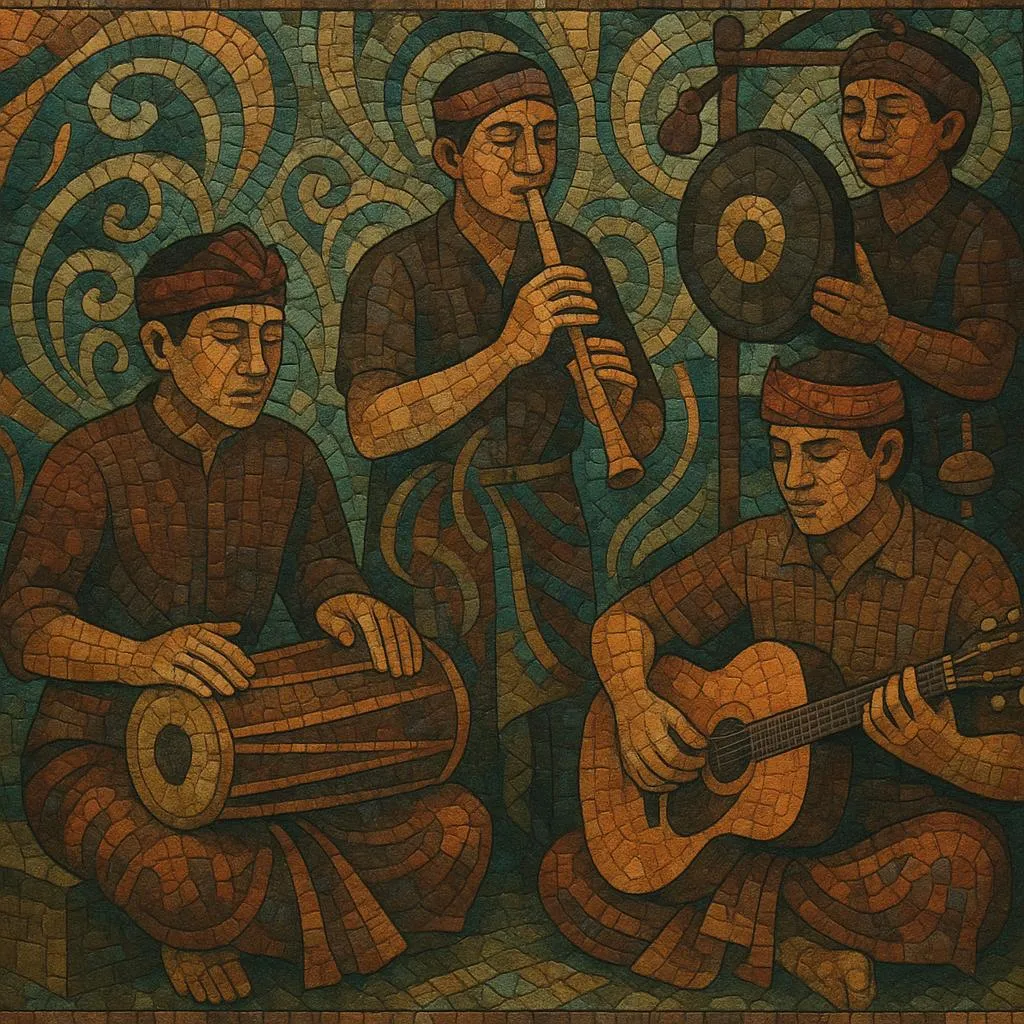
Stylistically, it blends local melodic contours (cengkok) and the pelog/slendro modal world of Lombok’s gamelan with Western diatonic harmony, guitars, and keyboards. Percussion timbres—especially the driving interlocking of gendang (drums), small gongs, and cymbals—remain central, while bamboo flute (suling) and fiddle/biola lines often carry ornamented, call-and-response melodies. Contemporary Lagu Sasak frequently leans into danceable 2/4 or 4/4 grooves borrowed from dangdut/koplo and Indonesian pop, but keeps lyrics, humor, and storytelling firmly rooted in Sasak identity and everyday life.
History
Sasak musical life long predates recording and mass media. Core practices include processional gendang beleq (large-drum ensembles), wayang Sasak (shadow theatre with sung poetry), zikir/rudat devotional singing, and the folk-pop hybrid known as cilokaq. These practices supplied the modal language (pelog/slendro), percussion feel, and vocal aesthetics that underpin Lagu Sasak.
With the spread of cassettes and local radio in the 1980s, Sasak-language songs moved from purely local stages to recorded circulation. Singers and village ensembles began adapting traditional grooves and melodic ornaments to verse–chorus structures, adding guitar, keyboard, and bass. The popularity of national genres—especially dangdut and Indonesian pop—catalyzed a distinctly Lombok sound that still foregrounded Sasak lyrics and humor.
The 2000s saw stronger dance-floor influences (dangdut koplo, housey backbeats) and fuller band instrumentation. Live shows at weddings and community events became key incubators, with call-and-response refrains, catchy hooks, and percussion breaks designed for audience participation. Traditional flutes and fiddles continued to weave ornamented countermelodies over modern rhythm sections.
Affordable home studios and video platforms enabled rapid production of Sasak-language singles and performance clips. Artists fuse EDM textures, pop-ballad writing, and regional percussion while maintaining local diction and themes—love, locality, satire, and social commentary. The result is a living, bilingual (traditional/modern) ecosystem where village ensembles, devotional forms, and pop acts inform one another.