Your digging level
Description
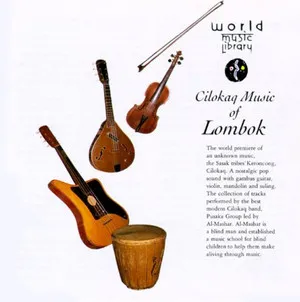
Cilokaq is a Sasak (Lombok, Indonesia) popular-traditional style that blends local vocal and poetic traditions with the timbres and idioms of Javanese keroncong, nearby Balinese gamelan, and Islamic devotional singing.
Typically performed at community gatherings, weddings, and cultural events, cilokaq features lyrical, melismatic singing in the Sasak language over gently pulsing string accompaniments reminiscent of keroncong (cak–cuk–guitar–cello textures), while hand drums and small metallophones add interlocking, gamelan-like patterns. Islamic religious aesthetics—Qur’anic recitation and nasheed-like phrasing—inform the vocal contour and rhetorical delivery, giving the music a devotional color even in secular contexts.
The result is a tender, swaying, community-centered sound: part serenade, part devotional, and part regional light music that sits between urban keroncong and village ensemble practice.
History
Cilokaq crystallized on Lombok during the post-war decades, when radio, cassettes, and inter-island travel intensified musical exchange. Sasak vocal traditions and social poetry met the already pan-Indonesian keroncong style (itself with Portuguese roots) and the brilliant, interlocking textures of neighboring Balinese gamelan. Islamic devotional arts—nasheed and Qur’anic recitation—shaped the vocal melismas, cadences, and themes.
By the 1960s–70s, cilokaq ensembles were common on community stages and wedding circuits across Lombok. Portable string ensembles (cak, cuk, guitar, cello/contra) provided an intimate keroncong-like bed, while local drums and small metallophones added Lombok/Bali interlocking figures. The rise of regional broadcasting (e.g., RRI Mataram) and low-cost cassette duplication helped standardize a recognizably "Sasak" sound that still felt open to improvisation and local lyricism.
Despite the growth of dangdut, pop daerah, and globalized Indonesian pop, cilokaq has persisted through cultural groups (sanggar seni), festivals, and educational efforts. Contemporary ensembles may incorporate keyboards or microphones but retain the genre’s core: Sasak verse, keroncong pulse, gamelan-like interlocks, and Islamic-inflected vocal ornament. Today, cilokaq functions as a living emblem of Lombok’s interwoven cultural currents.