Your digging level
Description
Lagu Madura refers to traditional and popular songs from the Madurese people of Madura Island (and surrounding Madurese communities) in Indonesia. It is primarily sung in the Madurese language and spans a spectrum from village folk repertoire and processional pieces to modern, dangdut- and pop-influenced regional songs.
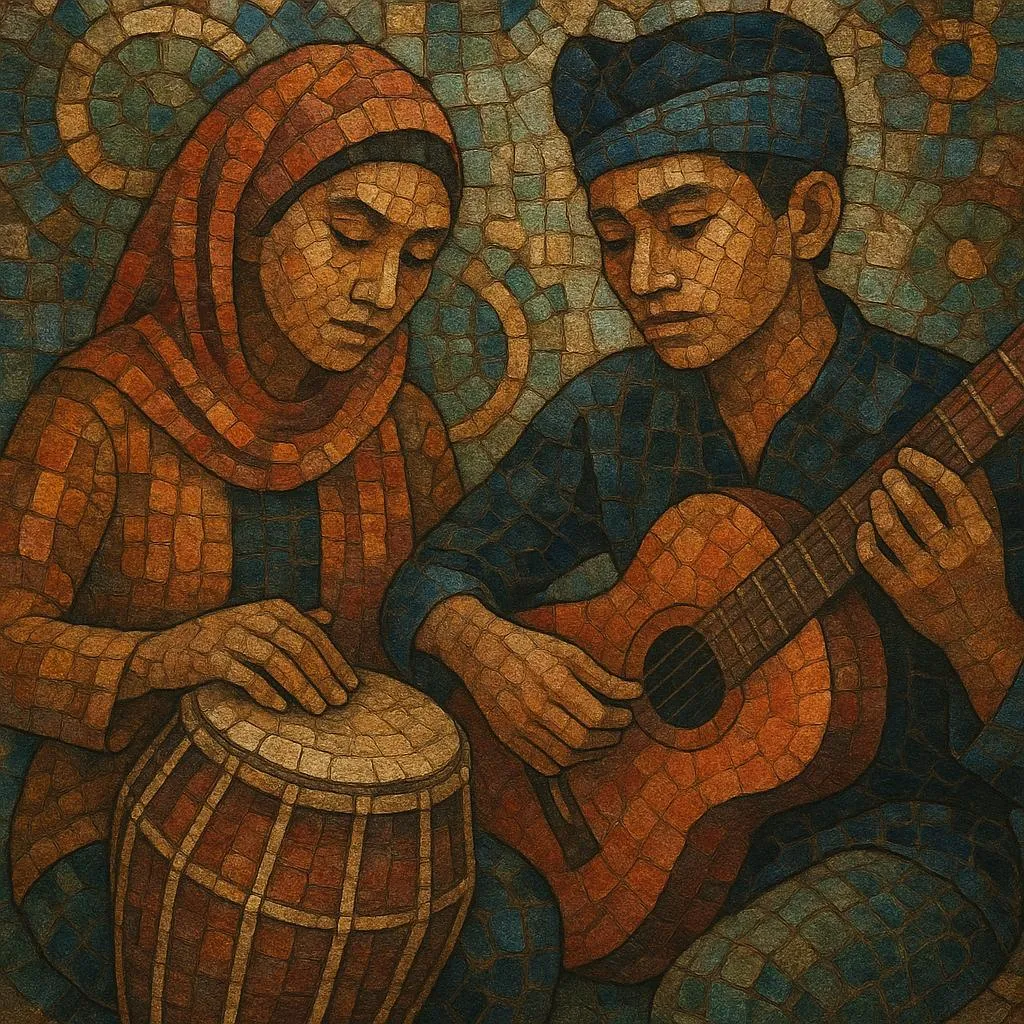
Musically, Lagu Madura draws on the broader Javanese–Madura cultural sphere: pentatonic modes associated with gamelan practice, ornamental vocal delivery, call-and-response textures, and cyclical percussion patterns. Iconic local timbres include the piercing double-reed saronen (a type of shawm) used in processions, plus kendang (drums), small gongs, and rebana frame drums in Islamic devotional and social contexts.
In contemporary practice, traditional melodies and poetic forms coexist with studio-arranged versions featuring guitars, keyboards, and modern drum kits—often merging folk melody with dangdut rhythms and pop song structures.
History
Madurese song traditions developed in village, market, and ceremonial settings on Madura Island and in Madurese diaspora communities across East Java. Oral transmission sustained strophic folk songs, lullabies, work songs, and celebratory pieces tied to life-cycle events and communal festivities—including the famous bull-racing season (karapan sapi). The saronen shawm ensemble became emblematic for processions and outdoor celebrations, while poetic singing connected to regional macapat (tembang) meters reflected deeper links to the wider Javanese cultural sphere.
With the spread of radio, cassette culture, and state cultural programming in the mid–late 20th century, Madurese songs began to be recorded and circulated beyond local settings. Musicians and ensembles adapted folk repertoire for stage and studio, incorporating guitars, keyboards, and drum kits alongside rebana and small gong–drum units. Urban popular currents—especially keroncong and later dangdut—began to shape arrangements, meters, and harmonic pacing, creating a recognizable regional pop strand still rooted in Madurese melody and language.
Since the 1990s and 2000s, dangdut (including koplo variants) and Indonesian pop aesthetics have further informed Lagu Madura recordings, yielding danceable versions of folk standards and new songs in Madurese. Digital platforms (VCD/DVD, then YouTube and streaming) amplified circulation across the Madurese diaspora, inspiring studio acts and semi-professional community ensembles alike. Today, the repertoire lives in parallel: traditional saronen-led processional music and poetic singing remain central to ritual and festival life, while modern band and dangdut arrangements bring Madurese language and melody into nationwide popular channels.