Your digging level

For this genre
0/8
🏆
Sign in, then listen to this genre to level up

Description

Lagu Betawi is the song tradition of the Betawi people of Jakarta, Indonesia. It blends Malay song forms and pantun poetry with Peranakan Chinese gambang kromong sonorities, the European-style brass of tanjidor, and Middle Eastern/Arabic-influenced devotional and popular idioms.

Typical performances feature lively, danceable rhythms, catchy pentatonic-leaning melodies, and humorous, down‑to‑earth lyrics in Betawi Malay about everyday city life, romance, food, and neighborhood culture. The style is closely linked to Betawi stage arts—especially lenong (comedy theater) and topeng Betawi (masked dance)—and functions as both entertainment and a marker of Jakarta’s cosmopolitan heritage.


Sources: Spotify, Wikipedia, Discogs, RYM, MB, user feedback and other online sources

History

Origins (18th–19th centuries)

The Betawi community formed in Batavia (now Jakarta) from intermarriage among local Sundanese and Javanese, Malay migrants, Arab and Indian traders, and Chinese Peranakan families. Their urban folk songs drew heavily on Malay pantun verse and absorbed musical colors from nearby Javanese gamelan practice.

Colonial fusion in Batavia

Two hallmark Betawi ensembles shaped the soundscape:

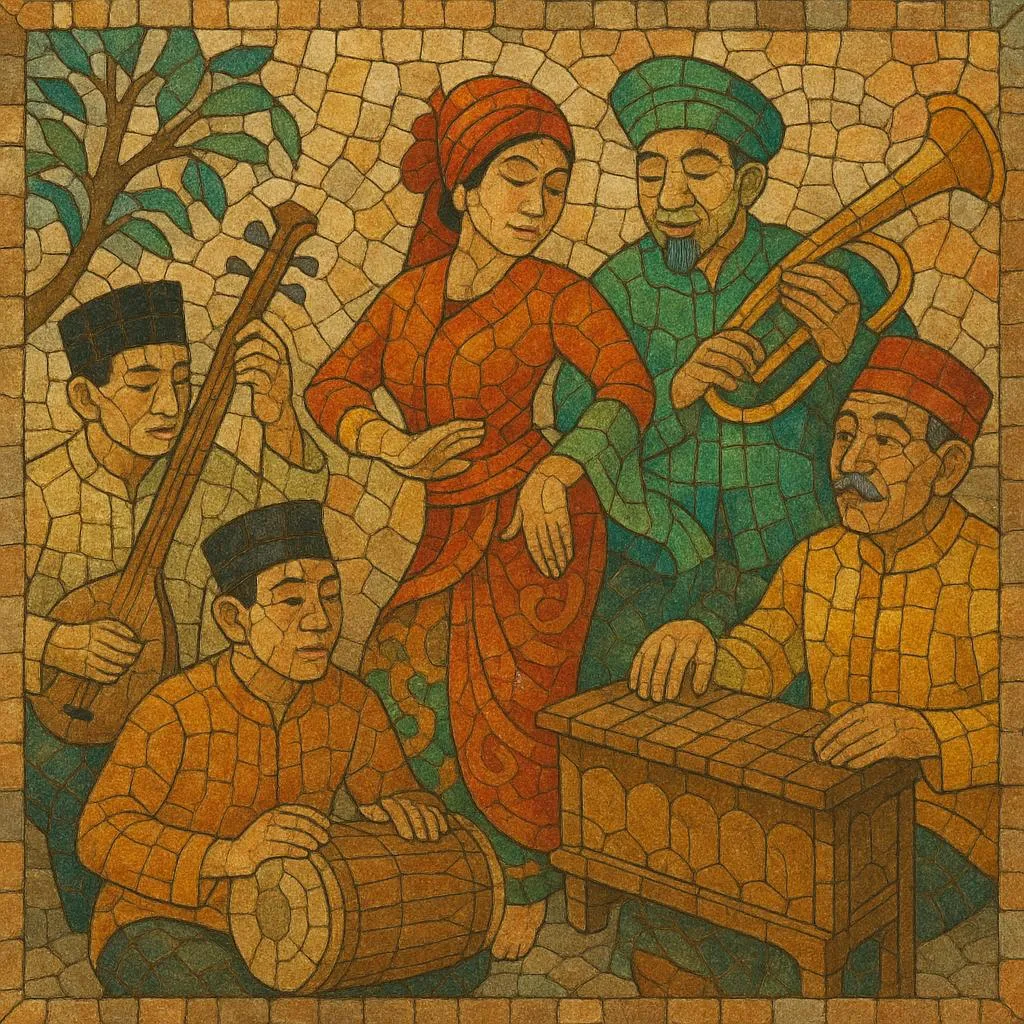
•   Gambang kromong (a Peranakan Chinese–Betawi hybrid with wooden xylophone, small gongs, strings, and winds) supplied pentatonic melodies and ornamental playing. •   Tanjidor (a 19th‑century brass/wind band tradition introduced via colonial military and civic bands) contributed marches and polkas that Betawi musicians localized with syncopation and dance grooves.

Religious and popular currents from the Middle East (qasidah and gambus) further colored vocal style and modal tendencies.

20th‑century popularization

With radio, recording, and film in the mid‑20th century, Betawi songs reached wider audiences. The music intertwined with comedic theater (lenong) and modern urban entertainment, producing witty, conversational delivery and catchy refrains. The post‑independence era saw city festivals and community troupes codify a recognizably “Jakarta” repertoire.

Preservation and modern revival

Cultural centers and Betawi villages (e.g., Setu Babakan) maintain teaching, staging, and ensemble activity. Contemporary performers mix traditional instrumentation (gambang kromong, tanjidor winds) with guitars, keyboards, and drum set, while retaining hallmark Betawi dialect, pantun forms, and neighborhood storytelling. The style endures as a living emblem of Jakarta’s multiethnic identity.


How to make a track in this genre

Core instrumentation
•   Traditional palette: gambang (wooden xylophone), kromong (small knobbed gongs), suling (bamboo flute), rebab (spike fiddle), kendang/drums, and tanjidor winds (clarinet, trumpet, trombone, tuba, percussion) for parades and festive contexts. •   Modern additions: guitar, bass, keyboard, and drum set to support stage shows and recordings, while keeping the timbral color of gambang/kromong or a small brass/wind section when possible.
Melody and mode
•   Favor bright, singable tunes that often outline pentatonic figures; ornamental slides and turns echo gambang kromong and rebab phrasing. •   Use call‑and‑response between lead voice and chorus/instruments to mimic theatrical banter.
Rhythm and groove
•   Medium to upbeat tempi (≈ 90–120 BPM) with buoyant, danceable feels. Lean on steady 2/4 or 4/4 with syncopated accents from kendang and hand percussion. •   For tanjidor‑styled pieces, adapt march or polka underpinnings, then localize with swung phrasing and off‑beat hits.
Lyrics and form
•   Write in Betawi Malay (or Indonesian with Betawi flavor), using pantun stanzas (ABAB rhyme) and playful wordplay. •   Topics center on daily Jakarta life—markets, food, flirtation, neighborhood humor, and moral quips. Keep verses conversational and punchy, with a memorable refrain.
Arrangement tips
•   Start with gambang/kromong ostinato or a short brass fanfare; introduce call‑and‑response vocals; build to a catchy chorus with group shouts. •   Layer heterophonic textures: melody doubled with slight variations by voice, suling, and gambang; add rhythmic fills from kendang and small gongs for lift between lines.

Top tracks

Locked
Share your favorite track to unlock other users’ top tracks

Upcoming concerts

in this genre
Influenced by

Download our mobile app

Get the Melodigging app and start digging for new genres on the go
© 2026 Melodigging
Melodding was created as a tribute to Every Noise at Once, which inspired us to help curious minds keep digging into music's ever-evolving genres.
Buy me a coffee for Melodigging