Your digging level
Description
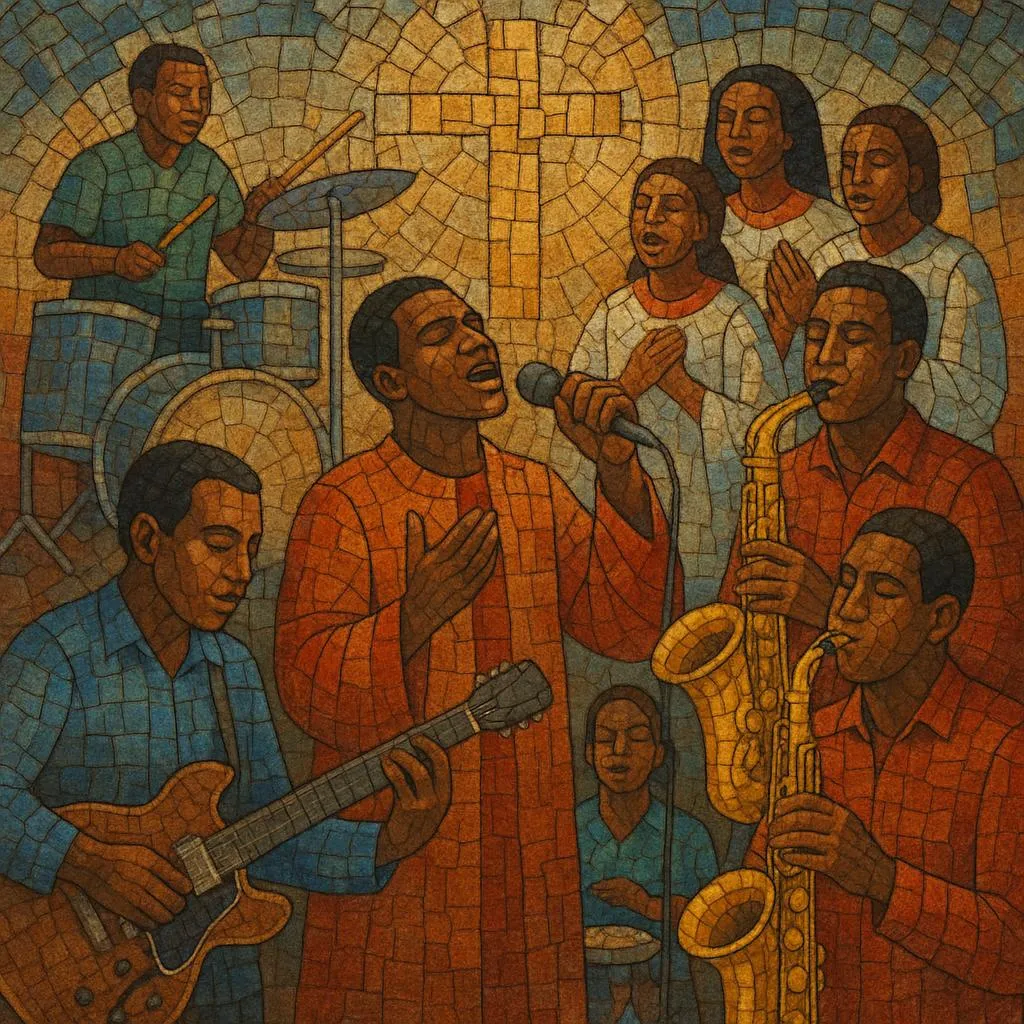
Kompa chrétien (Christian kompa) is a faith-centered branch of Haiti’s kompa/compas dance music in which the familiar steady, swaying kompa groove and horn-rich arrangements are paired with Christian praise and devotional lyrics in Haitian Creole and French.
Musically it retains the kompa backbone: a four-on-the-floor drum pulse, syncopated electric-bass ostinatos, off‑beat, tightly arpeggiated guitar patterns, bright keyboards, and punchy saxophone/trumpet lines that interlock with cowbell/tanbou percussion. Vocals often use call‑and‑response between a lead singer and choir, with congregational refrains designed for dancing as well as worship. These traits derive from compas (konpa), the modern Haitian méringue created and popularized in the 1950s and subsequently embraced across the Caribbean and diaspora.
History
Kompa chrétien grows directly from compas (konpa), the modern Haitian méringue codified in the 1950s by bandleaders such as Nemours Jean‑Baptiste. Compas’ steady dance pulse, interlocking guitars, bass, horns, and percussion became the nation’s dominant popular style and was later recognized internationally as a key element of Haitian cultural heritage.
As evangelical and Catholic youth ministries sought local musical languages for worship, church ensembles and community bands began performing praise repertoire over kompa rhythms. This created a distinct practice—still stylistically kompa, but lyrically centered on Christian testimony, repentance, and hope—performed at church services, rallies, and family celebrations in Haiti and the diaspora.
Large Haitian communities in Port‑au‑Prince, Cap‑Haïtien, Miami, New York, Montreal, and Paris nurtured studio recordings and live circuits where Christian kompa bands shared stages with secular kompa artists at community festivals while maintaining a worship focus in church contexts. The idiom absorbed contemporary gospel production (synth pads, modern drum programming) while preserving kompa’s core rhythm section and danceability—helping younger congregants identify with local sacred music.
Kompa chrétien remains a vibrant part of Haitian gospel, from full church orchestras to tight dance bands. Its continued relevance is tied to kompa’s status as a living national music and to its role in articulating joy and resilience in difficult times.
These choices maintain kompa’s recognizable dance engine while foregrounding Christian worship content rooted in Haitian language and practice.