Your digging level
Description
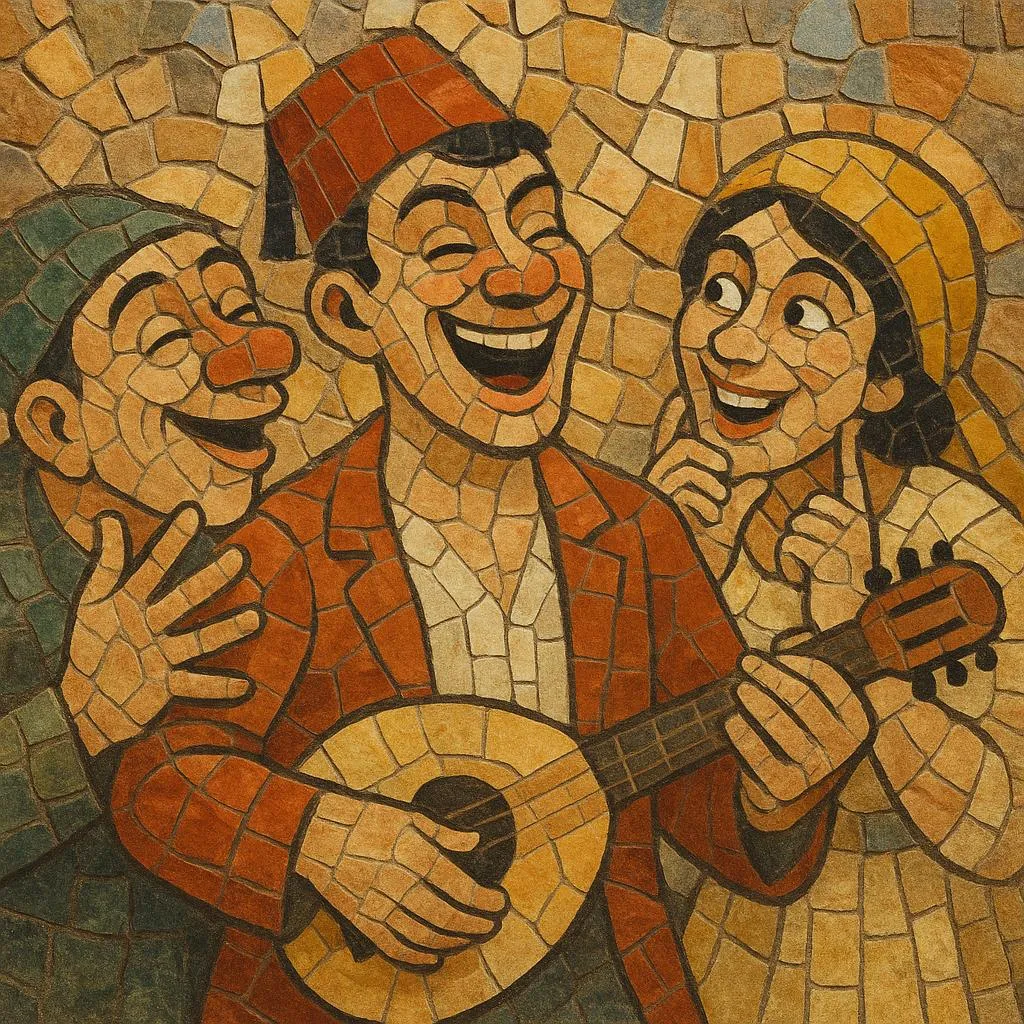
Komedi, in an Indonesian context, refers to humorous song and theatre-derived musical performance that blends jokes, skits, and catchy tunes. Its roots reach back to Komedi Stambul, a popular folk-theatre form that mixed Malay, Western and Chinese opera elements with Middle Eastern music and operetta; these shows routinely integrated sung couplets, playful patter, and comic scenarios.
Across the 20th century and into the streaming era, komedi has remained a broad, audience-facing umbrella for music whose primary intent is to amuse—whether through parody lyrics, satirical observations, or revue-style numbers. Today it spans live stage troupes, novelty and parody bands, and even audio-first formats like comedy podcasts that borrow song cues and jingles to frame humorous dialog.
History
Komedi’s lineage in Indonesia is commonly traced to Komedi Stambul (a.k.a. Komedie Stamboel), a trans-ethnic folk-theatre that flourished from the late 1800s through the mid‑1900s in the Dutch East Indies. Stambul drew on Malay entertainment and imported models—Western and Chinese opera, Middle Eastern music, and operetta—and normalized the blend of spoken comedy with sung numbers that audiences associated with “komedi.”
With television and cassette culture, comic troupes and parody acts popularized the idea of komedi as music meant for laughs. Revues and cabaret-like programs used theme songs, musical skits, and topical parodies to reach national audiences; groups such as Bandung’s Padhyangan Project became known for song parodies embedded in sketch formats.
Komedi diversified across platforms: novelty bands and genre-mashing “band komedi” acts emerged alongside comedians who fronted music projects. At the same time, Indonesia’s comedy podcasts surged on streaming services, where musical cues, jingles, and sung hooks frame humorous talk—evidence of komedi’s continued fusion of music and comedy in audio culture. Spotify reported comedy (“komedi”) as one of the country’s most‑listened podcast genres, underscoring the format’s popularity with younger listeners.