Your digging level
Description
Kleinkunst is a Dutch‑language singer‑songwriter and small‑stage (literally “small art”) tradition that took shape across Flanders (Belgium) and the Netherlands in the early 1960s.
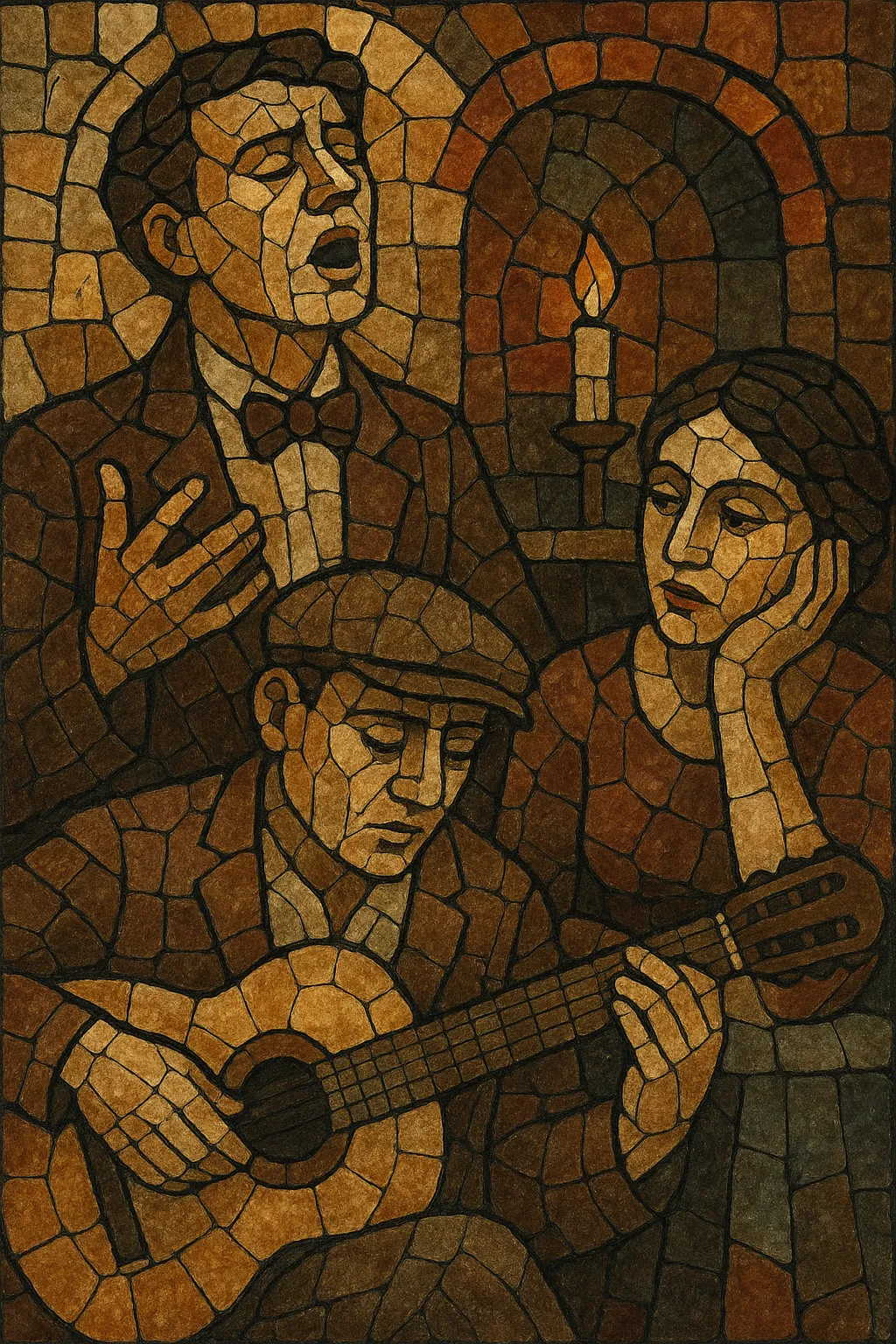
Rooted in cabaret and chanson, it puts the text front and center: intimate narratives, poetry, social observation, and understated humor are delivered with clear diction and a theatrical, storytelling sensibility. Instrumentation is typically sparse—voice with acoustic guitar or piano—sometimes embellished by a small ensemble (double bass, accordion, clarinet, strings) that supports, rather than obscures, the lyrics.
Musically, kleinkunst borrows the strophic and through‑composed song forms of French chanson, the topical directness of protest song, and the tuneful familiarity of folk. It favors modest tempos, diatonic harmony with occasional borrowed chords, and arrangements designed for cafés, small theaters, and broadcast studios rather than stadiums. Distinct from mainstream schlager or pop, its identity is defined by authentic voice, literary craft, and intimacy.
History
Postwar cabaret culture and the European chanson tradition provided the aesthetic blueprint for Dutch‑language singer‑authors in Flanders and the Netherlands. Student clubs, café‑theaters, and radio/TV variety shows created a small‑stage ecosystem in which text‑driven songs could thrive. The term “kleinkunst” was adopted to signal a focus on intimate performance, literary lyrics, and theatrical delivery rather than large‑scale popular entertainment.
By the mid‑1960s, Flemish and Dutch performers crystallized the style: narrative chanson in Dutch, often addressing everyday life, love, and social themes with wit and empathy. Acoustic guitar and piano anchored the sound, while chanson‑like harmonic turns and cabaret phrasing distinguished kleinkunst from the emerging beat/pop currents.
Kleinkunst matured as a respected stage genre. Songwriters expanded from personal vignettes to pointed social commentary, aligning at times with the era’s protest ethos while retaining poetic nuance. Small theaters, cultural centers, and broadcast specials formed a professional circuit; conservatory and theater‑school programs further legitimized the craft of lyric delivery, arrangement, and stage presence.
A new generation refreshed kleinkunst with contemporary production touches, but the core grammar—Dutch‑language storytelling, intimate staging, and lyric primacy—remained intact. Today, kleinkunst coexists with indie folk and modern singer‑songwriter scenes, its influence audible in the Netherlands and Belgium wherever carefully crafted Dutch lyrics meet understated, theater‑ready songcraft.
-
•
Draft the lyric as a standalone poem/monologue.
•Speak it aloud to find natural meter; sketch melody to speech rhythm.
•Harmonize simply; add one color chord per section for lift.
•Orchestrate sparingly; rehearse stage delivery as much as the notes.