Your digging level
Description
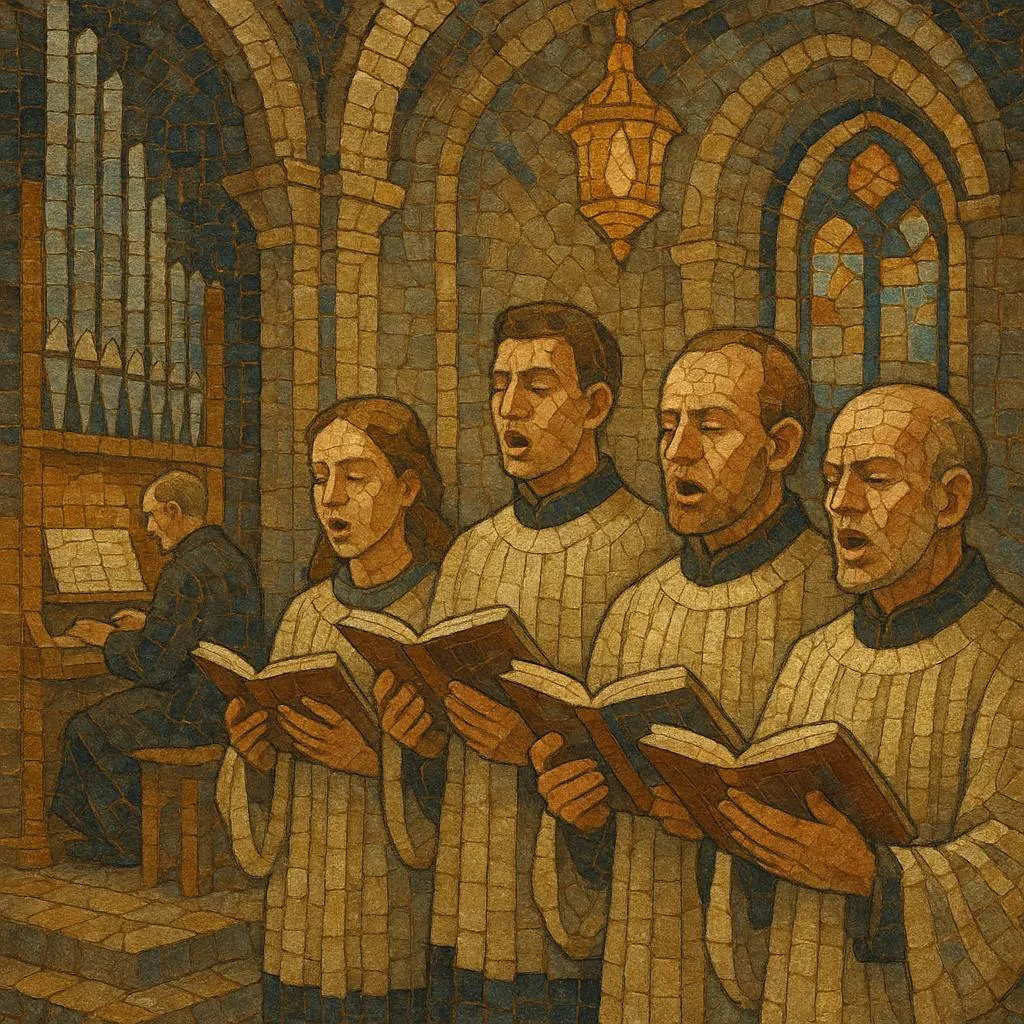
Kerkkoor is a Dutch church-choir tradition centered on congregational Christianity, where a dedicated choir (often men’s, mixed, or youth) performs hymns, psalm settings, and sacred songs within or inspired by Protestant church life.
The sound typically emphasizes clear text delivery in Dutch, homophonic choral writing (block chords), and supportive organ accompaniment, although a cappella passages and occasional orchestral/ensemble accompaniment also occur.
As a “genre” label in modern catalogs, kerkkoor usually refers less to a single musical style and more to a repertoire ecosystem: Dutch hymnody and psalmody, devotional songs, and choir arrangements intended for worship services, church concerts, and religious community events.
History
Kerkkoor practice grows out of long-standing European Christian choral traditions, especially the role of choirs in supporting liturgy, teaching congregational song, and presenting polyphonic sacred music.
From the 1500s onward, Protestant worship placed strong emphasis on vernacular congregational song and metrical psalms.
In the Netherlands this created a large, stable repertoire of Dutch-language hymnody and psalm settings that choirs could present in more elaborate harmonizations than typical congregational unison.
In the 1800s–1900s, church-anchored choir societies and local ensembles (including men’s choirs in fishing and regional communities) expanded the repertoire through arrangements, organ-led performance practice, and concert traditions.
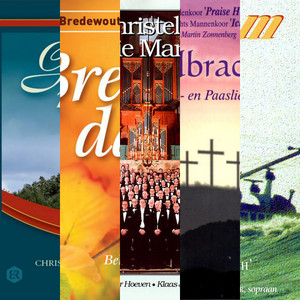
With radio, LPs, and later CDs and streaming, kerkkoor became a recognizable catalog category tied to Dutch sacred choral releases.
Contemporary kerkkoor releases often preserve traditional harmonizations and organ accompaniment while also incorporating newer devotional songs, modern choral arranging, and occasional crossover elements with contemporary Christian worship and popular sacred music—while still prioritizing congregationally intelligible melody and text.
Start from a known hymn/psalm tune or write a tune with stepwise motion, modest range, and a strong sense of phrase symmetry (often 4+4 or 4+4+4+4 bars).
•Common forms:
•Strophic (multiple verses over the same music)
•Verse + refrain (especially for newer devotional songs)
•Chorale prelude style intro on organ → choir entry → interlude → final verse with fuller harmony
Favor functional tonal harmony (I–IV–V with secondary dominants), clear cadences, and smooth voice-leading.
•Typical textures:
•Homophony for clarity of Dutch text.
•Occasional imitation or a brief fugato as a climactic device, but keep it intelligible.
•If writing in a traditional Protestant hymn idiom:
•Use four-part chorale-style writing.
•Avoid extreme chromaticism; when using it, resolve carefully and keep the harmonic rhythm steady.
Build intensity through:
•Verse-by-verse orchestration (e.g., unison or men-only verse → full SATB → added descant → final full organ registration).
•Dynamic arches (mp → mf → f) aligned with the theological climax of the text.
•Endings often feature a broad final cadence with sustained soprano or a solid root-position close.