Your digging level
Description
Kawina is a traditional, rhythmically driven Afro-Surinamese music genre that serves as a foundational pillar of Suriname's musical heritage. Characterized by its heavy use of percussion and call-and-response vocals, it evolved from plantation songs and spiritual Winti practices into a secular entertainment form. The sound is defined by a polyrhythmic interplay between various drums and the distinctive 'kwa-kwa bangi' (a wooden bench beaten with sticks), creating an energetic and trance-inducing groove that is central to Surinamese cultural identity.
History
Kawina emerged in the late 19th century, particularly after the abolition of slavery in Suriname in 1863. It developed from older Afro-Surinamese traditions like banja, laku, and tuka, as well as the spiritual music of the Winti religion. Originally sung by enslaved people on plantations to pass the time or accompany work, it gradually transitioned into a form of social commentary and entertainment.
By the early 20th century, Kawina was the dominant popular music style among Creole populations in Suriname. It was performed by large percussion orchestras and was a staple of street festivals and celebrations. However, as the century progressed, it began to be overshadowed by Kaseko, a derivative genre that incorporated Western instruments like brass and electric guitars, which gained massive popularity in the 1940s and 50s.
In the 1970s and 80s, Kawina experienced a significant revival. Artists like Johan Zebeda and later Patrick Tevreden brought the genre back to the forefront, adapting it for stage performances. This era saw the birth of Kaskawi, a fusion of Kawina rhythms with the drum kit and arrangement style of Kaseko. The genre also traveled with the Surinamese diaspora to the Netherlands, where bands like La Rouge modernized the sound further, ensuring its continued relevance in the 21st century.
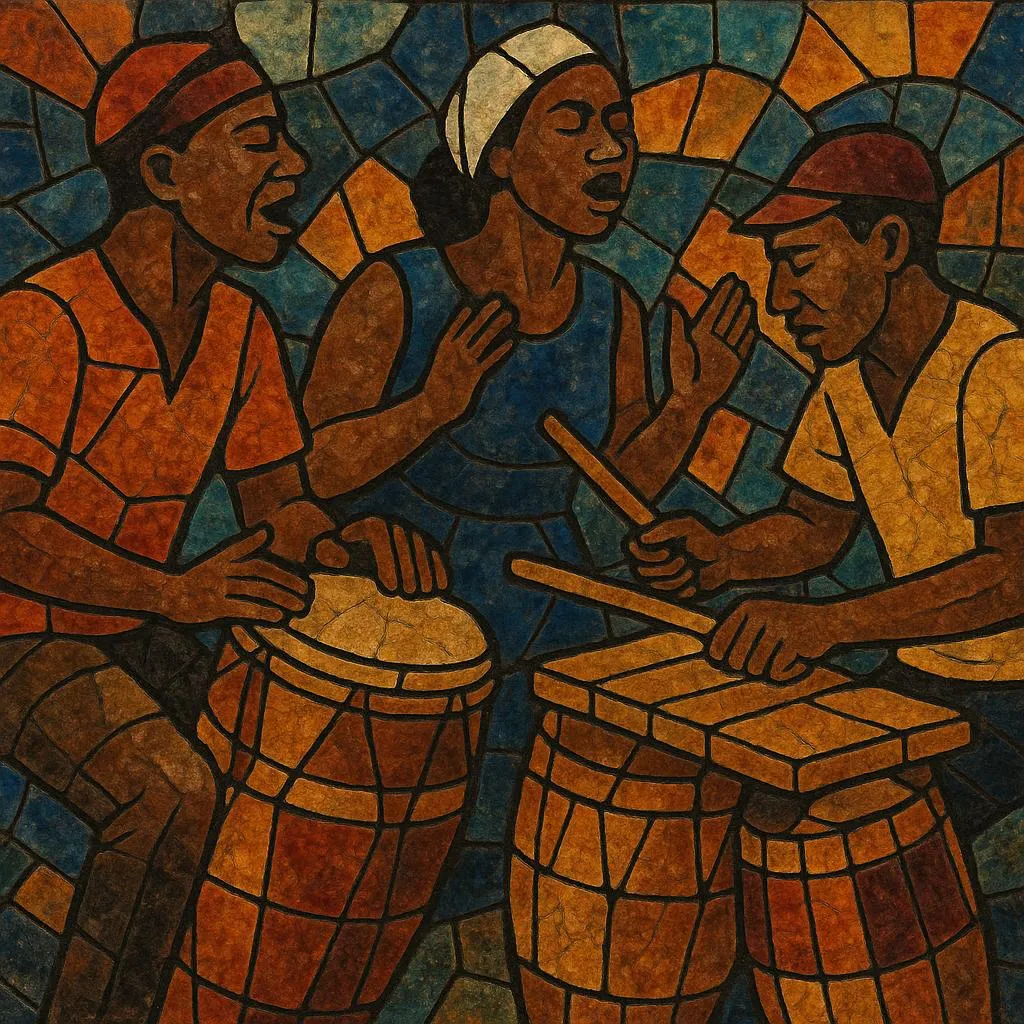
The core of a traditional Kawina ensemble is percussion. You will need a double-headed kawina drum (often carrying the bass line) and a kwa-kwa bangi, which is a wooden bench struck with sticks to provide a sharp, piercing rhythm. Complement these with shakers (zigzag) and other hand drums to build a dense, polyrhythmic texture. In modern 'Kaskawi' interpretations, a standard drum kit can replace some traditional percussion.
Focus on syncopation and the interplay between instruments. The rhythm should be driving and danceable, often in a 4/4 time signature but with a complex, rolling feel typical of West African-derived styles. The bass drum should anchor the beat while the kwa-kwa and shakers fill the upper frequencies with rapid, repetitive patterns.
Employ a strict call-and-response structure. A lead singer (the 'caller') should improvise or sing the main melody, while a chorus responds in unison with a fixed refrain. Lyrics are traditionally sung in Sranan Tongo and can range from social commentary and history to lighthearted storytelling or spiritual themes.