Your digging level
Description
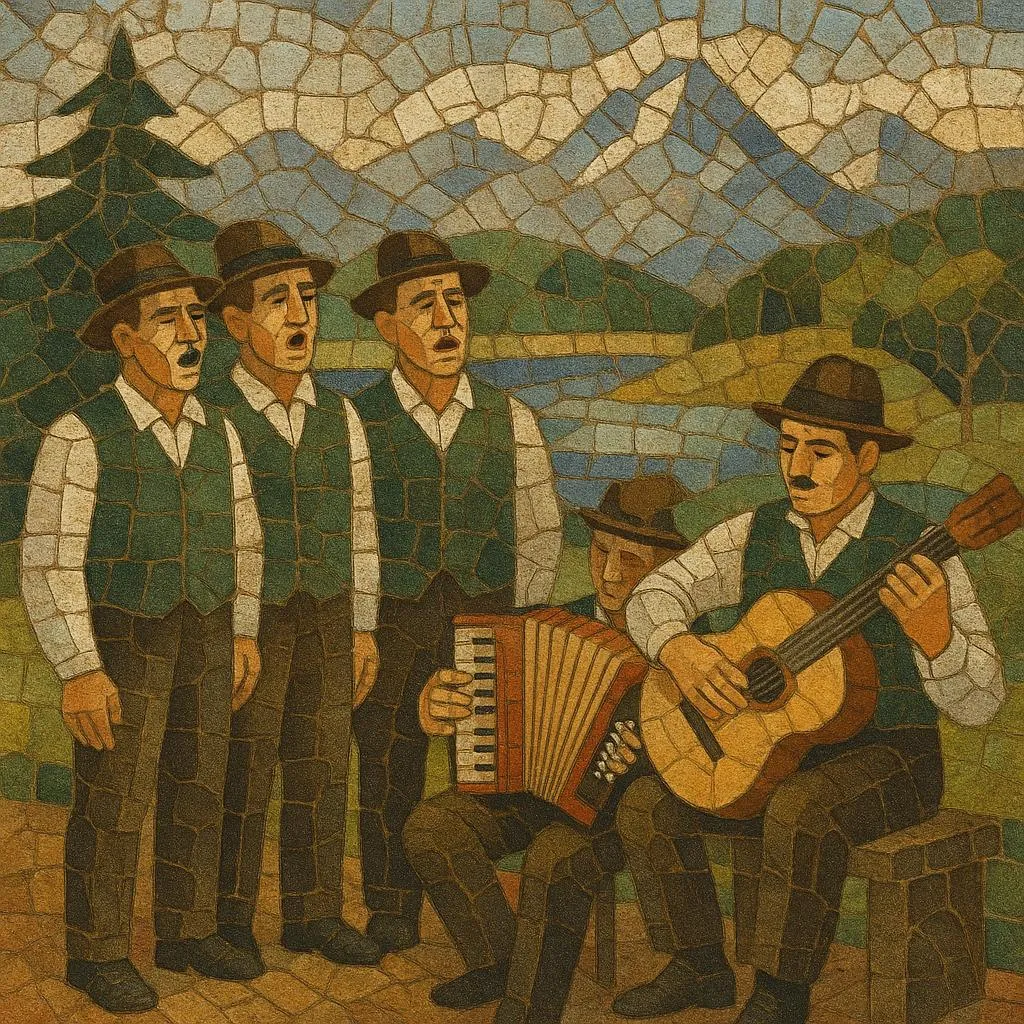
Kärntner Volksmusik (Carinthian folk music) is the traditional singing and instrumental folk style of Carinthia, the southern Austrian province bordering Slovenia and Italy. It is best known for its unaccompanied, multi‑part choral singing in the local Southern Bavarian/Carinthian dialect, often performed by male quartets, double sextets, or mixed choirs.
Musically, the style favors clear, singable melodies; strophic song forms; and close‑knit triadic harmony with frequent parallel thirds and sixths. Devotional and pastoral yodels (e.g., Andachtsjodler) appear alongside nature‑evoking songs about mountains, lakes, seasons, work, love, and home. While a cappella performance is central, light accompaniment with zither, Styrian harmonica (diatonic button accordion), guitar, or contrabass also occurs.
Culturally, Kärntner Volksmusik reflects Carinthia’s multilingual history. Its repertoire and vocal blend carry traces of the Romantic choral movement and neighboring Slovene traditions, giving the music a warm, nostalgic character that is both intimate and communal.
History
Carinthia’s older rural songs, work chants, and devotional pieces formed the seedbed for Kärntner Volksmusik. During the 19th century, the Central European choral boom—fueled by Romanticism, local identity movements, and the spread of Männergesangvereine (male singing societies)—standardized multi‑part a cappella singing in dialect. Carinthian composers, collectors, and choirs shaped a recognizable regional sound and published “Kärntnerlieder,” bringing local repertoire from farmsteads and taverns onto concert stages.
By the early 20th century, Carinthian quartets and choirs were touring, recording, and appearing on radio, helping popularize the Carinthian blend of close harmony, strophic songs, and devotional yodels. After World War II, folklore institutions (e.g., regional branches of the Volksliedwerk), choir festivals, and local broadcasting promoted careful documentation and performance, encouraging authenticity while also adapting arrangements for modern ensembles.
Carinthia’s proximity to Slovenia fostered ongoing exchange: Carinthian Slovene songs and German‑language dialect repertoires influenced each other, especially in melodic shape, modal color, and poetic topics. Today, Kärntner Volksmusik thrives in community choirs, school ensembles, and professional groups. New arrangements coexist with historically informed performance, and the aesthetic—homely timbres, unforced vocal production, and consonant part‑writing—remains a living emblem of regional identity.