Your digging level
Description
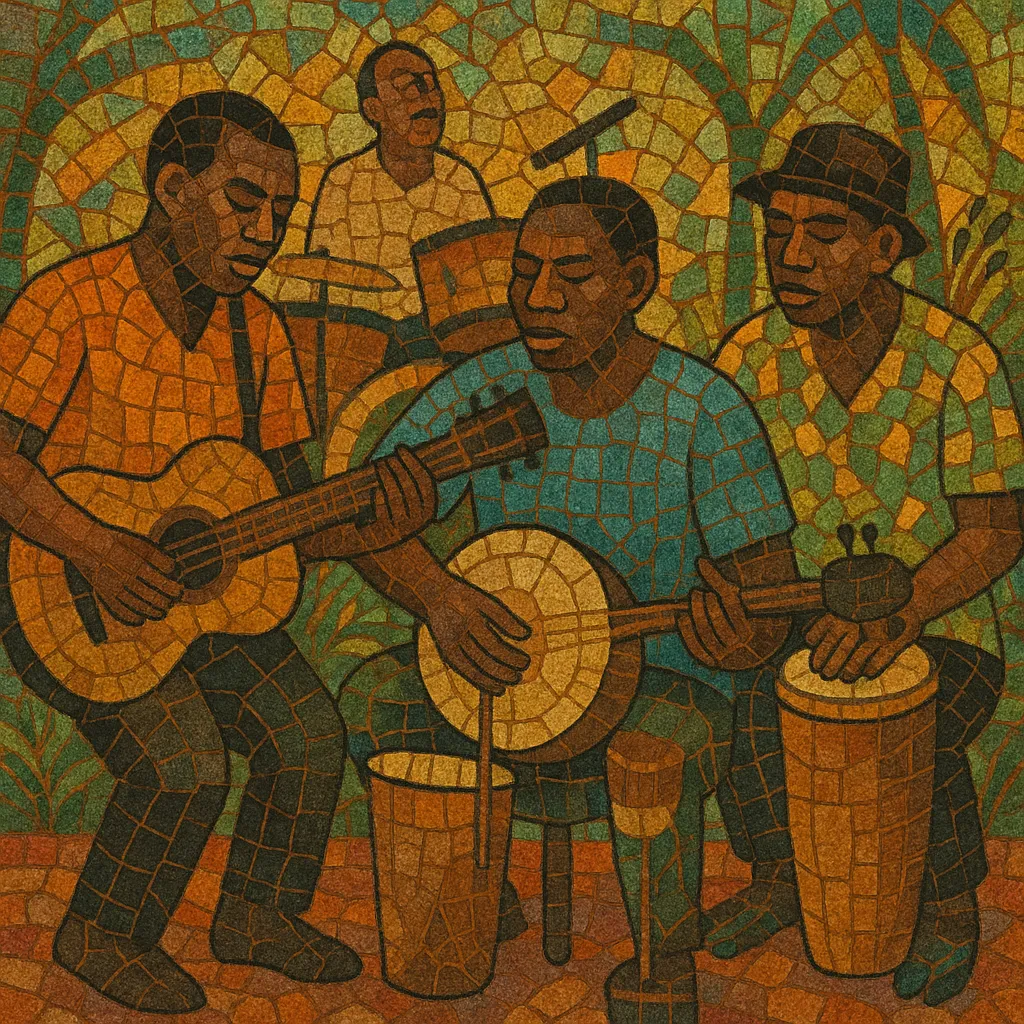
Kalindula is both the name of a locally distinctive bass guitar and the Zambian popular music style built around its driving, quick, and steady basslines. The music typically features multiple interlocking, rumba-like lead guitars, a chattering rhythm guitar, and hand percussion, all arranged to produce a bright, danceable groove.
Emerging as a neo‑traditional style, kalindula blends mid‑20th‑century popular idioms with regional Zambian rhythms and dances (e.g., Kontolola/Pimpinika, Akalela, and Infunkutu). It is particularly associated with Luapula Province (notably around Samfya) and spread widely across Zambia, with related scenes in Malawi and Zimbabwe. While some claim a Congolese origin, the weight of evidence places its birth in Zambia, albeit with clear guitar‑band inspirations from Congolese soukous.
The kalindula bass—often a locally made or adapted instrument—anchors the music with motoric ostinatos, while bright guitars weave melodic counterpoints. Lyrics are usually in Zambian languages (such as Bemba, Tonga, Lozi, or Nyanja) and address everyday life, social commentary, humor, and community celebration.
History
Kalindula’s foundations lie in local Zambian dance traditions—especially the social dances Kontolola or Pimpinika—and in neo‑traditional fusions that took shape from the mid‑1940s through the early 1960s. Musicians combined indigenous rhythmic patterns and call‑and‑response singing with the emerging Central African guitar‑band sound.
By the late 1970s and 1980s, bands crystalized a recognizable kalindula sound centered on a quick, steady bass ostinato (often played on a locally made “kalindula” bass) and multiple interlocking, rumba‑like guitars. Broadcast media and national festivals helped standardize and popularize the term “kalindula,” with Luapula Province—particularly Samfya—often cited as a key cradle of the style. While some have attributed the genre to the Democratic Republic of Congo, primary evidence points to its Zambian origin, even as it drew clear inspiration from Congolese soukous guitar textures.
Kalindula flourished nationwide in the 1980s and 1990s through prolific touring bands and recordings. The style became a dance‑floor staple at celebrations, weddings, and public events, and its bright timbre, fast tempos, and accessible I–IV–V harmonic cycles made it a popular form of neo‑traditional pop. Parallel scenes appeared in Malawi and Zimbabwe, where musicians adapted the rhythmic feel and guitar interplay to local languages and contexts.
In the 2000s and onward, kalindula continues as a living, community‑based style. While it exists alongside newer urban genres, it remains a bedrock for social dancing, local festivals, and cultural expression, and it informs how Zambian guitar bands arrange grooves, bass figures, and vocal call‑and‑response today.