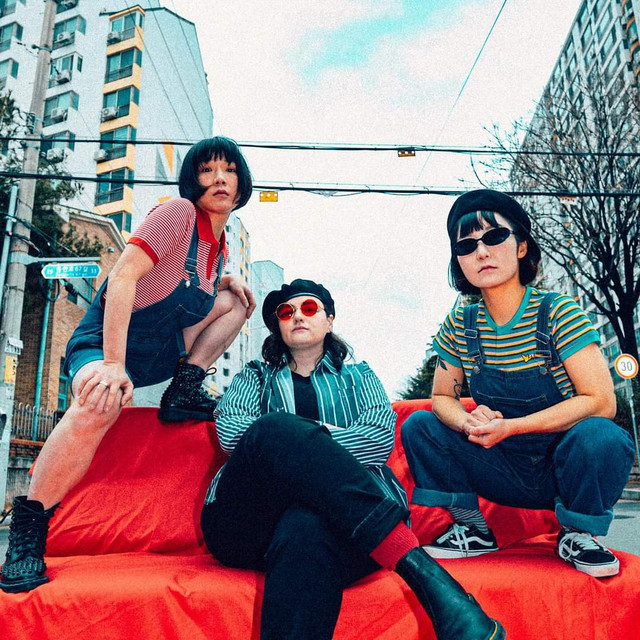
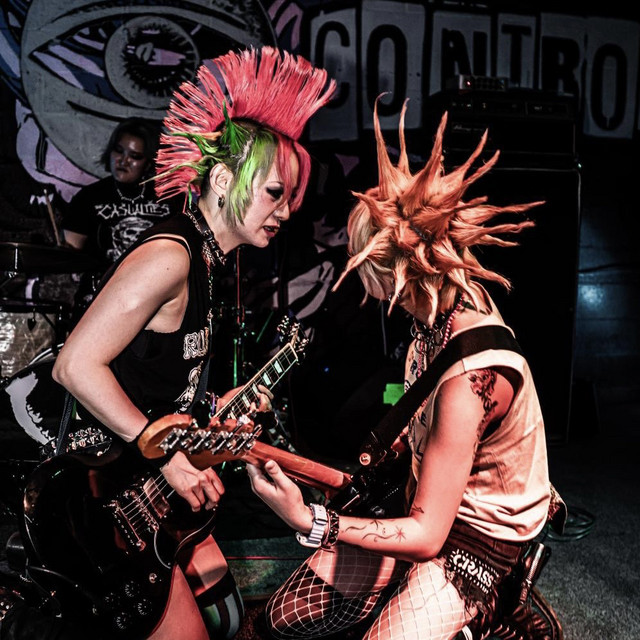
Description
Joseon punk was a mid-1990s punk rock scene centered on the Hongdae neighborhood of Seoul, South Korea, rather than a separate musical style. Its participants adopted a historical name for Korea to express a local punk identity, and gathered around small clubs, particularly Club Drug, as well as independent recordings and promotion.
The music drew on alternative rock, ska punk and pop punk alongside punk rock. Accessible songs, simple chord changes, quick rhythms and choruses made for group singing met rough production and direct lyrics; humor and satire were also part of the scene. Shows were energetic and participatory, with close contact between bands and audiences, moshing and stage diving.
Sources: Rate Your Music
History
A Hongdae scene
Joseon punk emerged in Seoul’s Hongdae neighborhood in the mid-1990s. The area’s arts community, inexpensive rents and spaces that could be converted into clubs attracted young musicians. Club Drug, which opened in 1994, became a central meeting place for the early punk community.
Recordings and wider attention
Crying Nut and No Brain became the scene’s most prominent acts, while 삐삐밴드 [Pipi Band] helped shape its early identity. Crying Nut and Yellow Kitchen shared the split album Our Nation vol. 1 in 1996; it is widely regarded as South Korea’s first indie album. In the late 1990s and early 2000s, wider independent distribution and music television appearances brought the scene more attention.
Decline and legacy
The scene declined in the mid-2000s amid commercialization, gentrification in Hongdae and a public backlash following a 2005 live-television indecent-exposure incident involving The Couch. Its influence nevertheless continued through independent venues, labels and later punk-related acts, and it remained an important foundation for South Korean underground and indie music.
Write for a live audience
Start with a direct punk rock song built on simple chord progressions and a fast rhythm. Give the chorus a clear melody that a crowd can sing along with, and keep the lyrics straightforward; humor or satire can add another dimension. Aim for an accessible song rather than an elaborate arrangement.
Arrange and record
You could use a familiar punk setup of guitars, bass, drums and vocals, keeping the performance energetic and the production rough rather than heavily polished. As a suggestion from the related styles, try a punchier pop-punk chorus or touches of ska-punk rhythm while keeping the song’s punk foundation clear.
Bring it to a small room
Arrange the song so its chorus and rhythmic changes are easy to follow in a live setting. Leave space for audience singing and interaction, and consider a self-produced recording that captures the immediacy of a club performance.