Your digging level

For this genre
0/8
🏆
Sign in, then listen to this genre to level up

Description

Jazz worship is a sacred subgenre that sets Christian hymns, psalms, and contemporary worship songs within jazz idioms—swing, ballad, bossa, and gospel-inflected grooves. It retains congregational singability while enriching the harmony with jazz chord color, extended tertian voicings, modal interchange, and reharmonization.

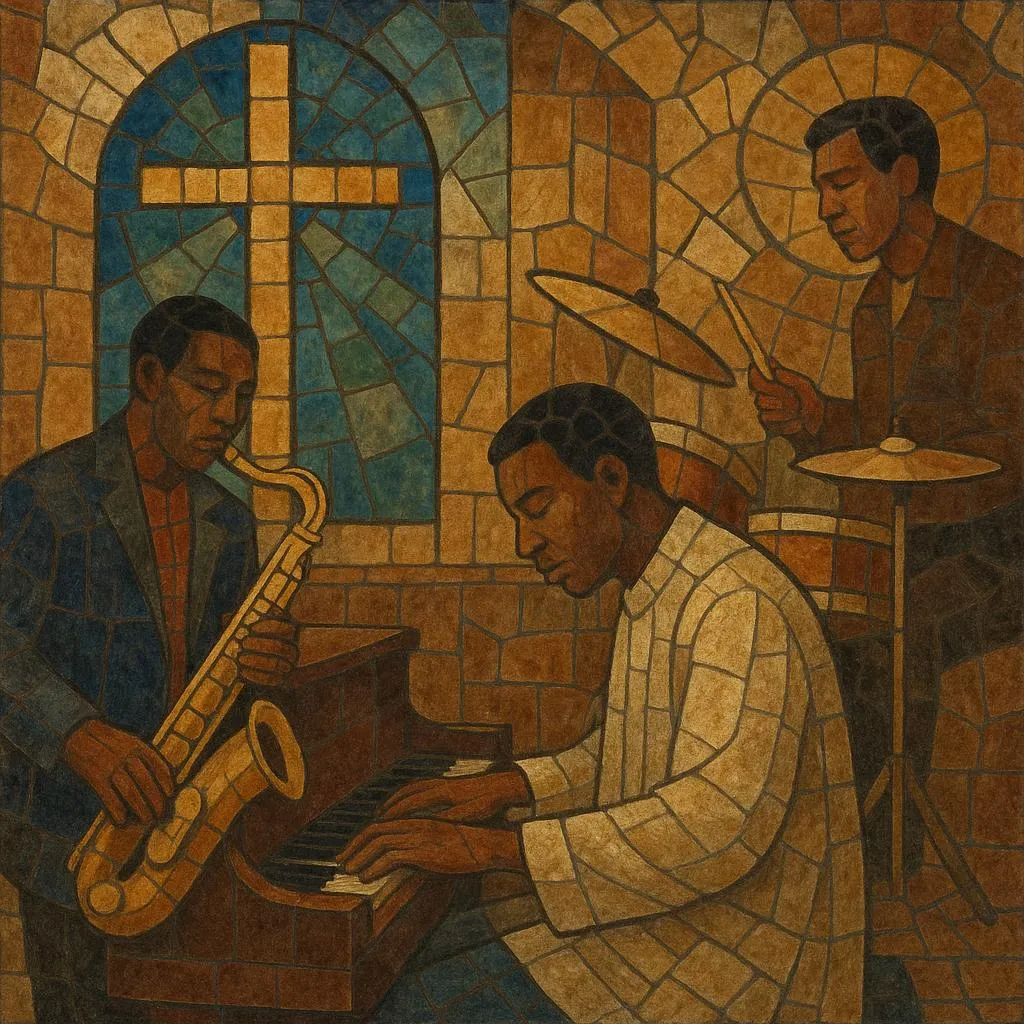
Arrangements typically feature small jazz ensembles—piano or organ, guitar, bass, drum set, and often saxophone or brass—supporting melodies drawn from hymnody or modern worship repertoire. Improvisation is present but framed to serve liturgical function: responsive readings, altar calls, communion, and reflective moments. The result bridges church liturgy and jazz aesthetics, emphasizing reverence, uplift, and communal participation.


Sources: Spotify, Wikipedia, Discogs, RYM, MB, user feedback and other online sources

History

Origins (1960s)

Sacred uses of jazz coalesced in the 1960s when major bandleaders and composers brought jazz into church contexts. Landmark sacred jazz works established a template for liturgical swing, choir-and-band textures, and sermon-adjacent performance. Post–Vatican II openness to vernacular styles and expanding Black sacred music practice further normalized jazz sonorities in worship spaces.

Consolidation in Churches (1970s–1990s)

Through the 1970s and 1980s, church musicians adapted hymns and spirituals with jazz harmony, while gospel ensembles absorbed jazz phrasing and instrumentation. The 1990s saw a rise in “gospel jazz” recordings and workshop networks that trained church rhythm sections to support services with jazz-influenced voicings, walking or syncopated bass lines, and tasteful improvisation between verses or during altar calls.

Contemporary Practice (2000s–present)

Modern jazz worship spans choir-backed swing arrangements, reflective piano-trio hymn settings, and smooth-jazz treatments of contemporary worship songs. Educational resources, church music conferences, and conservatory-trained rhythm sections helped standardize best practices: reharmonization that preserves melody, space for short solos, and congregationally friendly keys and forms. The style now circulates globally, with local churches across the Americas, Africa, and Asia reshaping standard worship repertoires through jazz idioms.

How to make a track in this genre

Core Materials
•   Start with a familiar hymn or worship song in a singable key. Preserve the melody; place the congregation first. •   Choose a groove that matches the text: swing ballad for contemplation, medium swing or soul-gospel backbeat for praise, bossa or gentle 6/8 for reflective devotion.
Harmony and Reharmonization
•   Enrich diatonic changes with jazz color: add 9ths, 11ths, and 13ths; use sus chords over pedal tones for congregational cues. •   Employ ii–V progressions, secondary dominants, and tasteful tritone substitutions, but keep cadences clear at phrase ends for communal entry. •   Use modal interchange (borrowed IVm, bVIImaj7) for emotional lift; reharmonize intros/turnarounds while returning to simpler changes under sung verses.
Arrangement and Form
•   Typical band: piano/organ (or Rhodes), electric or hollow-body guitar comping, bass (upright or electric), drum kit with brushes/sticks, plus optional saxophone/flugelhorn. •   Structure: intro (instrumental verse or vamp), verse/chorus for congregation, brief solo or call-and-response vamp, key change or dynamic swell, and a quiet tag/amen cadence. •   Texture management: thin out under lyrics; add fills/guide tones between vocal phrases; reserve solos for interludes.
Rhythm and Feel
•   For swing, keep ride cymbal light and supportive; for gospel backbeat, lock kick/snare with handclaps; for bossa, use soft cross-stick and syncopated bass. •   Encourage drummer and bassist to support congregational pulse—avoid overplaying during verses; open up in instrumental sections.
Improvisation and Ministry Flow
•   Soloists should quote the melody and keep chorus-length statements; avoid harmonic detours that obscure congregational return. •   Use vamps for prayer moments, modulations for lift, and cadential “amen” figures to cue endings.
Sound and Practicalities
•   Favor warm, church-appropriate tones (clean guitar, rounded piano, breathy sax). Keep stage volume controlled; let lyrics and congregation lead. •   Provide lead sheets with both simple and reharmonized changes; rehearse cues for repeats, tags, and fermatas tied to the service flow.

Top tracks

Locked
Share your favorite track to unlock other users’ top tracks

Upcoming concerts

in this genre
Influenced by

Download our mobile app

Get the Melodigging app and start digging for new genres on the go
© 2026 Melodigging
Melodding was created as a tribute to Every Noise at Once, which inspired us to help curious minds keep digging into music's ever-evolving genres.
Buy me a coffee for Melodigging