Your digging level
Description
Javanese dangdut is a regional form of Indonesian dangdut performed primarily in the Javanese language (ngoko and krama registers) and shaped by Javanese musical aesthetics.
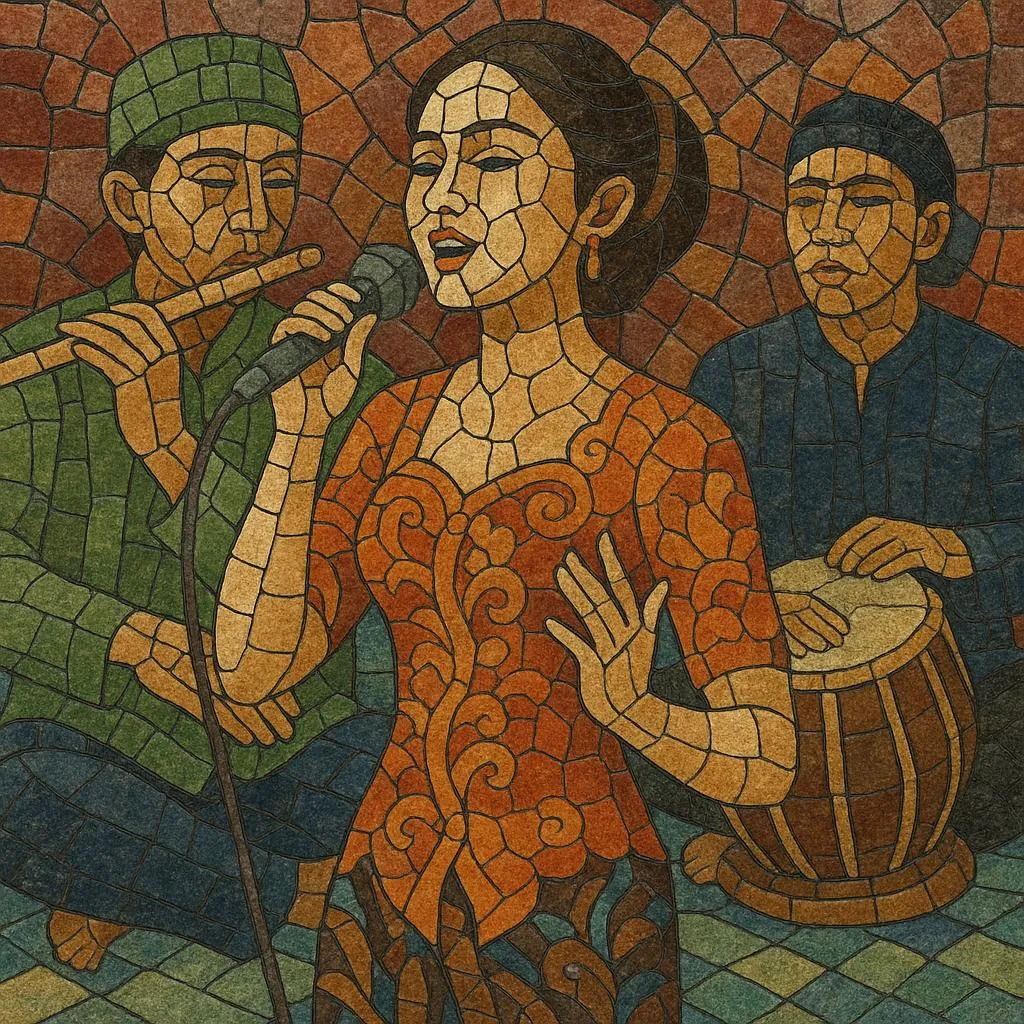
It retains the signature dangdut backbeat (ketipung/kendang plus drum kit), melodic bamboo-flute (suling) lines, and synth/arranger‑keyboard textures, but blends them with Javanese vocal ornamentation (cengkok), melodic contours reminiscent of pelog/slendro pentatonic thinking, and the relaxed, narrative feel of langgam Jawa and campursari.
In practice, it ranges from tender, nostalgic ballads to energetic, dance‑ready stageshow numbers. Its modern form is ubiquitous across Central and East Java’s orkes live circuits and social media, and it overlaps with (and helped spur) faster, percussion‑heavy koplo as well as contemporary pop‑Javanese (“Java‑pop”).

History
Dangdut emerged nationally in the 1970s as a hybrid of Indian filmi rhythms, Malay pop, and local orkes Melayu. In Java during the 1980s, singers and orkestrasi began delivering dangdut entirely in Javanese, adopting Javanese poetic diction and vocal cengkok. At the same time, Javanese idioms from langgam Jawa and keroncong—as well as the timbral memory of gamelan (pelog/slendro)—colored melodies and phrasing.
By the 1990s, campursari (a fusion of keroncong/dangdut with Javanese song forms) popularized a relaxed, story‑forward Javanese sound that overlapped with Javanese dangdut on cassettes and VCDs. Portable arranger keyboards and affordable PAs helped small orkestrasi play weddings, pasar malam fairs, and village celebrations across Central and East Java.
In the early 2000s, East Java’s road‑show culture pushed percussion to the forefront, and a faster, “koplo” drumming style took hold. While koplo became a distinct label, its Javanese repertoire and delivery grew directly out of the Javanese dangdut songbook, keeping the language, cengkok, and melodic sensibility while adding denser kendang patterns and higher tempos.
YouTube, TikTok, and livestreamed panggung hajatan shows amplified the scene nationally. Javanese dangdut ballads about love, longing, and daily life (“ambyar” moods) co‑exist with dancefloor‑oriented hits. Producers fold in pop‑rock guitars, EDM backbeats, and even hip‑hop flows, while maintaining Javanese lyricism and the genre’s signature suling/keyboard hooks. The result is a living continuum spanning intimate campursari‑tinged performances to stadium‑sized koplo energy.