Your digging level

For this genre
0/8
🏆
Sign in, then listen to this genre to level up

Description

Instrumental grime is the MC‑less, producer‑forward strain of grime that foregrounds cold synth leads, sparse but heavy drums, and sub‑bass pressure at around 140 BPM. Stripped of vocals, it magnifies the style’s rhythmic minimalism, icy timbres, and battle‑ready “war dub” attitude.

Built for pirate radio, raves, and DJ clash culture, instrumental grime prioritizes 8‑bar switch‑ups, stark motifs, and negative space. Square‑wave leads with portamento, sine subs, orchestral stabs, metallic hits, and game‑like bleeps are common, while harmony stays minimal—usually minor or modal—with tension sustained through texture, rhythm, and arrangement rather than chord movement.


Sources: Spotify, Wikipedia, Discogs, RYM, MB, user feedback and other online sources

History

Origins (early 2000s)

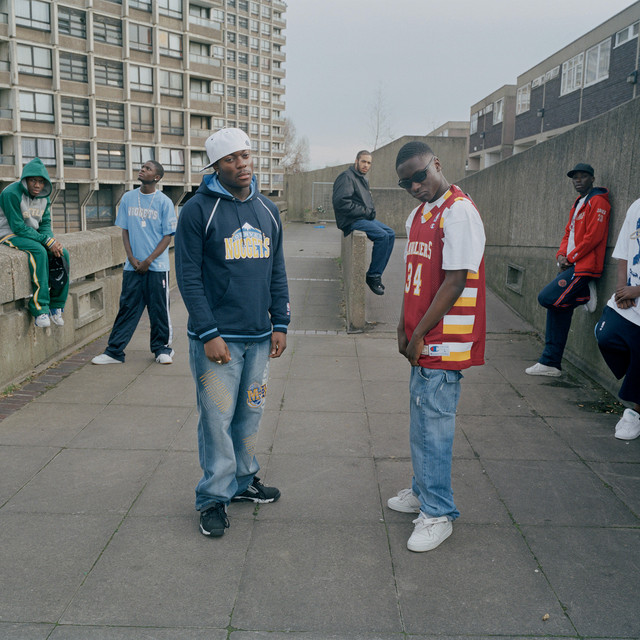
Grime emerged in East London from UK garage and 2‑step’s rhythmic DNA, cross‑pollinated with jungle’s sound‑system weight, hip‑hop’s drum heft, and dancehall’s attitude. From the beginning, instrumental dubs circulated on pirate radio and white labels: austere, skeletal tracks designed for MCs to ride—or for DJs to clash with. Early “eskibeat” instrumentals (square‑lead, frosty, minor‑key riddims) set the template for vocal and non‑vocal grime alike.

Mid‑2000s: White labels, dubs, and club utility

As grime club culture intensified, producers pressed instrumental versions for dubplate battles and sets. The instrumental side emphasized: 140 BPM swing, hard snares on the 3, off‑kilter kicks, stark motifs, and the crucial 8‑bar switch. Many signature riddims became classics even without vocals, circulating via Rinse FM/Deja Vu FM rips, white labels, and DVD/mixtape culture.

2010s: A dedicated instrumental movement

A new wave of producers and labels centered whole nights and catalogs around instrumental grime. London’s Boxed parties, boutique labels, and forward‑thinking imprints platformed icy, spacious, and sometimes abstract instrumentals. This period also birthed adjacent experiments—hyper‑minimal "weightless" constructions and "Sinogrime" timbral explorations—while maintaining the genre’s club focus and DJ‑friendly architecture.

2020s: Cross‑scene influence and continuity

Instrumental grime remains a go‑to dialect within UK club sets and online scenes. Its sound design and arranging logic (8‑bar turns, negative space, cold synth palettes) seep into UK bass mutations, wave, and even UK drill aesthetics. Producers continue to revisit classic tropes—square‑wave leads, sine subs, orchestral hits—while pushing more cinematic, ambient, or hybrid club approaches, keeping the instrumental form vital beyond MC‑led contexts.

How to make a track in this genre

Tempo & rhythm
•   Aim for ~140 BPM. •   Use a hard snare on beat 3, with swung or skippy hi‑hats that nod to 2‑step/garage. •   Kicks are asymmetrical and sparse; focus on groove and off‑beat punctuation instead of four‑on‑the‑floor. •   Structure around 8‑bar phrases and a clear 8‑bar “switch” (change the lead, bass, pattern, or FX to keep DJ energy high).
Sound palette & synthesis
•   Leads: square waves with portamento/glide, PWM, or slightly detuned saws for metallic edge. •   Bass: clean sine or triangle subs in mono, occasionally layered with a quiet mid for definition. •   Textures: orchestral stabs, synthetic bells, video‑game bleeps, impacts, gunshot/fx one‑shots, icy pads, and filtered noise sweeps. •   Drums: tight, dry samples; short kicks, snappy claps/snares, crisp closed hats, occasional rimshots and toms for fills.
Harmony & melody
•   Keep harmony minimal: Aeolian/Phrygian minor or bluesy inflections; 1–2 chord zones at most. •   Write strong, memorable motifs (4–8 bars) rather than long melodies. •   Use call‑and‑response between lead and FX, and rely on rests/space to create tension.
Arrangement & form
•   Intro (DJ‑friendly), Riff A → 8‑bar switch → Riff B, with breakdowns and rebuilds. •   Automate filters, reverb, delay throws at bar lines to telegraph changes for DJs. •   Use subtractive arrangement: add/remove single elements to refresh the groove without overfilling.
Production & mixing tips
•   Sub‑bass is king: high‑pass most elements; keep sub mono and controlled (40–60 Hz focus). •   Transients should be sharp but not harsh—use gentle saturation for weight. •   Sidechain subtly to the kick for headroom, but avoid overt pump. •   Leave pockets for hypothetical MCs, even in instrumental tracks—negative space is part of the style.
Performance & context
•   Design with the dance floor and pirate‑radio DNA in mind: clear intros/outros, obvious 8‑bar cues. •   Prepare VIPs/alt versions (new drums, different lead, half‑time flip) for surprise switches and dubplate culture.

Main artists

Top tracks

Locked
Share your favorite track to unlock other users’ top tracks

Upcoming concerts

in this genre
Influenced by
Has influenced

Download our mobile app

Get the Melodigging app and start digging for new genres on the go
© 2026 Melodigging
Melodding was created as a tribute to Every Noise at Once, which inspired us to help curious minds keep digging into music's ever-evolving genres.
Buy me a coffee for Melodigging