Your digging level
Description
Ilahiler (singular: ilahi) are Turkish Sufi hymns—devotional songs in the Turkish language that praise God, the Prophet Muhammad, saints, and express mystical yearning and ethical counsel.
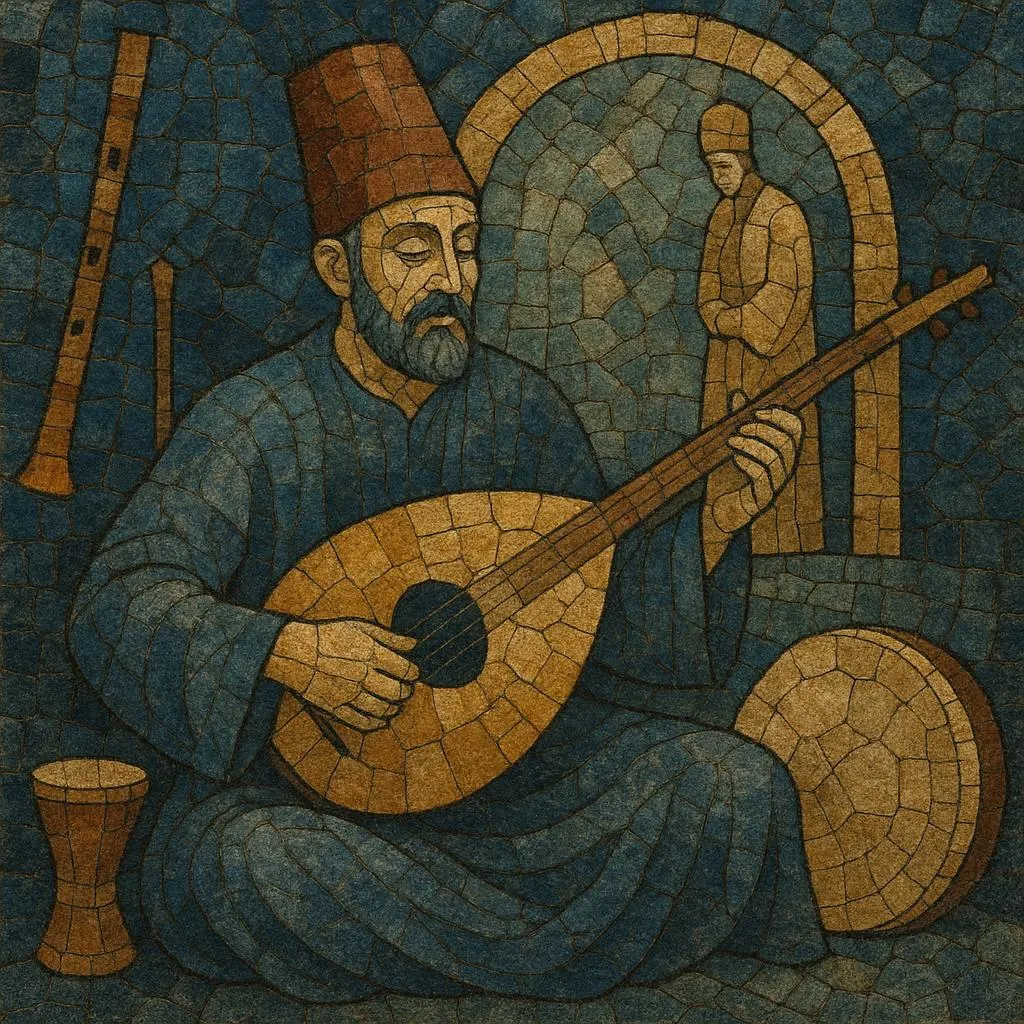
They are a core strand of Ottoman/Turkish religious and tekke (dervish lodge) music, typically set in the makam (modal) system and performed with simple, singable melodies and memorable refrains. While ilahiler can be sung a cappella, they are often accompanied by instruments associated with Ottoman and Sufi music—ney (end-blown reed flute), ud, tanbur, kanun, and small devotional drums such as bendir and kudüm. Texts commonly draw on the poetry of Yunus Emre, Niyazi-i Mısri, and other Sufi poets.
Musically, ilahiler balance accessibility and spiritual depth: they favor clear melodic contours, limited ambitus, and steady usul (rhythmic cycles) like Sofyan (4/4), Düyek (8/8), Aksak (9/8), or Semai (6/8), with occasional free-rhythm passages. They are performed in mosques and dervish lodges, in religious gatherings (zikr/sohbet), and in domestic devotional settings, and today also exist in concert, recording, and media contexts.
History
Turkish ilahiler crystallized in Anatolia as Sufi orders spread and Turkish became a major devotional language. The poetry of Yunus Emre (d. early 14th c.) and contemporaneous Sufi verse provided a textual bedrock for simple, singable hymns used in zikr and sohbet. Musically, these hymns drew on Anatolian/Turkic folk sensibilities while gradually absorbing the makam and usul frameworks of emerging Ottoman art music.
Within the broader Ottoman religious and tekke repertoire, ilahi became a recognizable song type alongside Mevlevi ayin, na‘t, and other forms. Composers steeped in Ottoman classical idioms—such as Buhurizade Mustafa Itri and later Hammamizade Dede Efendi—helped stabilize modal-rhythmic practices and refined melodic style. The lodges provided transmission networks, while Turkish poetry (e.g., Niyazi-i Mısri) sustained a common devotional lexicon.
After the 1925 closure of dervish lodges, formal tekke performance diminished in public life, but ilahiler continued in mosque-centered contexts, mevlid ceremonies, private homes, and informal religious gatherings. Oral transmission, radio (later TV), and community choirs helped preserve repertoire and practice.
From the 1970s onward, archival projects, conservatory programs, and artists like Ahmet Özhan revitalized tasavvuf (Sufi) repertoire on stage and record. The 1990s–2000s saw a media-era expansion—cassette/CD markets, TRT broadcasts, and later streaming platforms—spurring new arrangements ranging from historically informed to contemporary pop-tinged renderings. Today ilahiler coexist in traditional worship settings and on concert stages, and they continue to inspire crossovers into jazz, rock, and film/TV soundtracks.