Your digging level
Description
Hula is the traditional Hawaiian art of storytelling through dance, chant, and song. As a musical genre, it encompasses both ancient ceremonial chant-and-drum forms (hula kahiko) and later song-based, Western-influenced forms (hula ʻauana).
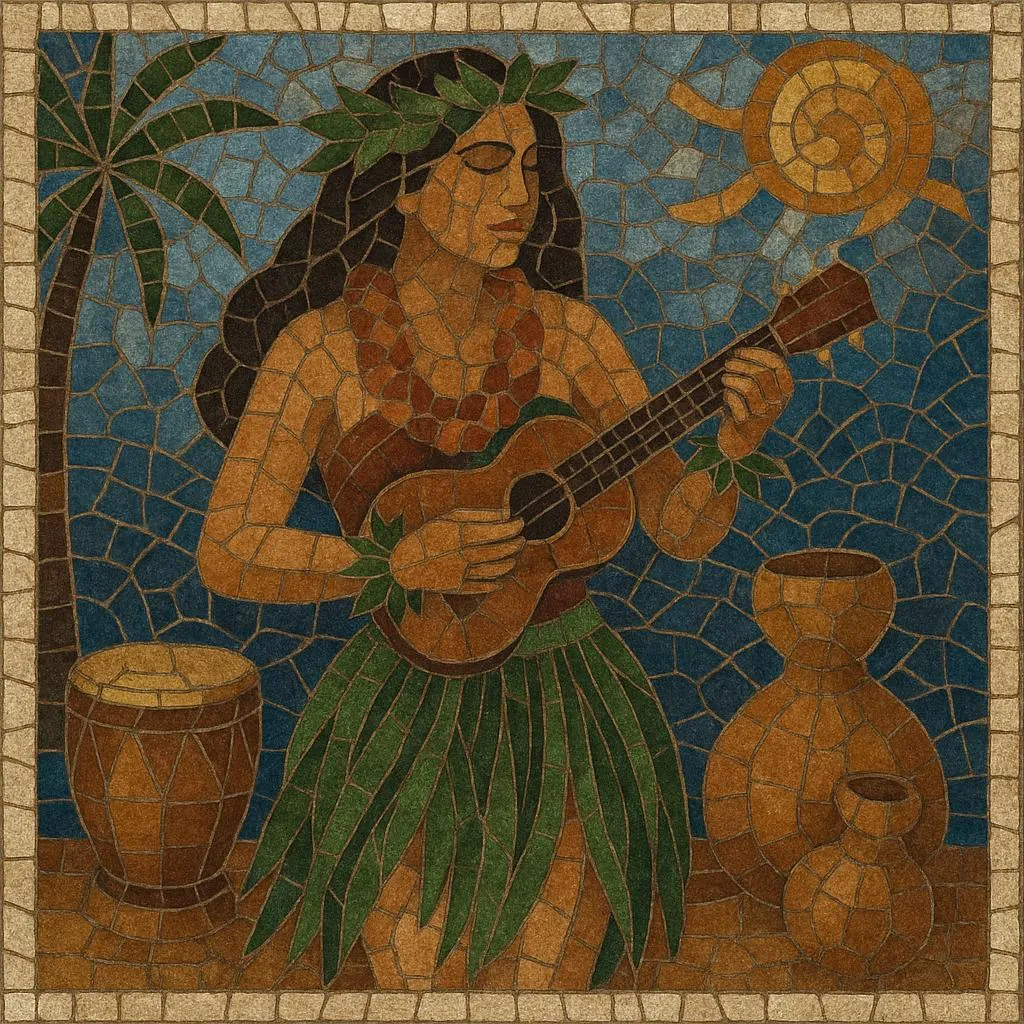
In hula kahiko, vocal chant (oli) is supported by indigenous percussion such as the ipu heke (double gourd drum) and pahu (sharkskin drum). The texts (mele) carry kaona—layered poetic meanings that honor genealogy, deities, places, and historical events.
In hula ʻauana (which crystallized in the 19th–20th centuries), the music adopts diatonic melodies, Western harmony, and instruments like ʻukulele, slack-key and steel guitar, and bass, while retaining Hawaiian poetic practices and dance vocabulary. Across both strands, music and movement are inseparable: tempo, phrasing, and dynamics follow the dancer’s narrative gesture, creating a tightly integrated performance tradition.
History
Hula’s roots long predate Western contact, emerging within Native Hawaiian religious, courtly, and communal contexts. The oldest stratum, hula kahiko, is tied to mele (poetic chant) and oli (non-metric chant) accompanied by the ipu and pahu. These performances served as living archives of history, genealogy, and cosmology; music was functional ritual and narrative medium.
After sustained contact in the late 18th and 19th centuries, Hawaiian musical life absorbed Western instruments and tonal harmony. This gave rise to hula ʻauana (“to drift, wander”), a song-led format with ʻukulele, guitar (including slack-key and steel), and later bass and ensemble textures. While melodies and harmonies followed Western diatonic practice, Hawaiian text poetics and hula movement vocabulary remained central.
In the early 1900s, “hapa haole” songs and Tin Pan Alley’s fascination with Hawaiian themes spread hula-associated music globally. Radio, vaudeville, and Hollywood (and later lounge/exotica aesthetics) helped fix a romanticized sound image of Hawaiʻi, foregrounding lilting vamps, falsetto singing (leo kiʻekiʻe), and signature timbres like steel guitar and ʻukulele.
Following mid-20th-century suppression and commodification, the 1970s Hawaiian Renaissance revitalized hula’s traditional knowledge, language, and ceremonial practice. Festivals like Merrie Monarch became crucibles for excellence in both kahiko and ʻauana. Today, hula music thrives—rooted in oli and mele yet adaptive—featuring historically informed chant ensembles, modern composer-performers, and collaborations across jazz, pop, and even hip-hop contexts.