Your digging level
Description
Musica madeirense refers to the traditional and contemporary music of the Madeira Archipelago (Autonomous Region of Portugal). It sits at the crossroads of rural dance-song, ceremonial and devotional repertoire, and modern popular idioms embraced by island communities at home and in the diaspora.
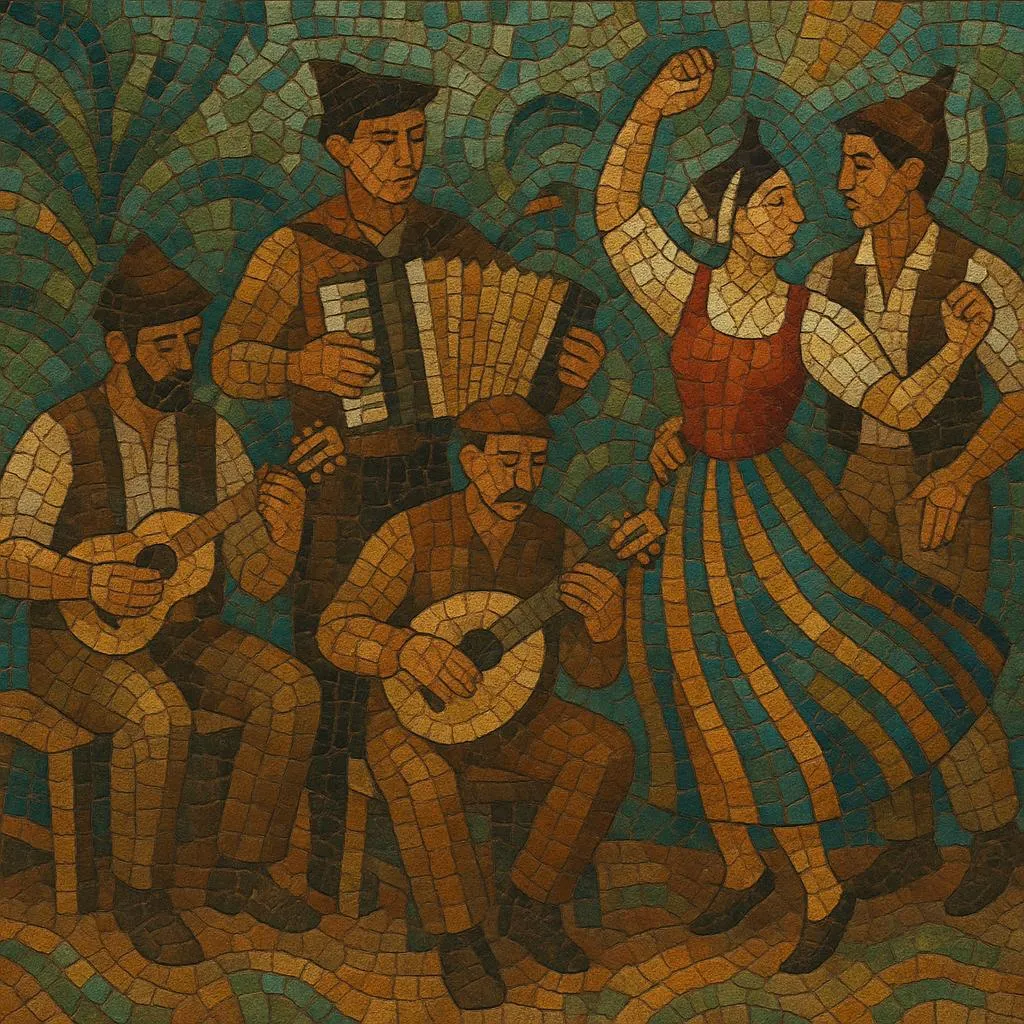
At its core are lively circle- and pair-dances (such as the Bailinho, Mourisca, and Charamba), call-and-response singing, and bright string timbres from unique local chordophones—the braguinha (also called machete) and the five‑string rajão—often supported by viola de arame, guitar, accordion, and distinctive local percussion like the brinquinho. Lyrics frequently celebrate romarias (saints’ festivals), agricultural cycles, seafaring, love, and emigration, delivered in accessible stanzaic forms.
While rooted in village performance and folklore ensembles, musica madeirense today also encompasses stylized stage presentations, community choirs, and fusions with fado, pop, and even electronic textures—yet it remains defined by its danceability, communal participation, and unmistakable island sound.
History
Portuguese settlement of Madeira in the 1400s brought Iberian song and dance forms that, over centuries of island life, evolved into local variants. Rural communities shaped a vigorous dance–song culture performed at romarias and harvest gatherings, with call-and-response vocals, clapping, and circle-step patterns.
Two small chordophones became emblematic: the braguinha (machete) and the rajão. Together with the viola de arame and hand percussion (including the unique rattling "brinquinho"), they formed the nucleus of village ensembles accompanying dances like the Bailinho, Charamba, and Mourisca.
From the late 19th century, Madeiran emigrants carried their instruments abroad. Notably, craftsmen and performers introduced the braguinha (and the rajão’s tuning concepts) to Hawai‘i, catalyzing the emergence of the ukulele. This unexpected Atlantic–Pacific link would profoundly shape Hawaiian music and popular culture.
At home, early recordings, radio, and tourism in the mid‑20th century helped codify “típico” (typical) Madeiran repertory for the stage, fostering folklore ranchos (ensembles) that presented polished versions of village dances and songs in regional costume.
After Portugal’s democratic transition and Madeira’s autonomy (1976), ethnographic initiatives and ensembles undertook systematic collecting, arranging, and teaching. Folklore groups and mandolin/viola ensembles flourished, while local luthiers kept instrument traditions alive. The repertory became a cultural emblem for schools, festivals, and international exchange.
Today, musica madeirense thrives in multiple lanes: community groups maintain dance‑song cycles for festivals and tourism; concert ensembles foreground strings and choral textures; and younger artists fold island timbres and rhythms into fado, indie pop, and electronic styles. Across these contexts, the bright strum of braguinha/rajão, the snap of the brinquinho, and communal dance energy continue to define the sound.